Artificial intelligence as a quality booster for digital marketing
Without good data, there is no intelligent marketing. But what constitutes data quality? Together with Stuttgart Media University, United Internet Media conducted a study on the topics of artificial intelligence and data quality, thus analyzing the importance of the two factors for intelligent marketing.


The importance of artificial intelligence in digital marketing is increasing. This is a key finding of the new "Digital Dialog Insights 2019" study. Three quarters of the experts surveyed forecast a high significance of AI for advertising companies and agencies. Half are certain that intelligent technology will form an essential part of a company's marketing strategy in the future.
However, current AI concepts still need to be revised for this - only 15 percent of the study participants currently consider the technology mature enough to be used productively in intelligent marketing.
Personalization as a killer application
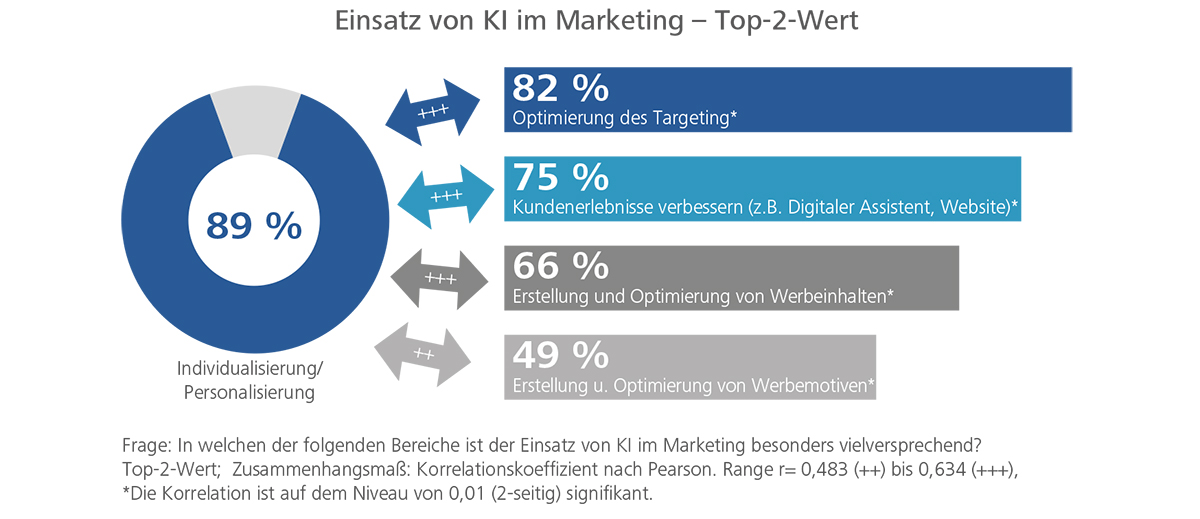
The experts agree: Artificial intelligence helps above all with personalization/individualization (89%). 82 percent of participants believe that this great potential comes from optimizing targeting with the help of smart technology. 75 percent of the experts think that improving the customer experience - for example, through a digital assistant - contributes to individualization. The respondents see great potential in the fact that messages can be personalized through automated creation as well as optimization of advertising content (66%) and motifs (49%).
Individually tailored and intelligent advertising messages
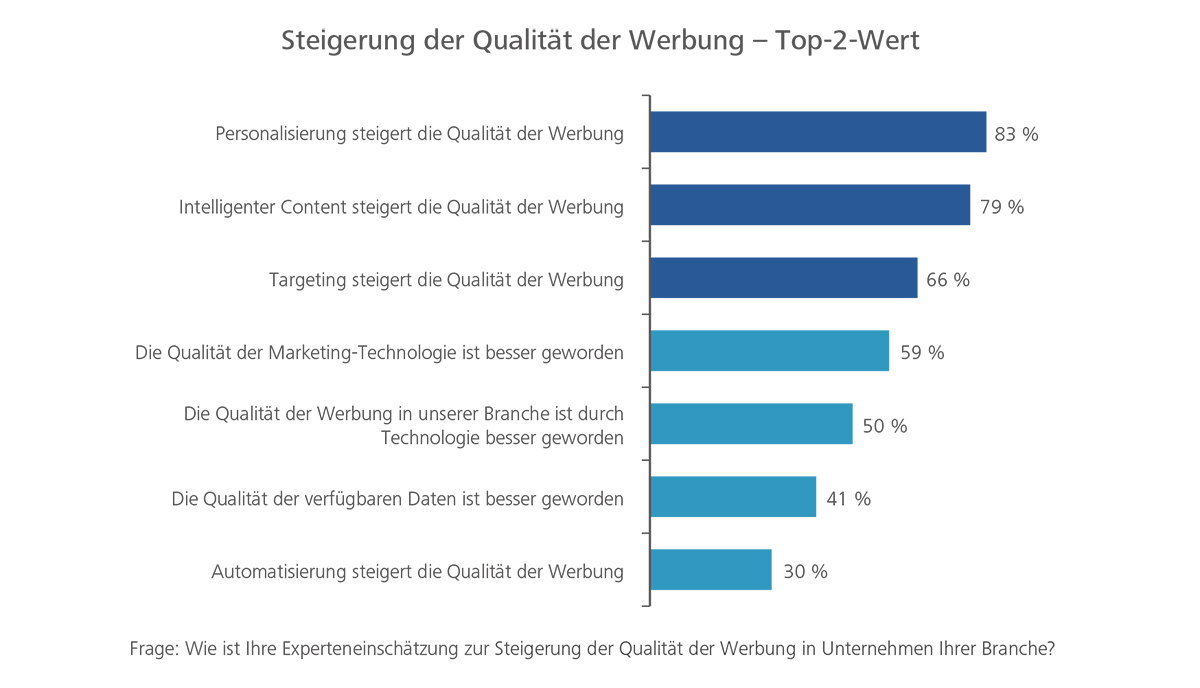
Artificial intelligence is seen as having the potential to contribute to improving digital marketing as a quality booster. This is because 83 percent of the experts surveyed are certain that personalization increases the quality of advertising messages. This is also improved by intelligent content (79%). Two-thirds of the study participants are convinced that marketing quality is additionally enhanced by effective target group addressing via targeting.
The willingness of companies to invest in promoting smart processes in marketing is correspondingly high. Almost 60 percent of the experts expect to improve existing customer experiences and individualization by investing in intelligent processes within the next two years.
Data quality as a success factor
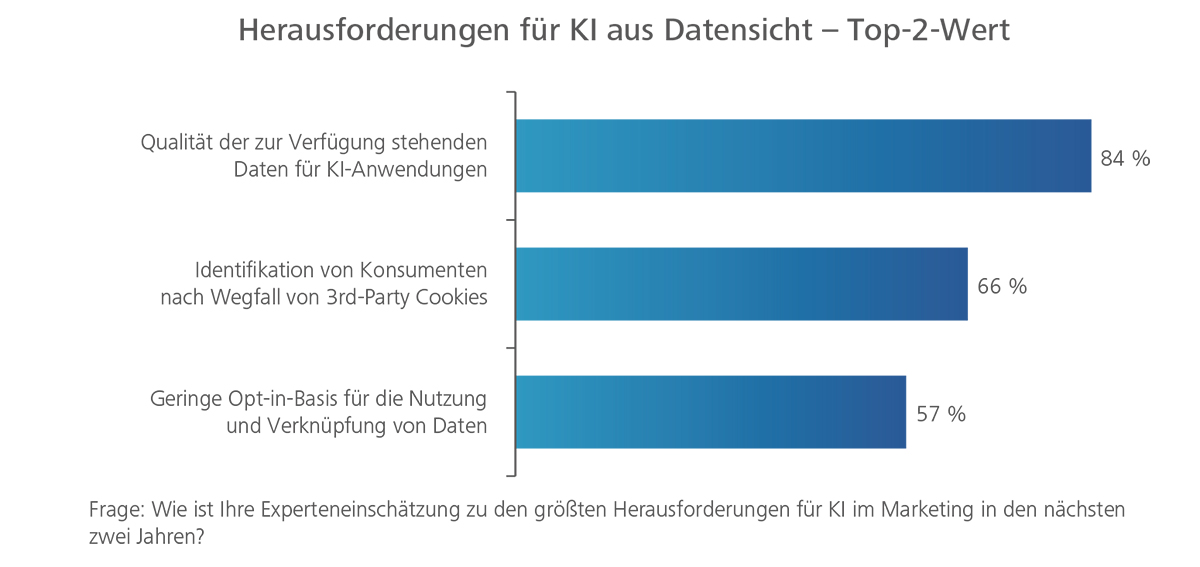
The use of artificial intelligence depends not only on the willingness to invest, but also on the quality of the available data. 84 percent of the experts see this as a major - or very major - challenge.
The experts name the identification of consumers after the discontinuation of "third-party cookies" as another top challenge (66%). More than half (57%) also consider the low opt-in basis for the use and linking of data to be challenging.
Almost 60 percent of the experts already consider the poor quality of the available data to be a high - or very high - hurdle. The study participants see the timeliness and consistency of the data as the most important quality criteria, with 96 percent and 80 percent respectively agreeing. However, the majority of experts also consider the criteria of up-to-dateness of the underlying data model (74%), documentation of data origin (73%), high degree of user identification (67%) and completeness of the data with regard to user identities (64%), as well as the type of data generation (57%) and persistence of data information (52%) to be important or very important.
Need for alternative identification methods potentially underestimated
The experts predict a high willingness to invest in the data basis due to the high relevance of data for AI applications. 65 percent believe that improving data quality for AI will be promoted in the future. A surprising figure in terms of user consent: Only one-third of respondents currently rely on opt-ins as part of their AI strategy.
However, more than half of the study participants across the industry already anticipate expanding the opt-in base to implement AI-based strategies (56%). The willingness to invest in the use of alternative identification methods as a replacement for third-party cookies (47%) is definitely there. However, it is rather weaker and the topic is thus potentially underestimated.
"As the basis of digital business models, cookies are becoming increasingly difficult to fulfill all the criteria for data quality, since browsers and adblockers, among other things, prevent them from being set and read. This makes it all the more important to look for alternative identification methods to compensate for third-party cookies, or to work with login-based solutions, as these allow persistent and privacy-compliant opt-ins to be obtained easily and quickly, as well as cross-device advertising," says Rasmus Giese (pictured below), CEO of UIM.
"Data-driven approaches are increasingly becoming the operating system in marketing communications. Our study underscores the importance of operational excellence and high-quality data," adds Professor Harald Eichsteller from Stuttgart Media University (HdM).
"Differentiating yourself through marketing AI is difficult. However, according to experts and decision-makers, investments are imperative in order not to be left behind in the competition. They are focusing primarily on personalizing their communications and improving the customer experience," explains Professor Jürgen Seitz from the HdM.

For the eighth edition of the "Digital Dialog Insights. 101 experts from the fields of production, retail and services were surveyed online in the period from May to June 2019. The questionnaire was developed by United Internet Media in cooperation with Stuttgart Media University. Participants were recruited from the HdM's network of experts and answered questions on the status quo, trends and upcoming challenges in digital dialog marketing.