SAP Campus Basel 2019: On the way to the intelligent future
At the SAP Campus Basel, thought leaders and experts from the worlds of business, academia, and IT discussed digital strategies and the latest technologies that prepare companies for the future as «Intelligent Enterprises.» The focus was on customer experience, intelligent processes, and a culture of innovation.


"What will be the most successful version of your company in the future?" asked Michael Locher-Tjoa, Managing Director of SAP Switzerland (pictured above), to the packed auditorium at the opening of the SAP Campus Basel 2019. It could well be that the answer no longer has much to do with the current company, the host answered his question and referred to current "disruptors" such as Airbnb, Uber and Netflix. That the future belongs to the intelligent company, however, is certain.
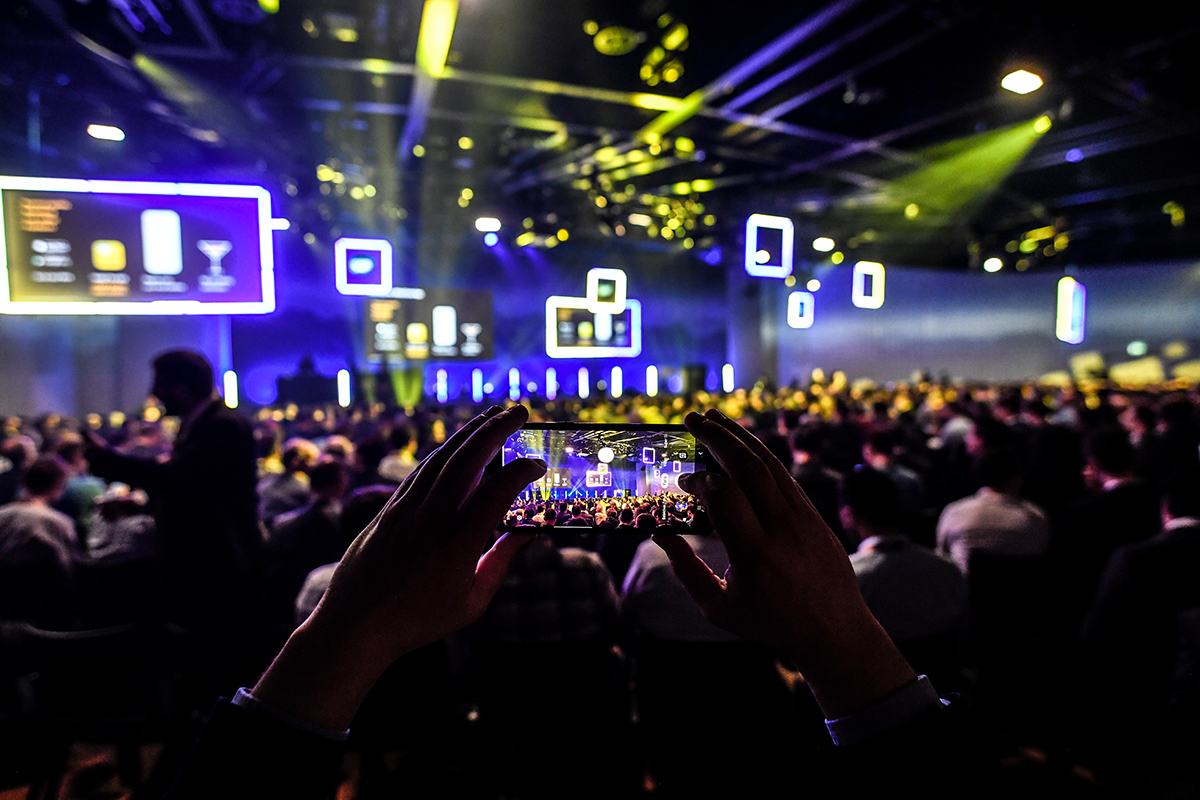
At the largest IT industry event in Switzerland with over 3,000 participants, the focus was therefore on the future of the intelligent company. As Locher-Tjoa explained, SAP is contributing three dimensions to this future: an intelligent suite of applications, a digital platform with SAP Cloud Platform and SAP HANA Data Management Suite, and intelligent technologies with SAP Leonardo. On this basis, the journey to the intelligent company begins. "I want to make the audience curious about the intelligent future," said Locher-Tjoa, formulating his conference goal.
And the audience had plenty of opportunity to do just that on April 3 and 4 in Basel. Under the motto "Explore the Future of Intelligence", well over a hundred sessions and demos explored individual aspects of intelligent technologies and solutions in greater depth using use cases, customer examples and live demonstrations. The presentation of solutions from companies such as Credit Suisse, SBB, Digitec-Galaxus, Migros, SV Group and Ypsomed met with particularly keen interest.
It was up to Luka Mucic, CFO of SAP SE, to point out in his keynote speech that people, not technology, are at the heart of the digital transformation currently affecting business and society. With reference to Stephen Hawking, he reminded us that intelligence is the ability to adapt to change. It is primarily about linking trends in human behavior and trends in people with digital innovations.
Customer experience (CX) is a key area of focus here. Today, SAP provides company managers with all the business-related data they need for smart business management. They can use this data to analyze their customers' behavior, inspire their employees or optimize their supply chain. "But what has been missing in this world of numbers is the emotional level," diagnosed Mucic. "How do customers feel about the shopping experience? Do they like the contact with a company? Was the experience pleasant or did they feel annoyed?"
This is where SAP comes in with SAP C/4HANA together with the acquisition of Qualtrics announced in January. In Basel, visitors were able to experience the 4th generation CRM software suite. Short live acts introduced this new world in which companies can build trusting relationships with their customers and manage their experiences in a targeted manner. The in-memory CX suite provides cloud solutions for marketing, retail, sales, service and customer data. Each of these cloud solutions was given a slot in the live theater.
But it shouldn't stop there. Using the example of an amusement park, SAP demonstrated in concrete terms what is important in practice if you want to satisfy customers. A typical challenge for amusement park operators is to estimate visitor volumes as accurately as possible. The weather, bridge days, concerts in the area, the football World Cup, special attractions in the park: various factors have an influence on how many customers are interested in the "products" in the park. If there are too many visitors, this means busier roads on the approach, fuller parking lots and longer queues.
However, historical data can be used to analyze visitor flows, establish correlations with the weather and parallel events in the region, include pre-sales of tickets and see how much the mobile app is used. With this information, it is quite easy to predict how many visitors can be expected. Tickets can also include a VIP pass or reduce waiting times with a "fast track" service. It is also possible for visitors to queue virtually while they use the waiting time for refreshments or relaxation. This certainly leaves a more positive customer experience than long waiting times in the queue.
Over a dozen other live scenarios showed campus visitors how companies are already using intelligent technologies to strategically advance their business today. Using the example of a one-armed bandit, visitors were able to see what intelligent engagement of tomorrow will look like with the inclusion of modern facial recognition, voice analysis tools, pulse rate scanners and thermal imaging cameras. Another scenario showed how the interplay of design thinking methods and C/4HANA solutions can bring a digital beer community to life.
The "Intelligent Enterprise Truck" - a 25-ton truck that turns digital transformation into a live experience and provides inspiring impulses in the mobile "SAP Immersive Experience Room" with various scenarios - also offered a practical and inspiring insight into the dormant innovation potential. Practice was also a top priority in the truck: Various examples showed how companies develop and implement their innovations with SAP Leonardo.
Innovation is a strategic concern of SAP that has long gone beyond its own borders. With SAP.iO, which was launched around two years ago, SAP invites internal and external start-ups worldwide to pursue their ideas and thus realize products and services. They can count on financial, technical, logistical and personnel support from SAP. To date, SAP.iO's acceleration program has supported around 100 software start-ups at an early stage of development.
The SAP Campus in Basel also addressed this promotion of innovation. It was already a central theme in the keynote speech by Chris Barton, who gave an entertaining account of the rocky road from idea to successful product using the example of the music recognition service Shazam, which he co-founded. In the upgraded start-up zone, six selected young companies presented themselves, which are shaking up the market with intelligent technologies and new business models: in supply chain management and personnel planning, in the management of customer data and in manufacturing.
The start-up 4tiitoo attracted particular interest with its eye-controlled computer operation. The software tracks the user's eye movements and recognizes the user's intention in order to automatically trigger the intended activity - opening or closing a window, selecting a field for data entry, etc. Stephan Odörfer, founder and CEO of 4tiitoo, demonstrated live how programs can be operated without the use of hands. This eliminates the need to switch between keyboard and mouse, allowing employees to complete their tasks more efficiently.
In addition to 4tiitoo, numerous other presentations and live scenarios at the SAP Campus Basel impressively demonstrated one thing in particular: the intelligent future has already begun.
The next SAP Campus will take place again in Basel on March 10 and 11, 2020.