The four emotional signals of a brand


DIGITAL BRAND MANAGEMENT How can you create immersive shopping experiences in digital media? Digital brand codes can also evoke strong emotions online.
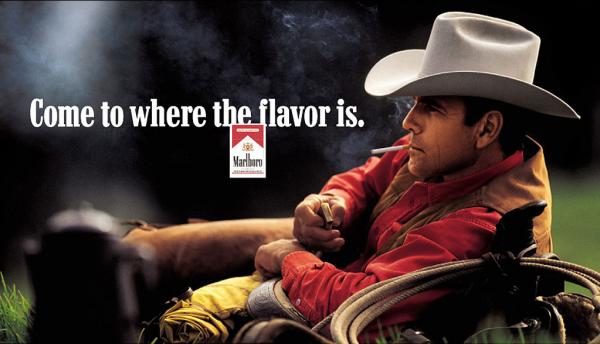
The Malboro cigarette brand also focuses on Wild West romance in digital media.There are many assumptions and assertions surrounding brand management in digital media. One of the most important is that strong experiences cannot be created in the digital space ("Has a website ever made you cry?"). But is this really true? The background to this is that brands work best when they trigger strong and uniquely attractive experiences, i.e. a unique bundle of strong feelings.Digital brand codes: The four emotional signals of the brandThe uniquely clear and attractive image of our brand is the result of all contact between our brand and the user. The more often the user has contact and the stronger the experience, the better they learn. Strong feelings associated with the brand are more important than frequent repetition. Brain researcher Prof. Spitzer puts it in a nutshell: "Feelings are a learning turbo." In all online and offline contacts, the brand conveys what it stands for, what it does and what uniquely attractive experience it rewards the customer with. The signals we use to communicate our promise of experience and create strong experiences are the brand codes. We learned them early on, they have a strong emotional impact and differ depending on the culture.Our brain decodes and stores codes in three ways:1. What does it look like? Our brain processes sensory impressions, i.e. those that we take in through our senses. This is where we store what things look like, for example that Deutsche Bank is blue or Deutsche Telekom is magenta. This processing is very superficial and does not yet take into account the meaning of the signals.2. What does it mean? We store semantic impressions, i.e. what the signs and signals stand for, like language and a company logo. The meaning is much more important than the appearance: "So what does the Mercedes star stand for?". A logo that triggers no or only a weak association has little effect.3. When and where did I see it? Who was I with there? Our brain stores episodic impressions, i.e. brand stories at an open day or memories of product use. Our brain does not store memories as a complete package, but encodes signals in three ways and stores them in different places. Brain research therefore distinguishes between three types of memory: sensory, semantic and episodic memory. Four codes, i.e. signals, are therefore available to eCommerce and digital brand management: sensory, symbols, language and episodes. SensorsReference groups can see, hear, taste, smell and touch the company and its products. Symbols: Symbols are signs that represent something, such as a logo and a key image (Nike's swoosh, Apple's bitten apple, O2's oxygen bubbles). Language: When using language, the content is relevant on the one hand and the form on the other. Language should convey the message to the recipient quickly, simply and concisely. The following should be checked when using language: word meanings, foreign words, names, word sounds, sentences. Stories: Stories are particularly effective in bringing a brand closer to the reference groups - success stories, stories from the CV, stories about the work and achievements of the company, stories about enthusiastic customers.ConclusionDigital brand codes can trigger strong experiences because they are culturally learned and have been charged with strong feelings through experience, as the examples of the Wild West romance of Marlboro and the adventure romance of Beck's beer show. Such brand codes are also used in digital media, where they can even have the same multi-sensory effect as offline.The second and third parts of this article deal with the multi-sensory appeal to all senses. Here you will find the first article on digital brand management.Authors: Prof. Dr. Dieter Georg Herbst is head of the Master's program "Leadership in Digital Communication" at the Berlin University of the Arts (www.dietergeorgherbst.de). Thomas Heinrich Musiolik is his doctoral student and also Scientific Director of the Digital Brand Lab (www.digitalbrandlab.org). The agency partner of the two in Switzerland is www.startbahnwest.ch