"We are witnessing the most radical evolution of mankind"


DIGITIZATION Christoph Oggenfuss* talks to Silicon Valley expert Herman Gyr about the digital transformation process and its consequences for our society.

Hermann Gyr is founder of the Enterprise Development Group, Palo Alto/USAI meet Herman Gyr in style in the wooden garage in a cozy neighborhood in Palo Alto. My expectations of a technocratic office complex are quickly dashed, but the unconventional surroundings and the open and warm-hearted manner of my conversation partner very quickly create a relaxed and inspiring atmosphere.

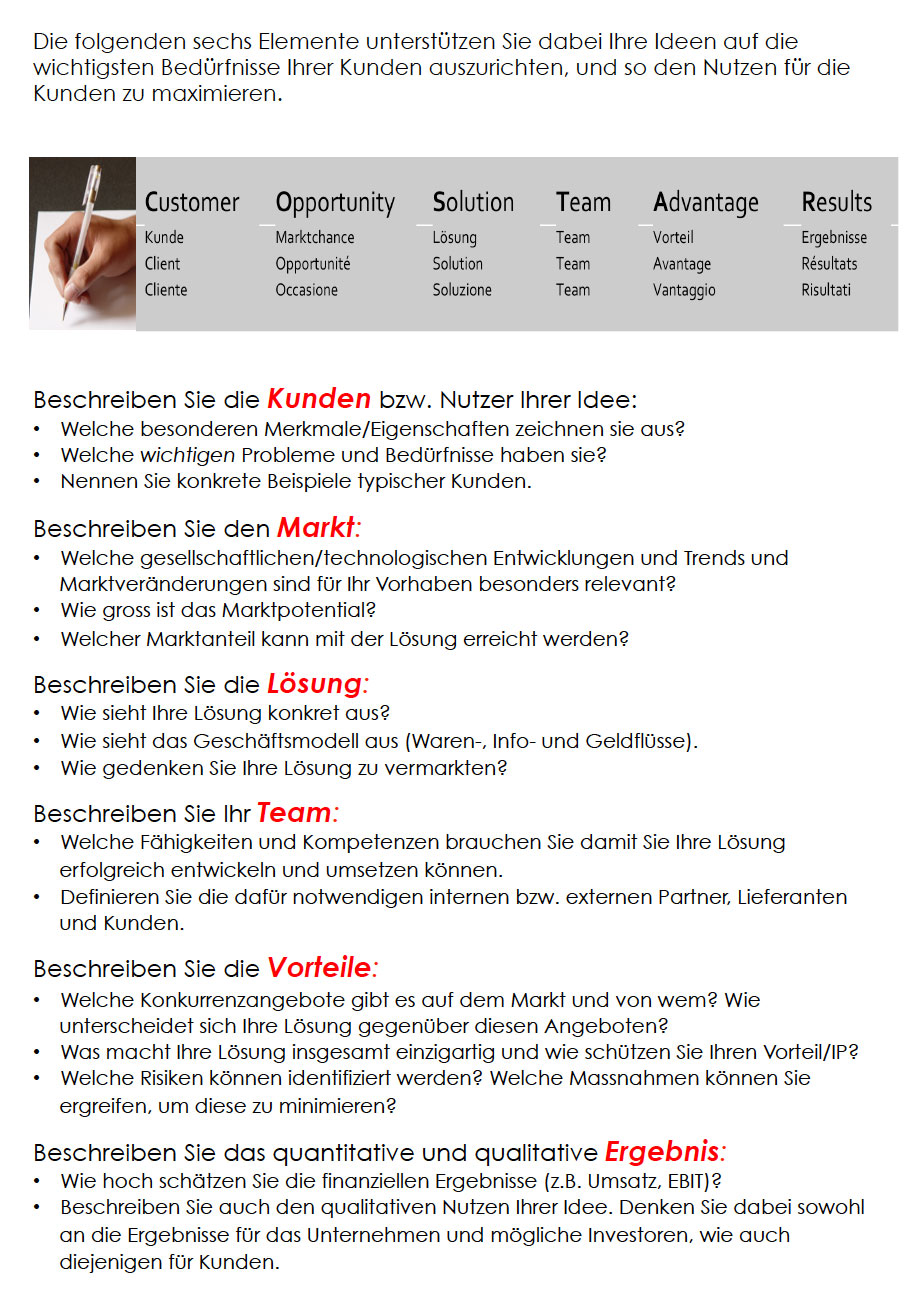
The first thing I want to know is whether Herman puts a question mark or an exclamation mark after the dossier title "Transform or Die". Without pausing, his answer is: "Exclamation mark". With a brief historical digression, Gyr makes it clear that people have always had to adapt to new conditions and have thus been able to take their lives to a new level, but what fundamentally distinguishes earlier transformations from the current change is the fact that innovations such as the petrol engine have developed linearly over time, but are still essentially the same. This is not the case with the microprocessor, which has and will continue to develop exponentially according to Moore's Law. The chip as a driver thus develops exponential explosive power - which makes my initial question almost rhetorical. Today's extremely low chip costs are therefore also a favorable prerequisite for the Internet of Things.Clever data evaluation requiredThe next question is who will be most affected by the transformation. If I was expecting individual sectors to be named, I am disappointed. Herman's answer is much more fundamental and points in a different direction. First, he comments on the change in customer behavior from passive consumption in the past to increasingly active involvement. The adaptation of companies means that their analogue processes must be digitized, but this step only represents phase 1 of the change; in phase 2, customer interaction must also follow a changed communication architecture, and it is precisely here that innovation is very important for the unique position of the offer. The example of this year's NFL Super Bowl event in San Francisco, where the players were equipped with body sensors for the first time, shows how data is generated during the game to make the whole sports experience even more interactive, but also more personalized. This practical and current example makes it clear how important data generation and clever data analysis are for a "content-rich" customer experience.Three basic questionsI am then interested in how Gyr, as a consultant, sets the transformation process in motion for its customers. In line with the strategic importance of the topic of digitalization, the management is involved at the beginning. Triggering the change process is based on three basic questions:- Where is the world going and what will this mean for us? In this context, it is important to recognize and correctly interpret relevant signals. The effects of sensor technology or the self-driving car can serve as examples across all industries.- Who will we be in this radically changed world? The company must take a stand with the same absoluteness - How will we get there? What offerings, what skills, processes and structures, what communication are needed? And what kind of leadership will enable us to achieve this?" With regard to adapting future-oriented leadership behavior, Herman includes the following: In the old world it was about "mastering of the known" - in the new world it is about "mastery of the unknown". As a successful practical example, my interviewee mentions a collaboration with the management of PostBus operations in December 2013, during which the signals around autonomous mobility that were visible at the time and their possible effect on PostBus operations were discussed. In 2016, PostBus is now starting pilot operations with self-driving buses in Sion!All people can achieve innovationAnd what are the first and most important objects of transformation that need to be addressed? Gyr also makes a fundamental point here - he is certain that all people can achieve innovation. However, the question arises as to how people can be inspired to work on a common future. In Silicon Valley, it is assumed that pitching and creating value propositions are fundamental to innovation management. These skills can and must be developed in a targeted manner.Methodology for idea developmentBased on decades of observing practices in Silicon Valley, his consulting firm EDG has created the easy-to-understand CO-STAR methodology for idea development (see below), which has proven its worth in many companies over the years. The advantage of such an easy-to-understand methodology is that it creates a common language for innovation within the company and also promotes the collaboration that is so necessary for effective innovation. The aim must be to make this structured innovation thinking a kind of DNA, and Herman summarizes the three most important elements for innovation: curiosity for the new and different; active support for creative thinking; and interaction between people who commit to improving their ideas together."Management culture must change"What does the innovation expert see as the biggest challenge of the digital transformation? "The management culture has to change massively." To this end, my interviewee picks up on his earlier statement that realigned leadership must be able to master "the un-known", i.e. deal creatively and constructively with uncertainty.Gyr illustrates his statement with the following parable: if you are unsure as a leader in the digital world whether you are the wolf in the territory, then unfortunately you are the sheep. The task of a leader who wants to master the unknown is therefore to constantly recognize signals in the market or technical developments that could change the existing territory. Then actively redefine the territory so that the company's success can also be maintained in the future environment." At the end of our conversation, I ask Herman Gyr what else is particularly important to him on the subject of digital transformation, to which he says: "What we are currently experiencing is absolutely the most radical development in the history of mankind". Gyr explains that chips are bringing intelligence into machines and things, which, in conjunction with networking, is leading to a huge surge in development and change - but unlike in the past, this is now happening exponentially. And Moore's Law means that non-human intelligence will surpass human intelligence in the foreseeable future. On my car journey back to San Francisco, I find myself wondering whether I will still be at the wheel myself on my next visit to Herman Gyr or whether I will be steered safely to Silicon Valley with chips and sensors.
The CO-STAR methodology
"Digital - Transform or Die" series of articlesAs part of the digital series in Marketing & Communication by Christoph Oggenfuss (markITing ag), the first three seasons were entitled "Digital - not trivial", "Digital - from Talk to Walk" and "Digital - walk before you run". The fourth season, "Digital - Transform or Die", deals with the question of the ultimate value of fundamental change.