
Five tips for successful brochure design
Especially in an age of fleeting online media, printed brochures serve an important purpose. Cewe-Print offers five tips on what to keep in mind when creating them.


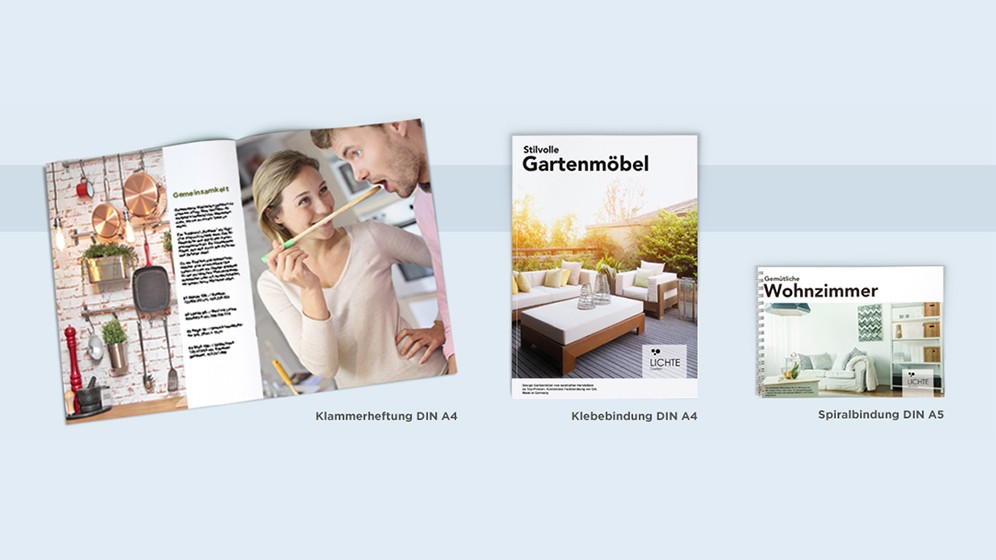
Brochures present compiled information to readers in a condensed form within a clear, well-thought-out format. Since customers consciously pick them up—unlike with direct mail or flyers—brochures also have another advantage: They’ve already captured customers’ attention and fostered a willingness to engage with the content. Companies can encourage and capitalize on this through an appealing design. The marketing team at Cewe-Print offers five tips on how to achieve this.
1. First things first
Even though it sounds simple, it’s especially important in brochures to present the most important information right on the cover or the first few pages. After all, customers pick up brochures for a specific reason and want to find the information they’re looking for quickly. If they don’t find it right away, in the worst-case scenario, they won’t even continue reading—they’ll just set the brochure aside. It’s also important to emphasize the product’s advantages and benefits and to clearly highlight how it stands out from competitors’ products. The brochure should be designed to be as informative as possible so that readers can use it as a reference guide in the future. To this end, companies can cite market studies or outline future trends. Brochures are comprehensive sales tools, which is why they should contain all relevant information—otherwise, companies may miss the opportunity to present additional arguments during a later sales conversation.
2. Refine your wording and tone
The language used in a brochure should not be overly sales-oriented but should instead be informative in nature. This means that companies should avoid exaggerations such as «most beautiful,» «best,» or «greatest.» It’s also advisable to always address the reader directly—in other words, avoid passive phrasing like “The product saves time” and instead use active sentences: “Our product saves you time.” Short, concise sentences also help readers understand the content immediately and identify key information.
3. Testimonials help build credibility
Customers trust other customers—which is why testimonials are especially important in brochures. When companies let their satisfied customers speak for themselves, it’s more convincing than any marketing promise. However, it’s important to use «real» customers and avoid fabricated statements—people always notice when they’re fake. Short customer statements are most effective; they should describe how the company’s product or service solved an existing problem and what the specific improvement looks like. Readers of the brochure who are facing a similar challenge will then take a closer look at the product or service.
4. High-quality printing and unique formats enhance the promotional impact
Quality is especially important when it comes to brochures: Readers pick them up voluntarily to learn more. A high-quality feel helps convey the quality a company aims to demonstrate through the brochure. High-quality paper and full-color printing help achieve this goal. Unusual formats, such as DIN long, also grab readers’ attention and reinforce the brochure’s high-quality feel. Perfect binding and finishes like cellophane lamination further enhance the perceived value. This, in turn, has a positive impact on the company’s image.
5. Know your target audience!
Knowing your target audience is the most important factor when designing a brochure. This is because it determines the language used: If the target audience consists of experts, for example, technical terms can be used—which would not be effective for a general audience. The target audience also determines the writing style: Can the tone be a bit more casual, since the goal is to reach a young, trendy audience, or is the readership an older, more conservative group that would appreciate a formal tone? It’s also important for companies to ensure, when designing the brochure, that the information included isn’t too short-lived: After all, the brochure is intended for long-term use, and references to a specific trade show or event can quickly become outdated.
Note: This guest article was written by Cewe-Print, but it is not sponsored content.


