
Customer contact via live chats must be better coordinated
The latest study, «Live Chat—Opportunities and Risks in Modern Customer Engagement,» by HubSpot shows that companies have room for improvement in their use of live chat for customer interactions.


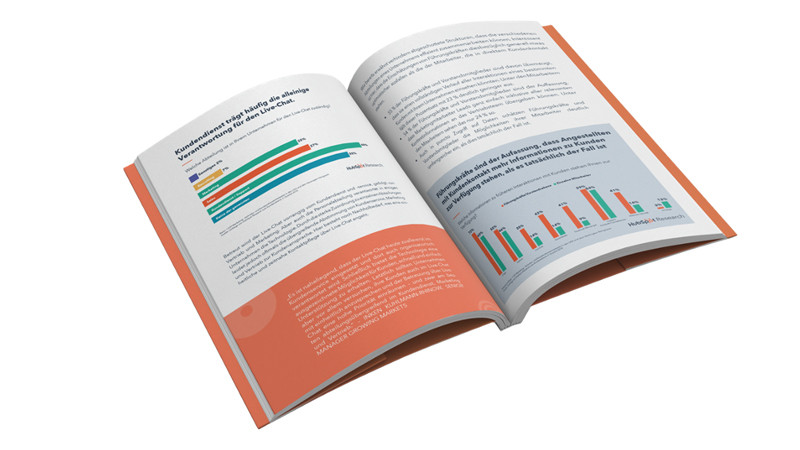
Live chats are currently one of the most important trend tools in customer contact. They undoubtedly offer great potential for customer service and contact, but their use is only just getting underway. The latest live chat study by HubSpot explains what customers expect today and how companies can make even better use of live chat. HubSpot is a provider of an all-in-one solution for marketing, sales, customer service and CRM.
Live chat use picks up speed
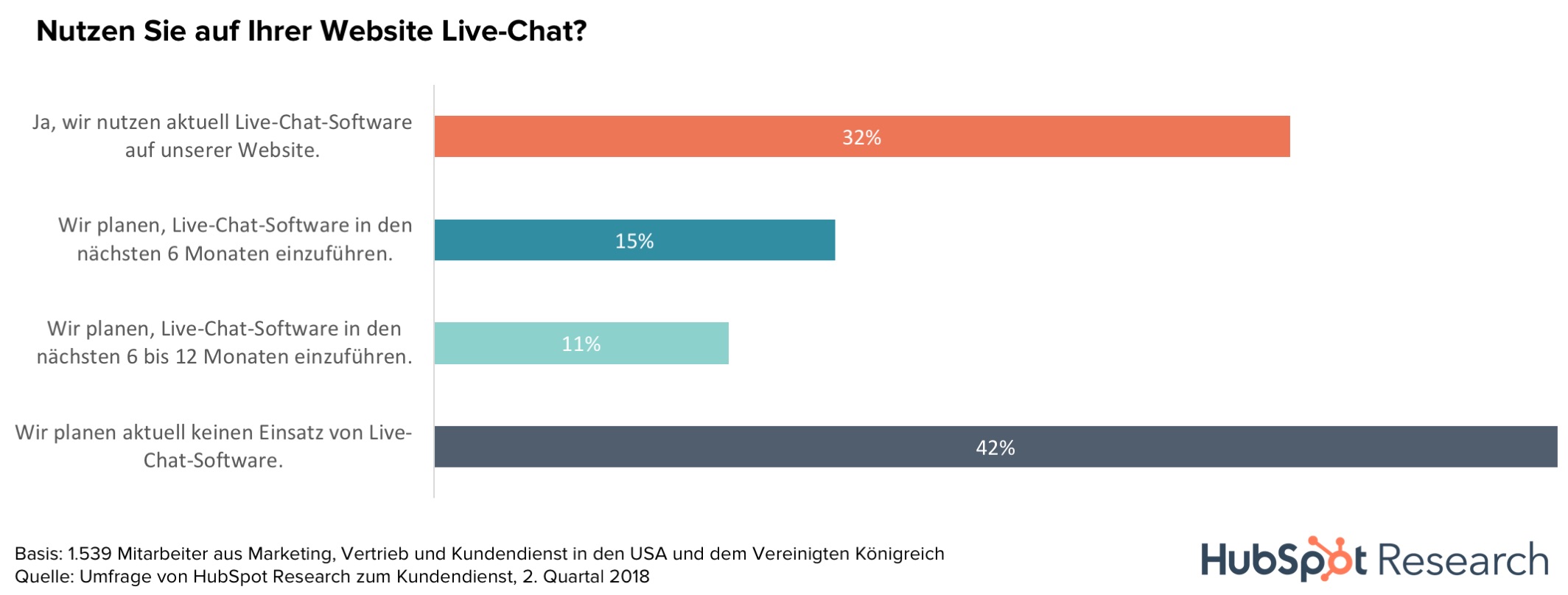
Around a third (31%) of the companies surveyed by HubSpot currently offer live chat on their website. Now that the first use cases are available and proven application scenarios have emerged, new companies are also venturing into the technology - a further 26% in total in the coming year.
Customer service most frequently responsible for live chat
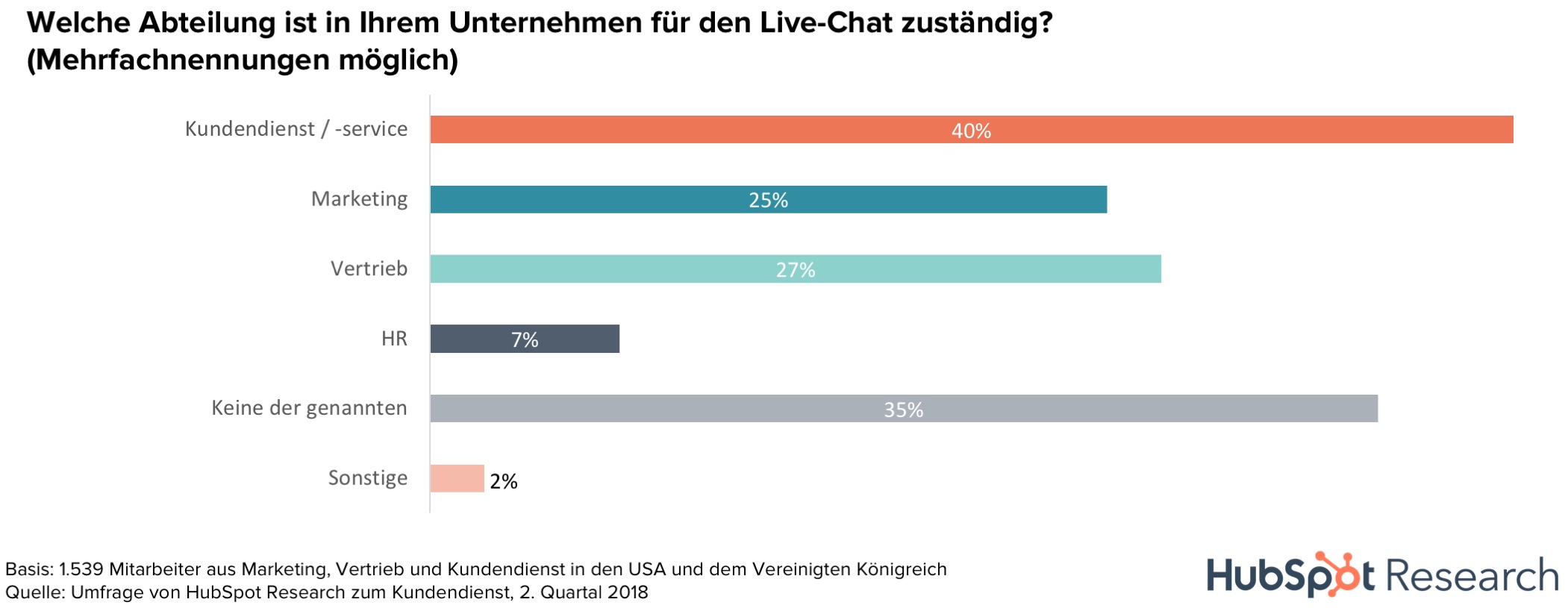
Live chat is currently primarily managed by customer service (40 percent), followed by sales and marketing (27 percent and 25 percent). However, the HR department is also responsible for the technology in a small number of companies (7 percent). Due to the strong allocation to individual departments, the overarching coordination of customer service, marketing and sales to address customers often suffers. There is still some catching up to do here in terms of uniform and prompt contact management via live chats.
"It is obvious that live chats are used first and foremost in customer service today and are also organizationally linked to it. After all, they offer an excellent opportunity for customers to receive support quickly and easily. Ultimately, however, companies should above all try to address their customers in live chat with one voice and prioritize support - preferably across departments in customer service, marketing and sales," says Inken Kuhlmann-Rhinow, Marketing Director EMEA, HubSpot
Today's customer does not wait
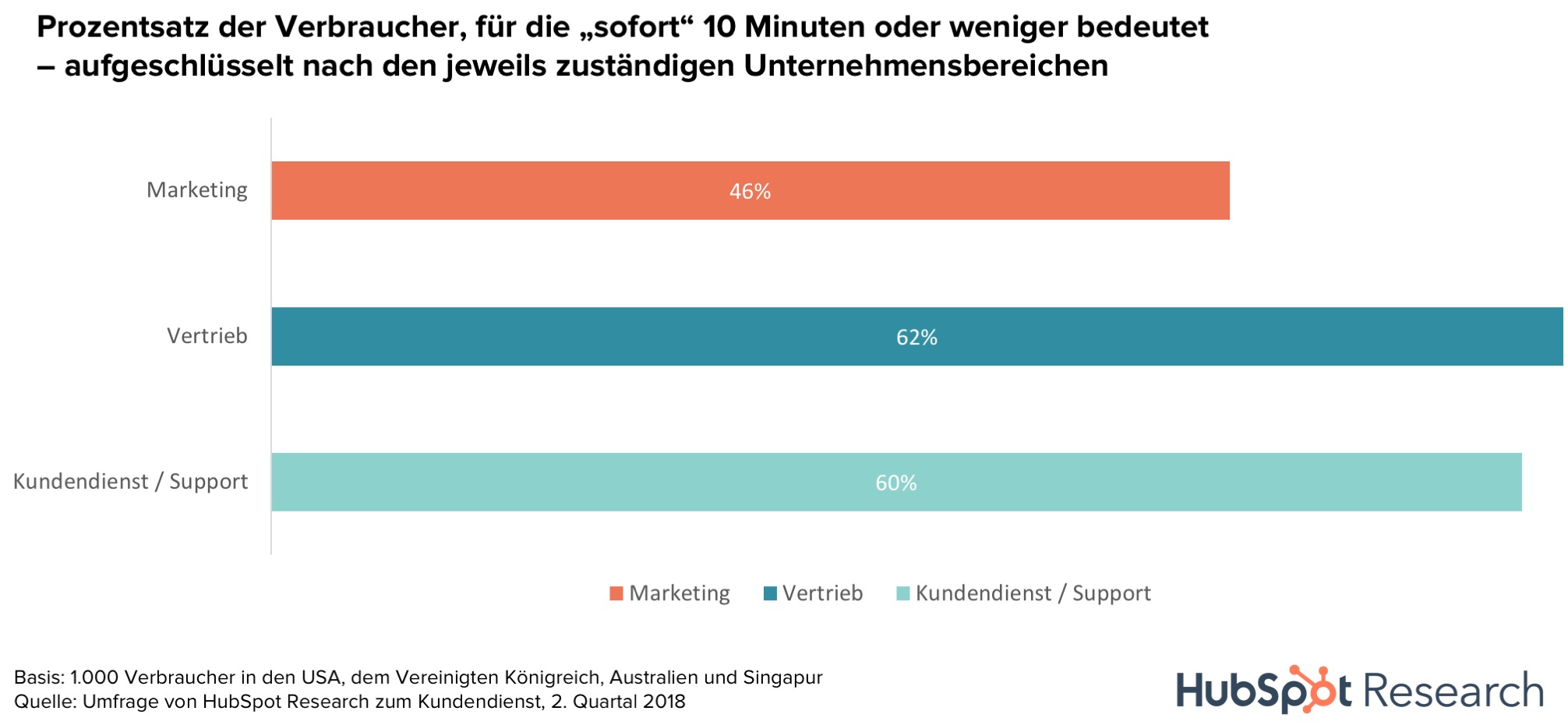
The latest HubSpot study also shows that customers have become increasingly demanding in recent years. In times of real-time availability via live chat, smartphone and the internet, consumers expect companies to respond ever more quickly. According to the HubSpot study, it is important or very important to 82% of customers that their questions to marketing and sales are answered quickly. 90 percent demand that customer support responds to their problems immediately. And for most consumers, "immediately" means "ten minutes or less".
A closer look at customer contact in support also shows that customers are becoming increasingly impatient and demanding. Customers are not only very frustrated by being put on hold (33%). They are also tired of having to explain their problem to every customer service employee (33%).
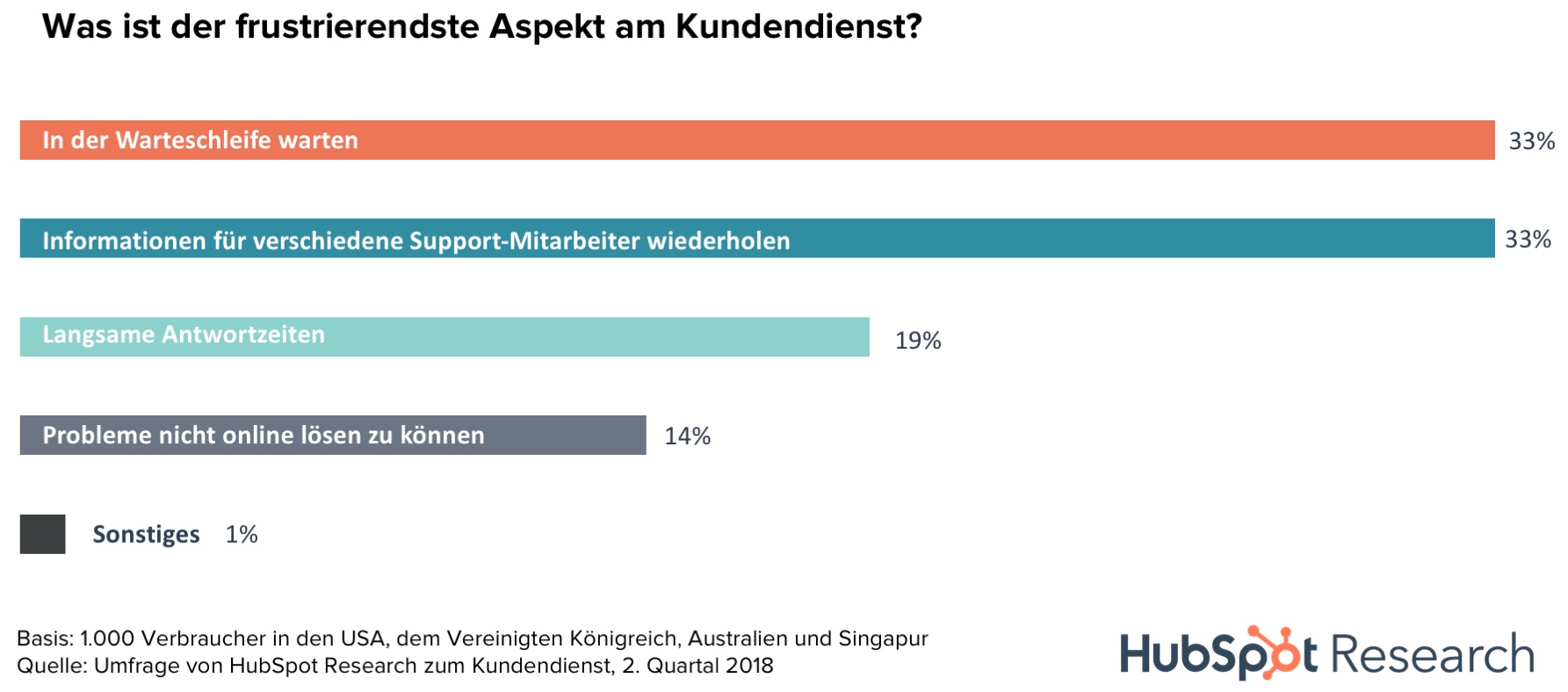
"Today's customers are more demanding than ever before. Companies should therefore do everything they can to satisfy them and solve their problems as quickly as possible. This is only possible if the employees involved in marketing, sales and customer service can access all relevant information centrally and are up to date when they speak to the customer. If the necessary data is not immediately available, the response time of less than ten minutes desired by the customer becomes utopian," says Inken Kuhlmann-Rhinow.
Poorly integrated tools jeopardize customer contact
Centralized data maintenance and fast access to up-to-date customer information are therefore basic prerequisites for live chats and other real-time communication tools to really lead to success. However, this is precisely where most companies still have a lot of catching up to do: Today, employees from marketing, sales and customer service sometimes spend more than 90 minutes of their working time per day searching for or updating customer data - valuable time that they lack in direct customer contact.
The great effort required to maintain the different communication tools becomes even clearer when you consider the various channels:
- In addition to live chat (22%), companies now use email (84%), telephone (75%), community platforms (37%), social media channels (35%), messenger (29%) and CRM systems (26%) to communicate with customers and interested parties.
- At the same time, employees communicate internally about prospects, leads and customers. They also use emails (83%), telephone (73%), CRM systems (25%) and community platforms (23%), as well as internal messaging apps (36%) and support tickets (3%). They also share information in personal conversations (22%).
More than 1000 employees from marketing, sales and customer service were surveyed internationally for the HubSpot study. You can download the complete edition here: Hubspot.com/live-chat-2018


