
m&k Why is sound branding becoming more important these days?
PHILIPP SCHWEIDLER Sound is a tool for brand management. But as with any tool, it must align with the brand, its values, and its goals—and, of course, be used deliberately. Oh, and Pavlov’s teachings apply to sound as well: Consistent application is half the battle. That’s the only way a brand can build audible brand equity over time.
What makes for good sound branding?
Conciseness, differentiation, and brand alignment. We need a system that addresses the challenges of fragmented communication mentioned above with flexibility in its application: principles instead of rules, inspiration instead of restrictions. This also includes curated assets that can be adapted to specific contexts. And an overarching narrative that makes the brand’s voice tangible and relatable.
What role does sound play in brand perception?
Because the brain doesn’t first process sound rationally, its impact is very quick and direct. The decision of whether a brand is perceived as approachable, high-quality, dynamic, trustworthy, calm, or bold happens within seconds and is usually subconscious—that’s the power of sound!
But not all brands have yet discovered the power of sound—or they underestimate it. Why?
Because many companies have not yet learned to treat sound as part of brand management, but instead view it simply as a production issue. The emotions this triggers, however, do not work in the brand’s favor and therefore do not generate any real value. Visual communication has a much longer history; it is well-established in many companies, with clear guidelines, budgets, and responsibilities. These structures are often lacking when it comes to sound.»
]]>
Willem Haen, 98 % of the Swiss population are familiar with your company. Could you describe Betty Bossi to the remaining 2 %?
Lars Feldmann Betty Bossi makes cooking and enjoying food easier. That is our core mission and the driving force behind everything we do: from inspiring recipes to kitchen appliances that bring joy to the kitchen, all the way to our food products.
Let's go back to 1956: How did Betty Bossi come to be, and what were the company's early days like?
Lars Betty Bossi was created as part of a commission from the Astra company to an advertising agency to market its products, such as cooking oils and fats. Copywriter Emmi Creola-Maag came up with the idea of doing this not through the newspaper ads that were common at the time, but through a cooking and advice magazine. Essentially, this was what we would call content marketing today. It took a great deal of persuasion on Emmi Creola-Maag’s part to get the agency to embrace this idea. This form of marketing, which was novel for its time, was initially met with skepticism. In hindsight, the success had many fathers—although, if you will, it was actually one mother.
Were there any defining or critical moments in the company's history? And even more interesting: How did you overcome them?
LARS There have certainly been several defining and groundbreaking developments in the history of Betty Bossi. One of these was the decision in the 1970s to transform what had been purely an advertising contract into an independent service. With the founding of a publishing house and corresponding business models—such as paid subscriptions and cookbooks—something entirely new emerged. That was certainly the first major shift. Then came the 1980s, which were also very exciting. That’s when the first kitchen appliances developed by Betty Bossi were introduced—initially through a separate company. The idea behind this was that people don’t just need products; they need solutions to the challenges of their everyday lives. This way of thinking also led us to begin developing fresh convenience products in 2001 in collaboration with Coop.
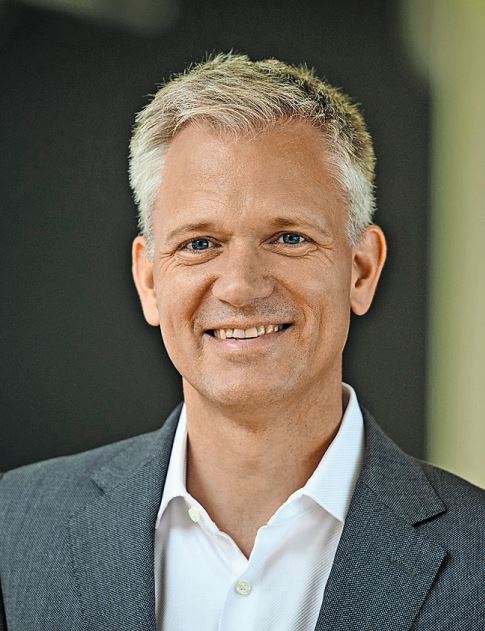
Is tradition generally seen as an advantage in your community?
Catherine Crowden Tradition is very important. If you grew up in Switzerland, Betty Bossi is part of the culture. Many people learned to cook with Betty Bossi and discovered the culinary world through her. Betty Bossi stands alongside many people in the kitchen. At the same time, she’s a fictional character. Many people think of her as: She’s my friend, my colleague, someone who’s there for me. That’s exactly what gives the brand its authenticity. She’s not just a made-up brand, but a personality with whom a genuine relationship has developed over decades. This credibility is a decisive competitive advantage for us, especially today, in the age of AI. We have a very high level of authority—not only in traditional SEO but also in GEO. This creates the conditions for our content to be visible in AI overviews and generative search systems and to be cited as a trustworthy source. There is so much content out there today—and so much of it is mediocre—when it comes to culinary topics. We, on the other hand, offer a credible and reliable anchor in everyday life. Tradition should never be merely a look back, but something we carry forward into the future. It’s like a vote of confidence.
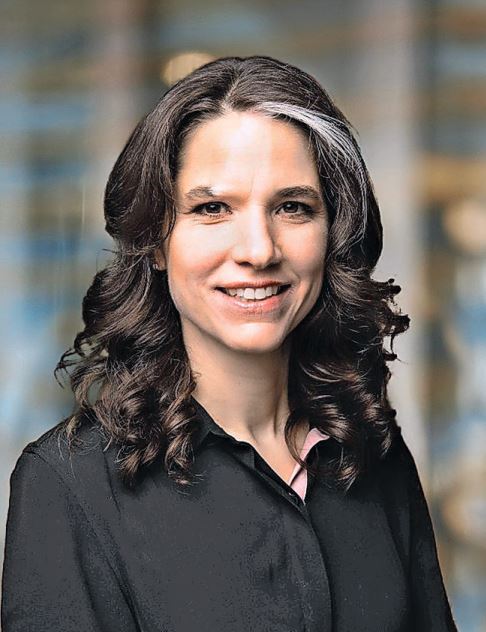
How do you strike the right balance between heritage and innovation to ensure that Betty Bossi remains relevant and exciting to your audience?
Lars In fact, our heritage is the driving force behind our innovation. A close connection to people has been part of our DNA from the very beginning. Even Emmi Creola-Maag wanted to understand what matters to people in their everyday lives—when cooking, eating, shopping, and enjoying food. And that’s exactly what’s constantly changing. That’s why we, too, must continually reinvent ourselves. We’re constantly challenged to develop innovative new offerings—especially when it comes to food. Our task is not only to understand what’s happening in Swiss households today, but also to recognize what might become relevant next. That’s why our teams travel internationally throughout the year. They observe culinary trends, discover new products, and draw inspiration from markets, restaurants, and cooking schools—from Seoul to Copenhagen.
Are there situations where you're almost too early to the game when it comes to a trend in Switzerland?
Catherine Yes, there are many wonderful anecdotes from the history of Betty Bossi. The tiramisu recipe, for example, is well known. When we first published this recipe in the Betty Bossi magazine, mascarpone sold out everywhere within a short time. LARS A major trend in recent years has been the air fryer. It was similar to when the microwave first came out: At first, many people weren’t quite sure what to do with it. That’s where Betty Bossi came in: with content, foolproof recipes, and, of course, the right kitchen appliances. That’s how we helped many people take the plunge into this new way of cooking.
Is Betty Bossi now «just» a name, or is there still a person behind it? If so, how do you use that in your communications?
Catherine Betty Bossi was, after all, a fictional character from the very beginning. Behind her was always a team of experts. Emmi Creola-Maag had three children and understood the struggles of her time: cooking was complicated. There were huge cookbooks with lots of text and few pictures. So her idea was: Let’s bundle easy-to-understand knowledge under the guise of a fictional character who stands by people like a friend. I think, fundamentally, it’s no different today. Our employees are passionate about solving our customers’ problems. Together, they embody Betty Bossi. In our communications, we rely on corporate influencers. We support employees from across the company in sharing their tips, tricks, and recipes in short videos for social media. This makes it clear that Betty Bossi is made up of many smart and creative minds.
Is the brand name preventing you from appealing to male customers as well? Or does it perhaps convey a message that you no longer want to communicate today?
Catherine Our mission isn’t to promote a specific role model, but to help everyone make their daily lives easier and more enjoyable. There are many different lifestyles and needs. What matters most to us is that we can say: It’s simple and guaranteed to work. This applies to everyone—regardless of who does the cooking. LARS I think that because the brand is so well-known and has been present in Switzerland for decades, it inspires a deep sense of trust. This trust is an incredibly valuable asset for us. It transcends generations and is independent of gender.
In an age when recipes are available everywhere, it's probably not easy to successfully market cookbooks. How do you handle that?
Catherine Trust plays a central role today, which is reflected in a quote from Greg Brockman of OpenAI: «Taste is the new core skill.» The word ’taste” refers not only to culinary taste but also to good judgment. And that’s exactly what it’s all about: the ability to select the right options from countless possibilities. That’s our job. We develop up to 3,000 recipes a year—and each one is cooked and tested multiple times before it’s published. When I look at a recipe on social media, on the other hand, I often have no idea if it even works. That’s exactly where the difference lies. LARS We critically evaluate every recipe: Does it really need all these ingredients? Can the recipe be simplified? We’re convinced that, even in the future, there will be people willing to pay for exactly this kind of high-quality recipe—in whatever form that may take.
Last November, the movie «Hallo Betty,» which tells the story of how Betty Bossi came to be, was released. What opportunities did it open up for you?
Lars The feature film is an independent production. The idea was brought to us by the Swiss film production company C-Films. We were thrilled. It quickly became clear to us: This is a once-in-a-lifetime opportunity. Virtually none of us were around 70 years ago. Exploring the story of Betty Bossi and Emmi Creola-Maag in this way was a real eye-opener for many of our employees. CATHERINE We all know the challenge: How do I balance work, family, and everyday life? That’s exactly the story the film tells in a very honest and touching way. That’s why we saw the film as an opportunity to introduce Betty Bossi to a younger generation. To that end, we pulled off an incredible amount: from a major brand campaign—in which we were even allowed to use scenes from the film—to very special experiences for our community: We were able to take customers to the film set, offer exclusive behind-the-scenes glimpses, and even raffle off extra roles among our fans. This created entirely new ways of engaging with the brand and many emotional touchpoints.
Let's look ahead: What should we definitely preserve? And where do you see a need to evolve or reinvent yourselves?
Catherine What we absolutely want to preserve is a genuine interest in people’s everyday lives. What do people like to eat? How can we bring that home in a simple way? Or how can we develop products from that which are accessible to as many people as possible? The challenge lies in consistently finding the right business models for these solutions. Throughout its history, Betty Bossi has repeatedly proven that it can reinvent itself.
What will be the key approaches and themes in marketing in the coming years?
Catherine What’s particularly on our minds right now is the topic of relationships. Further strengthening these customer relationships is at the top of our agenda. The key question is: How do we build genuine relationships in a digital world that’s becoming increasingly interchangeable? Topics such as community and personalization will play a crucial role in this. Our goal is to be a trusted companion in everyday life. We don’t want to sell individual products or services; rather, we want to offer an entire ecosystem of inspiration, knowledge, services, and products. Ultimately, trust is the foundation of everything. Only when people trust us are they willing to share information with us, accept our recommendations, and see us as a long-term companion in their daily lives. It is precisely this trust that we strive to earn anew every day.
1956 – One Year, Many Stories
What do an orchestra, a culinary company, and a watchmaker have in common?
They were all founded in 1956—and they remain relevant to this day. We at Swiss Marketing are also celebrating our 70th anniversary this year. For seven decades, we have served as a platform for professionals—a place for exchange, inspiration, and continuing education. Encounters, ideas, and experiences from the business world have shaped us and brought us to where we are today. But rather than celebrating ourselves, we’d like to turn our attention outward—to organizations that were founded in the same year and have, over seven decades, overcome challenges, continued to evolve, and maintained their relevance.
]]>At the Brand Day event organized by the branded goods association Promarca, the Swiss brand community gathered at Zweifel Chips & Snacks AG in Spreitenbach. A factory tour, expert presentations, an awards ceremony, and a surprising brand collaboration highlighted why authentic experiences, consistent brand management, and bold collaborations are becoming increasingly important, especially in the digital age.


Promarca: A Heavyweight with a Community Feel
When Promarca, the Swiss Association of Branded Goods, calls, the industry responds. This year, President Monique Bourquin announced a new record of 260 entries for Zweifel. The event was held under the annual theme «Brand Experience: Truly Analog and Intensely Digital.».
But Promarca is much more than just a platform for an annual get-together. Bourquin emphasized the association’s economic significance: Its 104 members and over 2,000 brands represent annual Swiss revenue of 14.5 billion francs, provide 30,000 jobs, and most recently invested 1.6 billion francs in sustainability projects.


Selfie Station in Spreitenbach
The m&k editorial team had the opportunity to experience firsthand what this experience means for both the mind and the heart during a factory tour. The production facilities in Spreitenbach vividly demonstrate what Swiss brand manufacturing means today: Here, people work with intense focus and remarkable precision to bring millions of chips of consistent quality to market every day.
The foundation for success is tangible. Potatoes—more than 90 percent of which are sourced from Switzerland—are quickly transformed into the products that have made Zweifel one of the country’s strongest brands for decades.
Roger Harlacher, Chairman of the Board of Directors at Zweifel Chips & Snacks AG, confidently states the company’s mission: «We do everything we can to make the best chips in the world.»

A particular highlight—one that fits perfectly with the current discourse on marketing, advertising, and creator culture—was the quality control process. At a sort of «selfie station,» every single chip is photographed and inspected for shape, color, and quality. During the tour, it became clear that Zweifel leaves nothing to chance—not even during this photo shoot.

Between the Digital Deluge and Analog Experiences
Two keynote speeches provided in-depth analysis, each approaching the same question from a different perspective: How do brands remain relevant in an era of constant digital information overload?
In his presentation titled «High Touch,» Dr. Thomas Deigendesch warned of the consequences of an increasingly digitized world. His central thesis: «The more digital and efficient everything becomes, the more valuable things that cannot be digitized become: time, quality, authenticity, emotions, and encounters.»

Artificial intelligence can create worlds, generate images, and simulate stories. However, the feeling of a historic place, a personal encounter, or a real-life experience cannot be replicated. Anyone who wants to build trust must remain authentic and deliver on their brand promises in the real world as well.
Perhaps the most compelling real-world example of this theory came, of all places, from a company that conducts nearly all of its business digitally. Martin Walthert, CMO of Digitec Galaxus, expressed a preference for surprisingly analog tools despite the company’s digital DNA. Printed brochures, TV commercials, and posters continue to play a role for the online retailer. At the same time, he called for more boldness in brand management.

The fundamental mechanisms behind successful brands have hardly changed at all. «Evoking emotion works, building associations… that’s actually very consistent,» said Walthert. When asked whether his recipe for success was more bold or measurable, Walthert replied without hesitation: «Bold.»
The Highest Honor in the Swiss Brand World
The «Promarca Brand of the Year» award was also presented that afternoon—an honor that Barbara Castegnaro described as a true «seal of approval.» The award focuses on the question of which brands are currently demonstrating the most momentum. The honor is based on a broad-based consumer study by Havas involving over 6,600 respondents. Adrian von Velsen, Chief Strategy Officer at Havas Switzerland, explained the methodology behind the Havas Brand Predictor. The focus is not solely on brand awareness, but on brand development.

«Has the brand gained in importance?» Today, a successful brand must meet functional, personal, and social needs in equal measure. This year’s ranking also yielded some interesting insights.
3rd Place: Oatly
Shortly after joining Promarca, the oat milk pioneer made it onto the podium. Sarah Dekthikyan explained the brand’s momentum this way: «We’re a voice for sustainability, and we also bring a touch of humor to our marketing.»

2nd Place: El Tony Mate
Intelligentfood’s Swiss mate brand celebrated a remarkable comeback. CEO Karl Schnyder attributed the success to the brand’s consistency: «We’ve stayed true to ourselves and remained authentic; we consistently embody the same passion, and we have a fantastic fan base.»

1st Place: Doubt
The crown went to the host for the second year in a row and the third time overall. Following victories in 2018 and 2025, Zweifel secured a historic hat trick with its third title. Serge Doutaz, CMO of Zweifel, attributes this success to the brand’s long-term management: «The consistency with which the brand is managed—with a steady strategy, broad relevance, and a steady stream of exciting innovations—is certainly the right approach.»


When Brand Magic Is Born in a Tube
The fact that this very spirit of innovation is constantly alive at Zweifel and that platforms like Promarca foster exchange was demonstrated by a story that was literally on everyone’s lips that day: the Zweifel-Thomy Tube. Conversations between the two companies led to a collaboration between two iconic Swiss brands. The result: a Thomy mayonnaise with the legendary Zweifel paprika seasoning. This collaboration exemplifies how modern brand management works. Not isolation, but openness. Not a competitive mindset, but collaboration. Or as they often say in the language of innovation: 1 + 1 equals 3.

Cedric Boehm of Nestlé Switzerland described the common ground as follows: «Both companies, both brands are committed to the very highest quality, and that’s where we found common ground. Two great brands, offering only the best for our consumers.» And when asked about the driving forces behind the project, Christoph Zweifel added with a wink: «The collaboration only works if both sides step on the gas at the same time.»
Chips, Chances, and Champions
Brand Day 2026 was far more than just an industry gathering. Between the production hall, the conference room, and the awards stage, it became clear what sets strong brands apart: consistency, relevance, and the ability to bring people together. Sometimes that happens with a major campaign. Sometimes with a perfectly seasoned chip. And sometimes with a tube in which paprika and mayonnaise prove together that one plus one really can equal three.
]]>

Milos Malenovic's departure was loud and ultimately inevitable. And yet it only explains part of what FC Zurich is dealing with in the winter of the 2026/2025 season. Because the real question is not why this collaboration failed - but why it was able to develop in this form in the first place.
This is where the story behind the image crisis begins. It is less about a person and more about a system in which management, organization and communication increasingly drifted apart. About a club that wanted to function in sporting terms without thinking about its brand. And about an open flank that did not arise on the pitch, but in the interplay of power, expectation and a lack of classification.
When trust becomes a currency
The transfer of Benjamin Mendy has accelerated this fragile situation. He acted as an accelerant in an environment that was already under tension. Not because football has to be moral - but because brands are based on trust. And trust is not built in fundamental debates, but in everyday life: with fans, partners, sponsors and employees.
To understand the significance of this decision, it is important to understand the context: French footballer Benjamin Mendy was charged with several counts of rape and sexual assault in England. The allegations related to alleged acts between October 2018 and August 2021, brought forward by several women. In court proceedings, Mendy was acquitted of all charges by a jury in 2023. The defense successfully argued that all sexual contact had been consensual. Mendy is therefore legally considered innocent.
However, this was precisely the communication challenge for FCZ. The club was not signing a player with sporting question marks, but a player with a highly charged public history. This meant that a sporting decision inevitably became a brand issue. Not because of the verdict, but because of the perception. And because FCZ did not succeed in clearly and credibly embedding this transfer in its own stance at an early stage, the club fell into a defensive explanation mode.
At a time when the club was already looking for direction, the Mendy transfer reinforced the feeling that sporting ambition, organizational culture and public image were no longer in harmony. The open flank was therefore less in the penalty area than in the club's self-image.
Behind the event: Why failure is systemic
The break with Malenovic was inevitable. But it doesn't explain anything. Because the real question is: why could a style that polarizes both internally and externally become so effective in the first place?
This is where the look behind the scenes begins. For years, FCZ has been strongly supported by individual figures - both financially and operationally. This has provided stability, but also created dependencies. Decisions were possible without necessarily being embedded in an overarching narrative. In such constellations, leadership quickly becomes power - and communication becomes justification. This is precisely where the flank opens up. Not on the left, not on the right in the square, but where claim and explanation are no longer congruent.
Leadership today means: being able to explain
Modern football clubs no longer function as one-man operations centers. They are complex organizations in which sporting, economic and communicative decisions interact. If you don't separate internally, you can't explain externally.
That's why FCZ is not just about new heads, but about architecture. It's about a management model that distributes responsibility, clearly assigns competencies - and thus creates calm. International role models have long relied on leadership teams instead of all-powerful sports directors. Not for reasons of fashion, but out of necessity. For a club with the charisma of FCZ, this is not a management gimmick, but brand work. A club that can explain why it does what it does becomes more accessible. For sponsors. For fans. For talents.
The Tararache moment - why experience makes talent better
Mihai Tararache joined FC Zurich in 2004. On a free transfer from Grasshoppers. An unspectacular transfer on paper - a stroke of luck in practice. Tararache was not a loudspeaker, not a symbolic player, not a marketing moment. He was something much rarer: a midfielder with a sense of order who not only stabilized a team, but made it better.
His strength lay less in individual moments than in the in-between: in positioning, in timing, in the clarity of his decisions. A high level of ball security, uncompromising ball recovery, game intelligence, authority - and an aggressiveness that never seemed hectic, but rather structured. Tararache took time out of the game when it needed it. And released the tempo when others were still sorting things out.
Above all, however, he created reliability. Players like Blermin Dzemaili and Xavier Margairaz were able to develop alongside him because they knew that there was someone playing behind and next to them who closed spaces, cushioned risks and took on responsibility. Tararache was not a mentor in the pedagogical sense - he was a point of reference on the pitch. Someone to whom the intelligence of the game could orient itself.
It was no coincidence that FCZ not only became champions during this phase, but also developed players who went on to have international careers. It was the result of an axis that saw experience not as a counterweight to talent, but as its amplifier.
The parallels to the present are obvious - not out of nostalgia, but out of logic. Today, FCZ once again has a remarkable generation of young players at its disposal. They take on responsibility early on, shape games and are the focus of attention. That's exactly why we need players who don't look for things themselves, but make decisions. They know when a risk is necessary - and when not. Tararache was not an effect. He was a player who made other players better. And it is precisely this type of player who decides whether talent grows or stagnates.
Squad planning begins in winter
In this light, squad planning becomes a question of leadership. Not just in the summer, when markets are overheated and options are shrinking, but in the winter, when direction is set. If you really want to promote youth, you have to give them a foothold. Not on the bench, but in the center of the game. The fact that under Milos Malenovic all talented players were given contracts for two to four years at an early stage is part of a fair balance. This planning security is a value - both in sporting and economic terms. It buys time. But time alone does not solve structural issues.
Data, AI - and the new sobriety in football
When budgets come under pressure, bad decisions become expensive. That's why technology is no longer an innovation toy in the modern club, but risk management. AI in scouting, in load management, in analysis - all of this serves one goal: less chance, more precision. Clubs such as Sevilla and Ajax show how data-based systems can help to objectify decisions. For FCZ, this would not be a break with its DNA, but rather a further development of it: recognizing, protecting and developing talent - systemically instead of intuitively.
Brand is not a claim, but behavior
In the end, everything leads back to the brand. FC Zurich is more than just a sports club. It is a city club, a projection surface, a place of identification. This is precisely why ambiguity has a stronger effect here than anywhere else.
Today, brands are not believed because they claim something, but because they act consistently. Reward logics, sustainability strategies, women's football - all these topics only pay off if they are not seen as an add-on, but as an expression of an attitude.
Women's football in particular shows the potential that lies here. The FCZ was a pioneer. Now it needs to professionalize. Not for image reasons - but because credibility comes from consistency.
Close the flank
The failure with Milos Malenovic was not an industrial accident. It was a warning signal. FC Zurich's open flank is not a tactical detail. It is the result of a lack of clarity between management, communication and the sporting axis. If you want to close it, you need more than new names. They need clarity and finally a shirt sponsor again...
]]>

Every customer journey consists of thousands of small text fragments. Some of them are visible - push messages or cookie notices - while others are only noticeable when it matters: reminders, cancellation confirmations, technical error messages. They all combine maximum reach with minimum attention. An auditory patchwork quilt.
And internally? Here, too, there is a proliferation of texts: onboarding guides, Slack announcements, notices in the canteen, even the farewell card in circulation. Each department writes for itself - there is rarely a real overall direction.
AI increases the blurriness
Generative AI models write quickly, formally correct - but probabilistically. They always choose the most probable word, not the most brand-typical word. This is precisely why chat responses, confirmation emails and app notifications will all sound exactly the same at some point. Without an explicit linguistic identity, AI does not multiply the character of a brand, but rather its arbitrariness.
From a sense of style to linguistic structure
Tonality guidelines often provide vague adjectives such as "fresh", "approachable", "competent". This is enough to create a feeling - but not enough to keep language digitally consistent. Because as soon as things get complex and detailed, language needs clear rules:
- Set speech modes (explanatory vs. activating)
- Define markers (preferred terms, typical formulations - much deeper than today's corporate wording)
- Set context guidelines (when which special features apply)
Only with such a structure can language be operationalized - for humans and machines.
Audit instead of gut feeling
The most important question: Where to start? By first making language measurable. A verbal identity audit collects real content from all relevant channels - from CEO circulars to internal notices - and evaluates it according to criteria such as comprehensibility, emotionality, differentiation and media adequacy.
The result is not a vague sense of style, but a clear language map. What characterizes the brand linguistically today? Where does the brand speak consistently, where does it fray? Only when this landscape becomes visible is it possible to control where the use is particularly effective.
Micro-touchpoints as a strategic lever
It's not just about individual microcopies. The principle is bigger: every word, no matter how small, conveys brand meaning, whether on the "Checkout" button, in email autoresponders or error messages.
The Deloitte/YouGov study "Excitement Points" from 2023 shows the impact of such micro-moments: if the proportion of positive interactions - so-called "excitement points" - increases by just one percentage point, the number of customers increases by 6.1 % and the recommendation rate by 4.1 %. So emotion beats function - and micro-touchpoints are the bottleneck of this effect. The fact is, the brand is created exactly where it is barely consciously perceived.
Why familiarity creates trust
The effectiveness of these micro-touchpoints is based on psychological principles such as the familiarity bias: What we see repeatedly and process easily, we consider to be trustworthy more quickly. In the Excitement Point study, needs such as safety and order dominate positive contacts across all sectors.
Consistent language fulfills exactly these needs - it reduces cognitive friction and lowers perceived risk.
What this means for teams
This means three things for marketing and product teams:
- Make all text sources visible, even the supposedly unimportant ones
- Prioritize clearly, consider the reach and risk of all content
- Condensing rules and coding language so that humans and AI can implement them
Only then should you add AI.
The shadow zone is therefore not a peripheral area of brand management - it is its foundation. Those who lead consistently here create a subtle but powerful advantage. After all, genuine brand identity is not reflected in big promises, but in every single line of text. Especially when nobody is looking.
* Julius Jäger is Executive Strategy Director at Jung von Matt Brand Identity. In the interview with m&k, he recently revealed how important a clearly defined verbal identity is for a brand, especially in times of artificial intelligence. In his exclusive guest contributions, he discusses the measurability of language and the importance of a "prompt economy" in greater depth.

In the videotalk with m&k advertisingweek.ch On stage at the Swiss Brand Congress at the Dolder in Zurich, Tobias Bachmüller, Managing Partner and CMO of Katjes, explains the company's marketing strategy. Inspired by the quote from Carlo Ancelotti, currently the most successful football coach in the world, that football consists of defence (organization) and attack (talent and creation), Bachmüller transfers this concept to marketing.
Katjes sets itself apart from the competition by completely avoiding gelatine and using starch instead. This "defensible characteristic" starts in the factory and is communicated positively to consumers without relying on shock images. Instead, Katjes emphasizes the value of every life and relies on cheerful, positive advertising messages with animal motifs.
Bachmüller emphasizes that creativity is encouraged by simple, clear messages - at Katjes, this is the word "vegan". In the digital marketing world, Katjes makes heavy use of social media such as Instagram and TikTok to attract the attention of the target group with interesting content.
One bold example from the poster advertising was the depiction of a Muslim woman, which caused discussion. Another poster showed a 107-year-old woman with the message "Every life is valuable", which also sparked a lot of discussion, but was largely received positively.
Katjes is also present at important events on television, for example with an advertising spot during the opening match of the European Football Championship between Germany and Scotland. Bachmüller emphasizes that such events offer an opportunity to reach a broad target group, even those who do not normally watch linear television.
In conclusion, Bachmüller emphasizes that he himself has learned a lot at the Swiss Marketing Congress thanks to presentations by Weleda, On and Switzerland Tourism and appreciates the event as it promotes the exchange of knowledge and experience.
]]>
m&k Werbewoche.ch: I have just been able to visit the Victorinox production facility here in Ibach, under the expert guidance of Hans Schorno. It was a great experience. I saw a poster saying "Employer of the Year 2024". Ms. Elsener, how do you become Employer of the Year?
Veronika Elsener: I don't think this is something that can be created at the touch of a button. There is a development behind it, there are values and leadership work behind it. In this sense, I believe that an important aspect is of course the family that stands behind this company, has shaped it and acts with foresight and for the long term. There are many family businesses like this in Switzerland. We have changed a lot in recent years in the wake of all the developments, strategies and globalization and are constantly working to ensure that our employees have a secure workplace. We have created various aspects to be an attractive employer.
What is the DNA of a family business to ensure its continued existence?
These values are very important and shape the company and its entire development from the very beginning. Family values are already geared towards the long term per se. I would also say that the environment here is formative. I call it a genius loci, a place of power, characterized by tradition and history. Such environments also produce special people who are committed and loyal and want to do a good job. I believe this is an important basis for Victorinox's success. And, of course, taking nothing for granted. You have to constantly work at it and be prepared to go along with change.

Her LinkedIn slogan is: "My Passion is Brand and Thought Leadership". Ms. Elsener, could you tell us more about your management style with regard to innovative thinking? Perhaps using an example from your day-to-day work?
Openness and courage are important values. We empower our employees through training, workshops and further education as well as the use of new methods, tools and resources. We discuss lessons learned from projects in internal retrospectives and integrate them into future projects. Our internal learning platform enables our employees to further their education in relevant topics. We are currently working intensively on agile organization, design thinking, AI and data-driven technologies. We are anchoring these topics through internal workshops, for example to further strengthen knowledge and commitment to the brand, to become more efficient and effective in our marketing activities or to use AI in campaigns. Constant change is part of our everyday life.
Is there a specific moment, a characteristic that is an expression of your very personal leadership style?
I believe that openness and the courage to try new things are characteristics that have always accompanied me. They allow me to engage with new topics and areas, take them on board and then develop them further together with the team.
And how would you define your passion for brands?
Strong brands are a company's most valuable asset. They create trust and orientation. Brands must be built, maintained and permanently anchored. Investments in intangible brand value are just as important as investments in equipment or production facilities. Brand management is in a state of constant, careful change. For my team and me, this is an exciting task that is associated with a great deal of passion. Over the last few years, I have been able to acquire knowledge and experience in the field of brand management and marketing.
How would you describe the Victorinox brand essence?
This year, we launched our refined brand strategy and defined our brand essence as follows: «We believe that being prepared makes life better. As the manufacturer of the original Swiss Army Knife , », Founded in 1884, we remain true to our heritage by offering well-thought-out and masterful solutions so that our customers are always fully prepared for their everyday challenges."
Can you still remember your first experience with a Victorinox gadget?
In my childhood, I had my first encounter with the "pocket knife", as we call it in Switzerland, through my father. He always had one in his trouser pocket. As a child, I noticed how omnipresent the product was in his everyday life and how he always stroked the knife bowl with a special gesture after use.

Which is your favorite blade on the classic folding knife from Victorinox?
I don't have a particular favorite tool. The well thought-out thing about the Swiss Army Knife is that it combines a variety of useful tools - and I particularly appreciate the versatility and multifunctionality of the Swiss Army Knife.
Outside of your professional activities, you show an interest in music, literature and sport, activities that you prefer to enjoy with your family or friends. To what extent are your personal interests reflected in your everyday working life?
Activities such as sport and hiking are important to me for relaxation and regeneration alongside work. They help me to maintain a good balance. Maintaining contacts, building relationships and drawing inspiration from experiences outside of work - all of this consciously influences my professional activities.
You are not only CMO of Victorinox, but also a member of the Executive Board. Where do you see yourself particularly challenged as CMO at the moment?
We face a variety of challenges in marketing. These include the increasing number of communication channels and the extensive volumes of data that we have to deal with. The automation of marketing processes and the explosion of the marketing system landscape also pose significant challenges. In addition, we are observing increasing consumer power and changes in customer behavior. In general, we are experiencing a virtualization of companies, products, services and performances. Last but not least, artificial intelligence is also playing an increasingly important role. All of these topics require an open mindset from management and my team. There has to be a willingness to constantly question the status quo.

Are you ever afraid of missing the boat?
Anyone who has grown up in Switzerland and witnessed the country's transformation and the agility of the economy has already been given a strong foundation. This creates confidence in one's own self-efficacy and helps to master difficult moments.
And where do you see yourself particularly challenged as a member of the Executive Board?
To be successful globally, we need to understand the different product categories and adapt to cultural, economic and legal differences. Efficient supply chains, talent management, innovation and sustainability are crucial. Not to forget Risk management. Our Swiss company, which exports 80 percent of its products, is struggling with the strong Swiss franc. Implementing price increases in saturated markets is an extraordinary challenge. We have to carefully monitor our costs on site and invest in automation at the same time. Operating globally in five industries requires in-depth industry knowledge. In summary, we find ourselves in an area of tension between changing customer needs, increasing competitive pressure and new technologies, while at the same time response times are decreasing.
In 2022, you and Victorinox won the gfm Marketing Award. The long-term focus on the well-being of employees was also emphasized. What specific steps are you taking to position Victorinox as an attractive employer, especially for young people?
People are very important to our company. We are a family business that takes a long-term and far-sighted approach. We offer our employees flexible working time models (annual working hours, flexitime, home office, holiday office) that give them a lot of freedom in their personal life situations. We strengthen the sense of community with various initiatives. We are active in promoting health. We also support personal development with a range of measures. Employees can actively contribute to ideas management. As you can see, we basically use similar resources to other companies. I believe the difference lies in our character as a family business.
The Marketing Award also recognizes innovative marketing strategies and effective measures. What would you highlight as particularly innovative in your marketing strategy?
Our marketing strategy is based on our enhanced brand strategy, which is geared towards the basic emotional needs of our customers. We address these needs in words and images to strengthen the connection with our current and potential customers. In doing so, we not only focus on product features, but also rely on digital measures and artificial intelligence.
And which measures are particularly effective?
For us, the most effective measures are those that best convey the added value for the respective target group. We differentiate between longer-term measures to strengthen brand and/or category awareness - where the focus is on emotional fit and relevance for the target group - and short-term measures with high efficiency. The latter communicate added value via a message that can be grasped quickly and are placed at the right touchpoint of the customer journey. In addition, the efficiency of measures in the area of luggage that are played out with an affinity for time, content and touchpoints shows us that cooperation is an increasingly relevant part of our marketing mix.
Victorinox takes Swissness out into the world. How should companies today use Swissness as a driving force for their marketing activities? What advice would you give to start-ups in particular?
Start-ups should consider whether the Swiss Made label offers an advantage for their company. Depending on the effort and costs involved, it may be worth investing in Swiss Made in order to strengthen the brand image through positive attributes. Competitive advantages of Swissness/Swiss Made can be: precision, reliability, quality, stability, fair conditions, tradition & exclusivity, trust. These attributes must be supported by an action plan and proof points and not remain empty words. The entire company must support and implement this. It is also important to bear in mind that Swissness and Swiss Made are regulated by law and stipulate what percentage of manufacturing costs must be incurred in Switzerland. These laws give the Swiss Made seal its value and its positive attributes.

According to the Brand Asset ValuatorIn addition to Swissness, cocooning has also emerged as a success factor in a long-term study by Ogilvy and Wunderman Thompson. This refers to a return to the familiar and the tendency to spend more time at home. How do you anticipate such trends if they are relevant to your brand?
In recent years, we have repeatedly taken measures to track global trends in the various categories. To this end, we have set up a small, fine internal Consumer Insight department. In addition, our employees are continuously guided by various trend platforms, as well as our internal newsletter in this area. We also receive market trends from our most important markets. We have also established an innovation team and are working on building a community platform. It is important for us as a company to understand consumer trends and examine how they fit in with our business and brand strategies.
A community platform sounds interesting. Can you say two or three words about what's already ripe for discussion here? Are there any influencers?
Veronika Elsener: Yes, this term can of course be broadly defined. We can see from the various forums and all the feedback from our customers on various communication channels that there is a real need to exchange ideas with us. We have therefore decided to offer such a community platform. We have now laid the foundations with the new website and the technology with which we can connect such a community.
Is the aim of this community platform also to generate ideas for new products?
Absolutely, that is already happening, even if less so with a targeted platform or process. We are already receiving ideas and suggestions. With this platform, however, we can collect them in a much more targeted way.
Victorinox is known for its successful brand collaborations, such as with the Felchlin chocolate brand. What role do such collaborations play for you?
Sponsoring and brand partnerships are part of our marketing mix in all relevant Victorinox markets. For the past four years, we have been pursuing a strategic orientation at global, national and regional level. We link all commitments to a specific product or product group to ensure a clear focus. We are increasingly focusing on global partnerships and cooperations. With Adidas, we developed a sneaker and a matching pocket knife, which opened up new target groups for us. We created a limited edition designer pocket knife with Off-White and Virgil Abloh. These collaborations position Victorinox as a modern global brand. In the future, we will increasingly focus on long-term partnerships and product developments such as the license partnership with Flechlin for our chocolate knife.
In Promarca's "Brand of the Year" ranking, you take 10th place and are recognized as a trustworthy brand that does not come from the Food & Beverage sector. Nevertheless, you were still in second place in 2020. How do you keep the brand attractive for the next generation?
We are delighted with our 10th place and that our customers consider us trustworthy. Trustworthiness is the basis of every brand! The drop in the ranking could also be due to the fact that we invested less in marketing during the pandemic and were therefore less present. To remain relevant for future generations, we follow trends, listen to customer feedback and invest in suitable product and service innovations.
How strongly is AI represented in Victorinox's marketing?
At Victorinox, we took measures early on to successfully integrate AI. In 2023, we established an internal AI policy and an AI committee to safeguard the potential benefits of AI while ensuring an ethical framework. AI is already being used in numerous marketing tasks, such as content generation, translations, copywriting, social media, headline testing and much more. AI will have a major impact on marketing by automating tasks, providing insights and improving personalization. It does not replace the marketing team, but augments their capabilities and creates a kind of symbiotic relationship between human creativity and technology. This opens up opportunities for more personalized and differentiated customer interactions, automation of repetitive tasks, effective customer segmentation and personalized marketing campaigns.
You have recently Brand positioning and are focusing entirely on the idea of being prepared in a new global brand campaign developed with Publicis. What is the main objective of this positioning?
We want our customers to always feel optimally prepared with our products - be it with our pocket knives, kitchen knives, watches or our luggage. We also want to convey this feeling in our communication. You never know what life will bring, but you can make sure you are prepared for anything. At Victorinox, we have made it our mission to prepare our customers for everyday challenges with well thought-out and masterful solutions. This positioning is relevant to our customers and is based on their needs, our beliefs and our heritage.
"Treat everything with the highest care" is the message in the brand film, which also features the Travel Gear, Swiss Army Knives, Cutlery and Watches product segments. What is behind this message?
With this we want to express that we act with attention to detail and always strive for perfection. Our products are carefully designed to fulfill their purpose perfectly. We strive for excellence and focus on uncompromising quality and precision.
On LinkedIn, you mention your ability to analyze complex issues, solve problems in an agile way and make difficult decisions to move forward in the areas of brand strategy, marketing and digital commerce. Can you tell us about your most difficult decision-making moment so far and what impact it had?
Building up the brand management and marketing division at Victorinox has really challenged me at all levels in recent years. My magic word is: focus. I had to decide time and again what was important for the company and the brand and what was not. Perhaps the most important moment for me was when, after careful analysis, I proposed an organizational change in 2017, which consisted of moving from a divisional to a functional organization. This paved the way for consistent brand management globally and, in retrospect, I consider this decision to have brought success to our company.
Werbewoche.ch: Where do you get inspiration for your own creativity?
I think it's a mix of different activities. It's not always important to actively do something. Sometimes it's just necessary to have time to think, read a good book or visit a museum. These are certainly sources of inspiration for me.
Do you have a special story from a customer in connection with one of your Victorinox products?
Veronika Elsener: Yes, there was a concert in the concert hall in Sydney where a pianist told us that his sheet music slipped into the grand piano just before the concert was due to start. He had a Swiss Army Knife with him and was able to open the part of the piano and get the sheet music out so that the concert could begin. This is a nice story that shows that with our products, such as the Swiss Army Knife, you are always well prepared, no matter what happens.
That's a nice story. In the movie "Armageddon", the Victorinox logo can be seen on the drill used by Bruce Willis' team to drill a hole to blow up the comet hurtling towards Earth. How did this come about?
Veronika Elsener: That was many years ago. As far as I can remember, our branch at the time was involved in targeted product placement.
Werbewoche.ch: Wow! Yes, a masterpiece!
Yes, you said it. Very good. It's surprising that you were able to retrieve that now.
I've seen the movie umpteen times. After all, it saves the world. That's what you like to see. And Victorinox in the middle of it all.
Thank you very much.
Thank you very much for the interview.
]]>

Trust is an omnipresent and ubiquitous construct. Whether self-confidence, trust in other people or in basic processes, for example in a professional context: without trust, our everyday lives would be impossible. Trust is also essential in purchasing situations, which often go hand in hand with a decision for or against a brand. "The only relevant emotion in relation to a brand is the trust of its customers," says German brand sociologist Dr. Arnd Zschiesche in his book "Trust - the hardest currency in the world".
Every form of marketing communication therefore has the sole purpose of reaffirming this trust again and again. Campaigns that do not take this principle into account and decouple themselves from the performance of a brand can therefore be counterproductive. Especially in marketing communication, any deviation from the familiar image learned by the viewer confuses customers and their trust, especially when it comes to a beloved brand.
How well a brand succeeds in strengthening a positive preconception of its own performance is shown by the level of trust that people have in it.
Transa: Comparatively little known, but enjoys a lot of trust
225 brands are permanently held up to this mirror in a measurement by the market research company Link. These brands, measured in the Swiss Brand Observer, represent a large proportion of the most relevant brands in the Swiss brand landscape, but are not exhaustive, as a total of over 500,000 brands were active in Switzerland at the end of 2022.
For the analysis, the self-reported brand perception of the population from the first ten months from the beginning of January to the end of October 2023 was taken into account. Most brands have a data basis of around 11,000 interviews - for a minority of brands, however, the particular trustworthiness and other key figures have only been measured since their inclusion in brand tracking in June 2023. In these cases, slightly fewer than half of the people were interviewed. As part of the interviews, people who recognize a brand based on its name and logo were asked whether they consider a brand to be particularly trustworthy (yes vs. no).
Just as there are differences in the individual perception of brands - especially in the case of polarizing brands - there are certain tendencies and therefore exciting differences between different population groups. The relative trust scores were calculated for the trust values shown here. The trustworthiness of a brand was assessed in relation to its awareness. Less well-known brands can therefore perform better, even if they are considered trustworthy by fewer people in Switzerland in absolute terms, as they are (still) less well known. For example, the outdoor brand Transa is only known to 39% of the population, which means that only 17% of the Swiss population consider it to be particularly trustworthy. However, in relation to familiarity - the 39% mentioned above - these 17% have a relative trust score of 42%, which puts Transa in 20th place out of 225 in the ranking of particular trustworthiness.
French-speaking Swiss and motorists place particular trust in the TCS
One of the brands that particularly stands out in the ranking is the Touring Club Switzerland (TCS). TCS is headquartered in Vernier, Geneva, and proximity creates familiarity - a prerequisite for building trust. It is therefore not surprising that TCS came second out of 225 brands in the trust ranking (relative to brand awareness) in French-speaking Switzerland, where it is rated as more trustworthy than in German-speaking Switzerland. In both German-speaking and French-speaking Switzerland, supported awareness is around 92 percent, but more than one in two people in French-speaking Switzerland consider the brand to be particularly trustworthy, while only one in three people in German-speaking Switzerland think so (27th place). Overall, a difference can also be observed between car owners and people without a car: People who own a car trust the TCS significantly more often than people who do not own a car. This applies both in French-speaking Switzerland (at a higher level) and in German-speaking Switzerland. Unfortunately, there is no data available on how many of these people are also members of TCS.
In addition to TCS, Cailler is another brand in the top 5 (51%) in French-speaking Switzerland that has significantly lower relative trust ratings on the eastern side of the Röstigraben (only one in three people). The Nestlé chocolate brand also has significantly higher ratings among the over-60s than among 15 to 29-year-olds (44% vs. 32%). In French-speaking Switzerland, there is also another brand that unexpectedly appears in the top 10: Outdoor specialist Bächli Bergsport, which only has a branch in Conthey and Lausanne in the French-speaking half of the country. However, the still rather small number of connoisseurs (16 percent) in French-speaking Switzerland have strong confidence in the brand, and the sports outfitter also achieved a good result in Switzerland as a whole in 24th place. Alongside competitor Transa and the still young Lenzburg brand Nikin, Bächli Bergsport is the only brand with a supported awareness of less than 40 percent that is particularly trusted by at least 2 out of 5 people.

Young women only trust Migros more than Nikin
The young Nikin brand is particularly noteworthy; only founded in 2016 - and therefore still very young - the brand is already familiar to 30% of the Swiss population, and even every second person under the age of 30. Two out of three young women aged 15-29 are at least slightly familiar with the brand, and around half of them consider the brand, which plants a tree for every product purchased, to be particularly trustworthy. In addition to the "big players" Migros (1st place) and Coop (3rd place), SBB and Twint are also in the top 5 for trustworthiness among 15 to 29-year-old women. Two other brands from the Migros universe appear among young men: Galaxus and Digitec.ch, which are particularly trusted by one in two in this socio-demographic group. Nikin does not rank quite as high here, but is also in the top 15.
At the other end of the scale, young people - regardless of gender - are familiar with brands such as Credit Now, AliExpress, Wish and Teleboy. These brands are also familiar to around half or more of those surveyed, but hardly anyone associates them with a particular level of trustworthiness. Across Switzerland as a whole, the brands Uber and Uber Eats, furniture retailer XXXLutz and the relatively new insurance brand Smile also share the fate of being known by at least one in two people, but only trusted by a fraction (maximum 4 percent of those in the know).
These brands are united by the fact that they have either not existed for very long (in Switzerland) and/or are not typical Swiss brands or are not perceived as such. This is because the higher the perceived Swissness of a brand, the higher its trustworthiness. The following scatter diagram clearly shows this correlation between relative trustworthiness and relative Swissness - i.e. in relation to awareness - but makes no claim to causality. For the keyword "Swissness", the AI software Neuroflash finds the associations "mountains", "chocolate", "watches", "punctuality", "banks" and "neutrality", among others. Typical prejudices that should come as no surprise to anyone - and a prejudice is harder to split than an atom, as physicist and Nobel Prize winner Albert Einstein once noted.
A brand would therefore do well to confirm its positive preconceptions with its (potential) target group again and again - boring, but effective. But: If Swissness is not associated with the brand (i.e. does not represent a positive preconception of the brand) or is not part of its brand essence, you should think carefully about whether communication should be geared towards it. After all, a (positive) preconception is not only harder to split than an atom, it is also hard work to build one.

The methodology of the Swiss Brand Observer
- Study: Swiss Brand Observer - continuous brand tracking (365 days per year)
- Population: Swiss resident population aged 15 to 79 years
- Sample size January - October total: approx. n = 10,500
- Confidence interval for total sample: max. +/- 1%
- Research method: online interviews
- Quotation/weighting: interlocked by age, gender and language region
- Random samples from the Link Online Panel actively recruited at 100% through representative telephone surveys, reaching more than 97% of the relevant population; survey participants are excluded from follow-up surveys for at least three months at a time
- Survey period: 01.01.2023 to 22.10.2023
- Further sources: Brand-trust.de; Zschiesche, A. (2021). Trust - the hardest currency in the world. Gabal publishing house
- Contact person Link Zurich; Matthias Biedermann, Research Consultant
Advertising Week: How is your travel business doing?
Nicole Pfammatter, CEO of Hotelplan Switzerland: Business is very good. The Swiss people are having fun and are looking forward to going on vacation again.
How do the new market players like Booking.com influence Hotelplan?
They are our competitors. They challenge us and motivate us to constantly improve. We work on this every day, whether on our website, in our call centers or in our 82 stores.
Hotelplan also enables trips to the Metaverse. Could you tell us more about this?
Yes, we have a Metaverse world in Spatial where we hold customer events. But mainly we also use it for training our employees. Currently we offer Greece, southern Africa and London as city trips in these virtual worlds.
What is your advertising focus and what media do you use?
Our focus is actually on online advertising at the moment. Search Engine Advertising is an important topic, as is SEO. At the same time, it's extremely important for us to combine this with offline media. A large proportion of our ads appear in the Sunday newspaper, as this is the day when people are most concerned with vacation planning.
What role does creativity play in your marketing strategy?
Creativity is gaining in importance again. In recent years, we have focused strongly on sales. But we are thinking about how we can also reach younger target groups in order to build long-term customer relationships.
As a CEO and former CMO, what do you consider to be the most important characteristic of a CMO?
The most important characteristic of a CMO is an understanding of our customers' needs and the ability to connect this to our brand in a creative and appealing way. But especially in the travel sector, it is also crucial to offer attractive prices and products.
Today's panel is called "Inspire". Where do you get your inspiration and ideas?
I have a large network from which I draw a lot of inspiration. I travel a lot, also abroad, to meet partners, talk to hoteliers and airlines and find out what's happening in the world and get inspired.
Thank you for your insights, and we look forward to seeing where your journey with Hotelplan takes you.
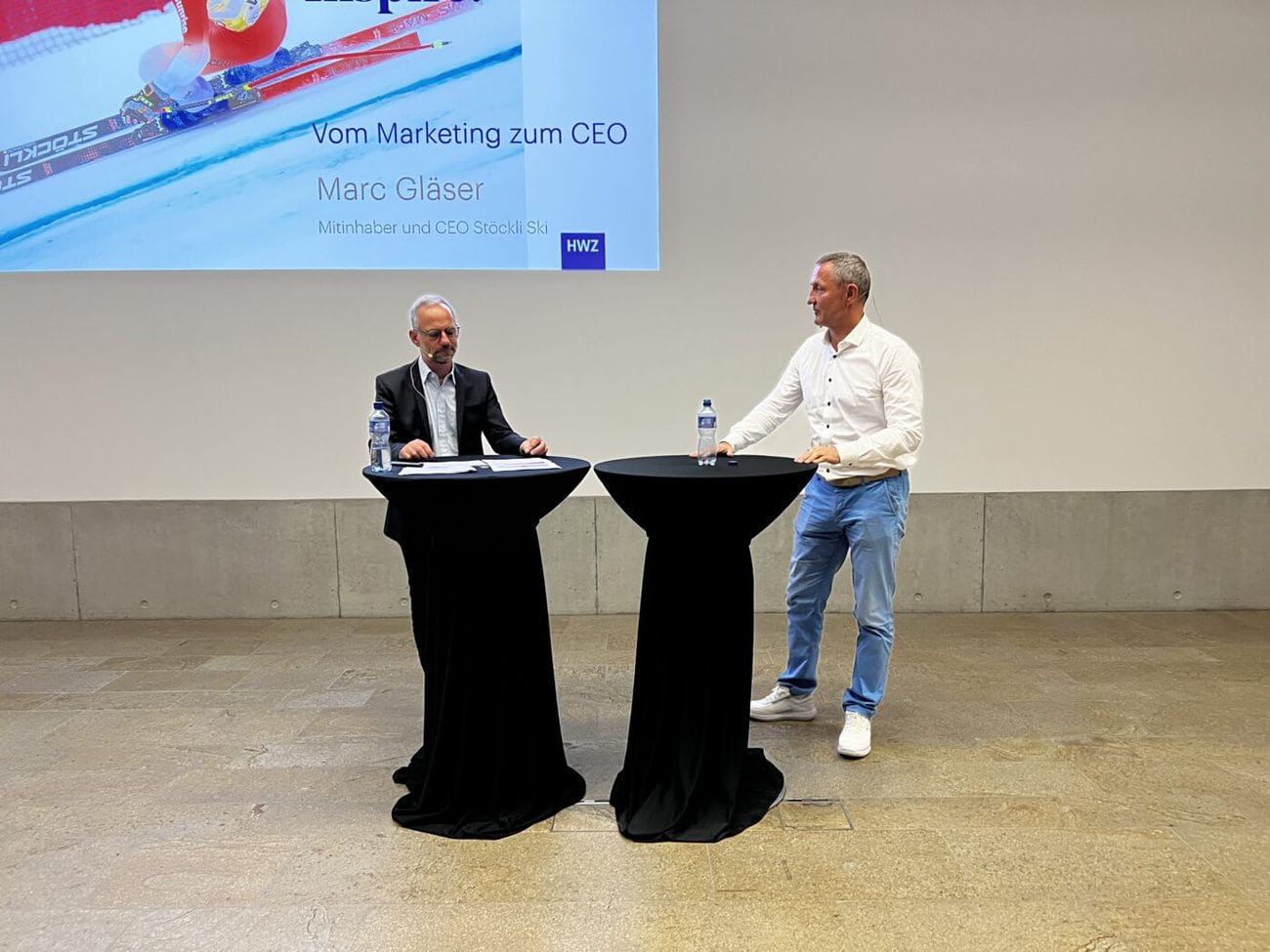
Marc Gläser, you were appointed CEO of Stöckli in 2014. Why did they choose you?
Marc Gläser, CEO of Stöckli Ski: I am a brand management expert with international sales, production and product development experience. These qualities were probably the deciding factor.
You also shared your vision with Stöckli Ski today?
Yes, our vision is to become the best ski brand in the world.
What attributes distinguish the Stöckli brand?
I think they are very powerful, versatile and precise skis.
What do people communicate when they wear Stöckli skis?
That is a good question. I think they are expressing that they are experts and lovers of skiing and that skiing is of great importance to them.
Stöckli is a premium brand. What is the biggest danger that a premium brand should avoid?
The biggest danger is to devalue the brand through discounts and rebates.
Demand for Stöckli products exceeds supply. How does that influence your marketing?
This means that we have to be very strategic, as it is not necessary in the short term when we are sold out. Our efforts are focused on high-quality marketing. Of course, we continue to carry out promotional activities, especially at retail and in our own stores. But we also want to prepare ourselves to be better equipped for the future when demand declines or when we can expand our capacities.
Which brand do you consider a role model for Stöckli?
Rolex, Apple and Porsche are definitely role model brands. They do almost everything right. Thank you very much for the interview, and I hope you have a great ski season with lots of snow.
Thanks for the insights and have a good season, with hopefully lots of snow soon.
That would be great, thank you.
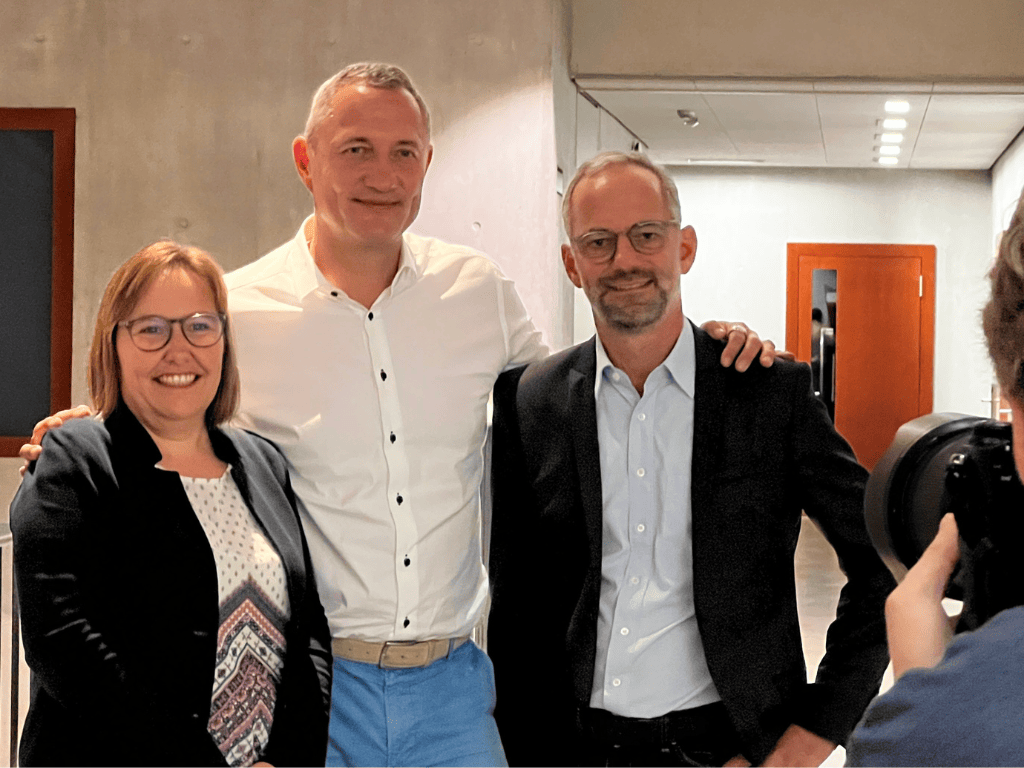

Marc Gläser has been CEO and co-owner of the successful Swiss ski brand Stöckli, which equips world champion and Olympic champion Marco Odermatt, among others, for almost ten years. Before Stöckli, he was CEO at watch manufacturer Maurice Lacroix.
Nicole Pfammatter has been CEO of Hotelplan Suisse for a year. Previously, she was Director Distribution & Marketing. As CEO, she also sees marketing as a top strategic priority and at the same time also acts directly and on site with the community and in the branches.

INSPIRE! stands for exciting discussions with doers. HWZ moderator Stephan Feige challenges both guests in the discussion and discusses with them what contribution the brand makes to the company, where the limits of a brand lie and how, in the end, brand success is measured?
The event will take place on Wednesday, September 27, 2023, 6 p.m. followed by an aperitif at the HWZ, Lagerstrasse 5, 8021 Zurich, Auditorium. Click here to register.
]]>