The crisis of mountain tourism and the way out


The destination of Flims is a prime example of product bundling in mountain tourism.The Swiss mountain region has long been struggling with weak growth and emigration. In cantonal location rankings, the mountain cantons regularly occupy lower positions. External influences such as the hard Swiss franc and the second-home initiative have had a new impact on prosperity in the Alps and the Jura Arc. However, the economic future of the mountain regions is not a matter of topographical fate, but can be shaped by appropriate framework conditions. Avenir Suisse presents in its study options for strengthening existing sources of added value.Central for the mountain area is also the reorientation in tourism. The excessive prices for agricultural products clearly put the catering industry at a competitive disadvantage. Therefore, border protection for agricultural products must be dismantled in favor of the mountain regions. Stronger profiling of individual destinations, product bundling or the merger of regional marketing organizations are also some of the measures discussed in the study.The crisis of Swiss mountain tourismBut this key mountain industry in particular is under pressure, as two developments show. First, mountain tourism is losing importance relative to city tourism. Second, Switzerland is increasingly losing market share to neighboring countries.
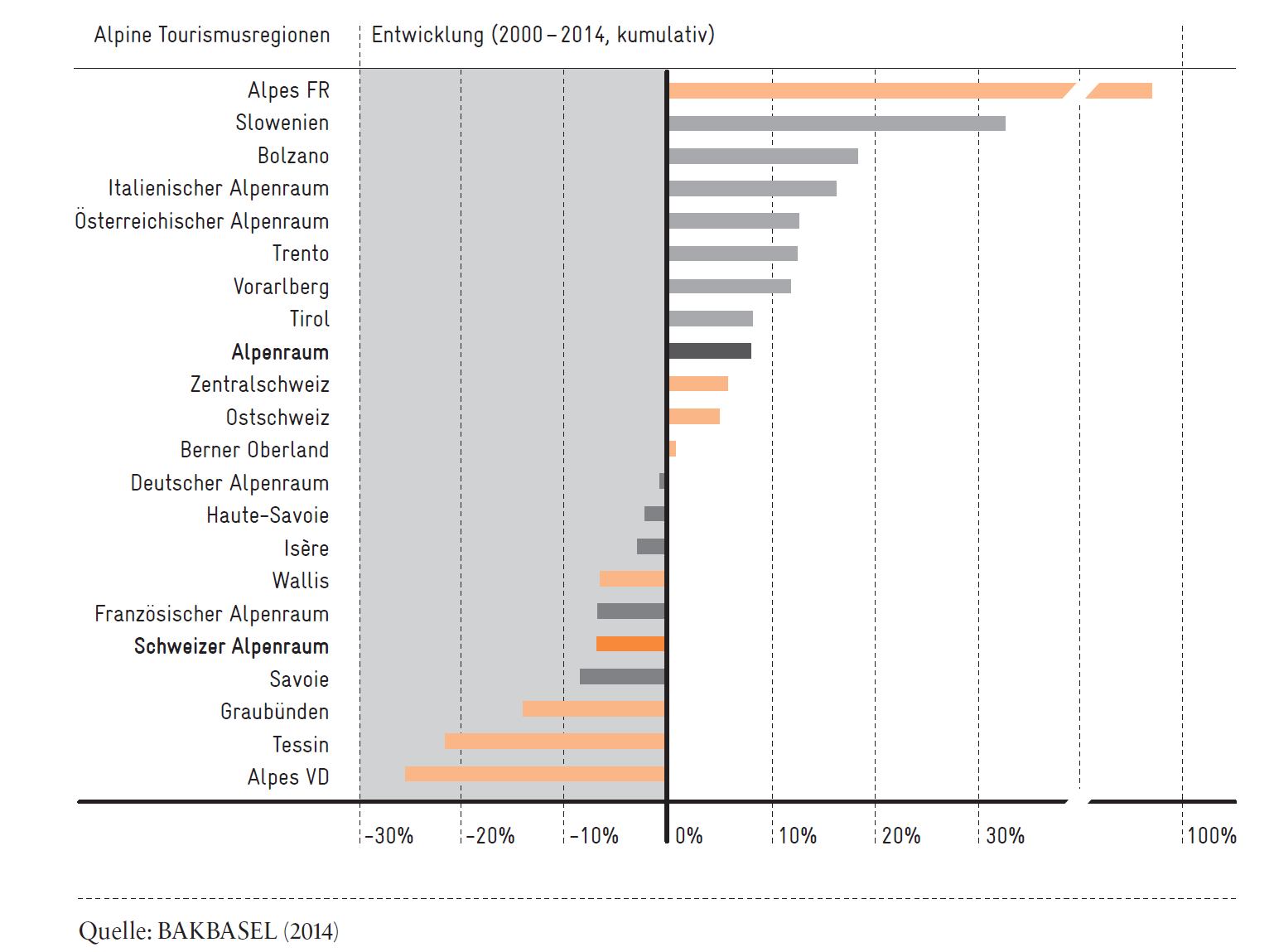
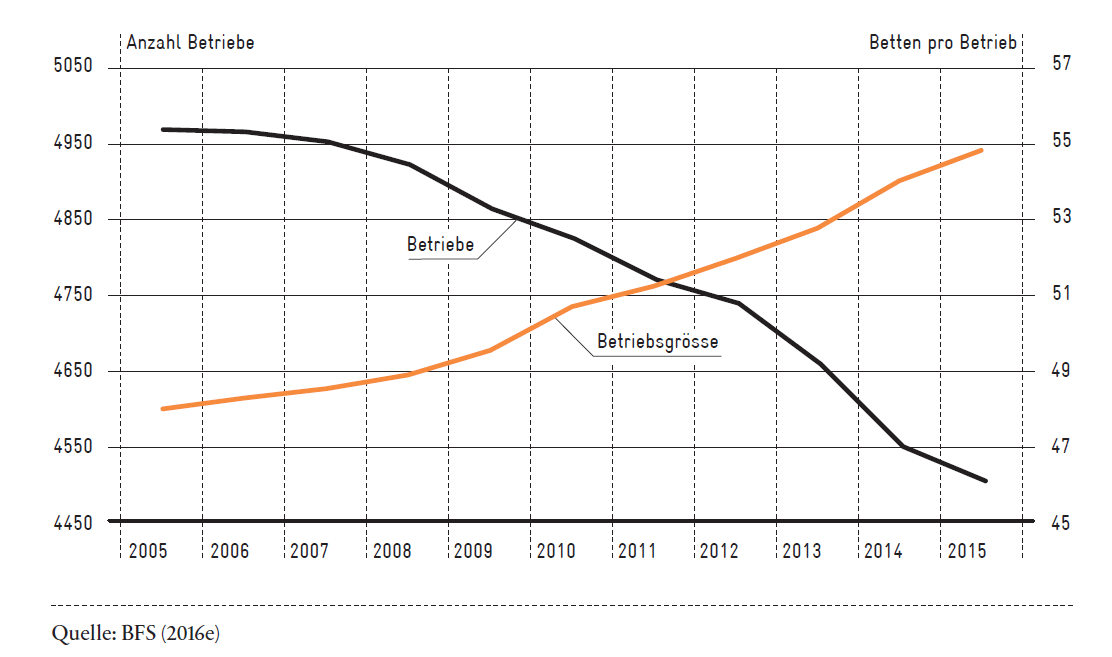
This problem suggests several factors:- Seasonality of demand: More than in city tourism, the number of guests in the mountains fluctuates considerably throughout the year. This undermines profitability, especially for businesses with high fixed costs. In addition, winter business suffers from mild winters and could disappear completely in some areas in the long term. The Bernese Oberland, central Switzerland and Ticino are particularly affected. The Valais and Grisons, on the other hand, are less affected.- Change in leisure behavior: However, the rise of low-cost airlines nowadays ensures fierce competition from warm-water destinations such as Thailand. With fewer children and young people learning to ski in many countries of origin, classic winter sports are also increasingly suffering from recruitment problems. Two other trends that are causing problems for mountain tourism are the trend toward more frequent short vacations and the growing popularity of city trips.- Small-scale nature of the industry: Despite consolidation in recent years, there are still too many small hotels, small ski resorts and small regions with their own tourism marketing. Many of these providers lack a clear niche strategy, critical mass for professional marketing, the necessary economies of scale for profitable operation, and the capital strength for investment.The disadvantages of small scale for customers are the lack of clarity in the Swiss market and a lack of product bundling offered elsewhere in the form of package tours.- Digitization: Digitalization is also leading to profound changes in the tourism industry. Online booking and comparison portals have massively increased competition between destinations and tourism businesses. The resulting price transparency and the market power of the booking portals are eroding the already low margins even further. Declining customer loyalty and the tendency to book vacations at short notice reduce planning security. But digitization also offers opportunities for those providers who succeed in developing coherent strategies and business models.- Problems in the countries of origin: The financial and economic crisis has led to a sharp decline in international guest numbers in recent years, especially from the euro zone. Specific economic problems in important countries of origin have also left skid marks on the industry. Growing visitor numbers from emerging markets have only been able to partially fill this gap. Moreover, only a few top destinations such as Zermatt are benefiting from this. The needs of new customers differ in part considerably from those of European guests.- High cost basis: Switzerland is an expensive tourist destination. High wages, high real estate prices and expensive food contribute to the cost problem of domestic suppliers. In recent years, the strong franc has again dramatically worsened the competitiveness of the tourism industry.The management of changeAs a result of these factors, hotel operations in Switzerland declined by 9.3 percent between 2005 and 2015. At the same time, the average size of operations increased from 48 to 55 beds per hotel. Ski resorts also saw the closure of small lift operators, while the large ones invested heavily. The industry can therefore shrink back to health, so to speak.
Structural change also brings other opportunities. For example, Switzerland's higher-altitude ski resorts are less affected by climate change than their competitors in Germany and Austria. The rise of emerging markets such as China is creating new customer groups. Those who focus on these can successfully grow with them, as the Engelberg region shows. The luxury segment, in which Switzerland is excellently positioned, is also growing worldwide. Globalization is fuelling the longing for authenticity, while urbanization is fuelling the need for nature. Outdoor and sports vacations are on the rise. These are positive trends for mountain tourism.Further coping measures could be cooperations and mergers that bundle forces. Examples are purchasing pools of hotels or the connection of the mountain railroads Arosa and Lenzerheide (GR). Consolidation of marketing structures is also important. In recent years, there have been numerous mergers of regional tourism organizations, for example in the Jungfrau region (BE), in the Engadine or in the Viamala region (GR). In addition, the successful umbrella brand Graubünden and the promotion company Valais were established. At the national level, the marketing organization Switzerland Tourism with its 250 employees has long demonstrated what can be achieved thanks to critical mass.The way out of the crisisThus, in order to stay in the market, companies are required to improve their offerings through product innovation and investment. Accordingly, Avenir Suisse listed the following examples in the study:-. Flims-Laax as a pioneer destinationFlims-Laax is a prime example of product bundling in mountain tourism. With the "Weisse-Arena-Gruppe AG", the ski resort has a company that is dedicated to destination development and pursues the goal of offering the guest a total experience.- Switzerland as an appWhile premium destinations are coming to terms with the high costs of Switzerland as a location, the high price level and Switzerland's image as a luxury destination are a problem for other mountain regions. At the same time, Switzerland offers a wide range of free experiences. Here, Switzerland Tourism could offer an app for different target groups. This could in turn make Switzerland attractive to the younger target group as well.- UNESCO World Heritage: Swiss mountain tourism also stands for tradition. Graubünden, the Bernese Oberland and Valais in particular have a rich tourist heritage. However, this has often been forgotten, its testimonies have been overformed or are only preserved as fragments. One way to change this would be a Unesco World Heritage Swiss Mountain Tourism. Within the framework of such a project, pioneering tourist activities could be reappraised and the historical infrastructure repaired.