2019 elections: Media presence largely corresponds to voter shares, according to analysis
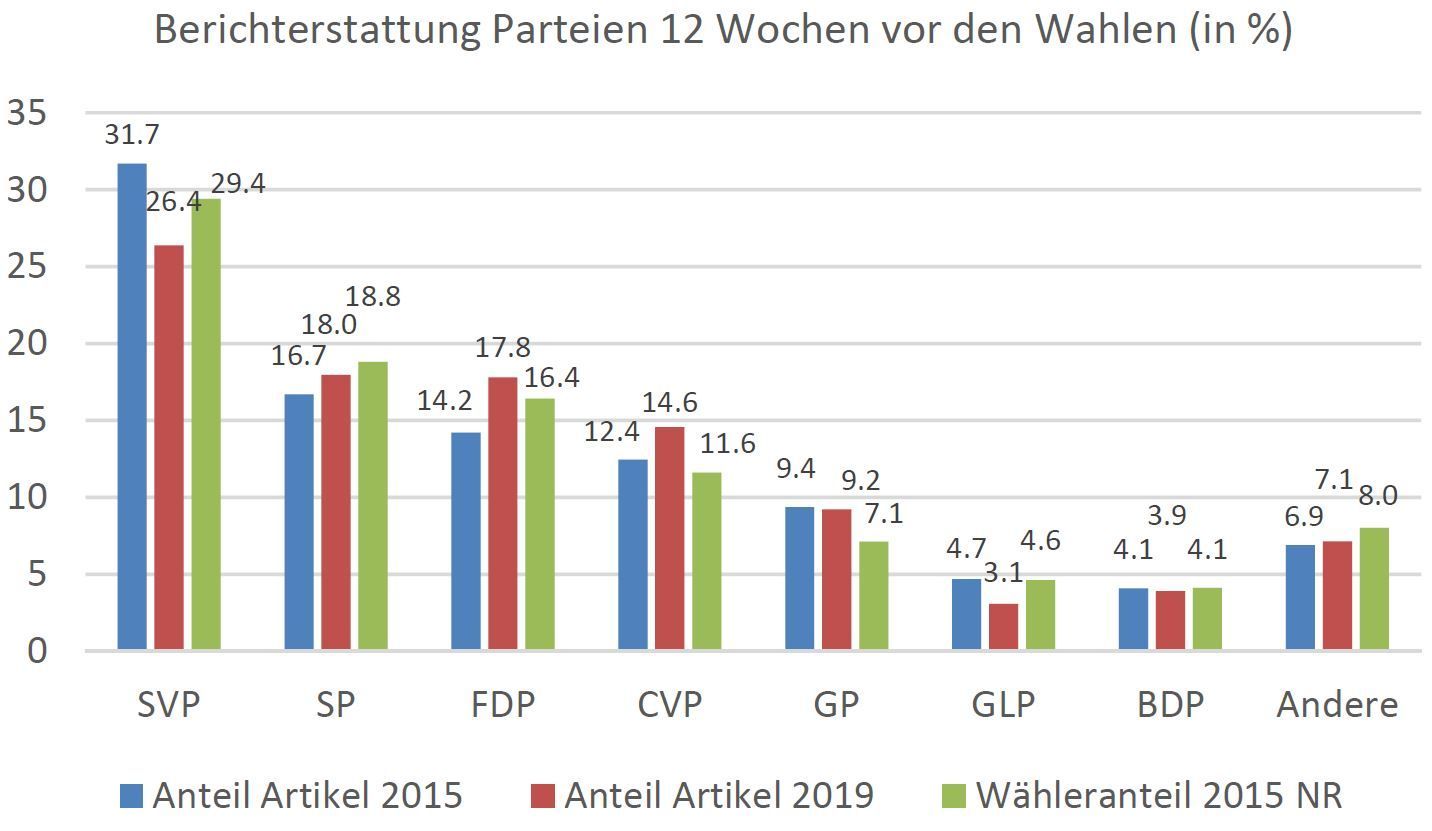
In 2019, in the run-up to the elections, the SVP once again claimed to have the greatest media presence among the parties represented in Parliament. Overall, the frequency of media coverage across the parties roughly corresponds to their share of the vote.


Media presence is the most important currency in the battle for attention in the run-up to federal elections, according to the study published on Wednesday by Année Politique Suisse (APS) of the University of Bern published analysis. The 33 Swiss daily and weekly newspapers with the highest circulation were included.
It is not uncommon for party representatives to complain about sparse or even tendentious reporting. However, at least as far as media presence is concerned, these accusations are unjustified.
The results of the analysis made it clear that the proportion of articles about parties in the print media examined in the twelve weeks before the federal elections corresponded surprisingly closely to the proportion of voters for the individual parties. So far, the most articles have been written about the SVP. Its media presence is no longer as dominant as it was before the elections four years ago, when it had twice as many newspaper reports as the SP.
Wormy apple as an outlier
But parties also create media events, if necessary with the help of provocation. The SVP in particular seems to have succeeded in this. According to the APS, one clear outlier immediately caught the eye when looking at the weekly progression of party reporting: when the SVP published its election poster with the worm-eaten apple in mid-August, this triggered a huge media response.
With its deliberate provocation, the SVP had thus succeeded in generating the desired media attention. The effect was amplified by the party's internal criticism of the poster (Werbewoche.ch reported).
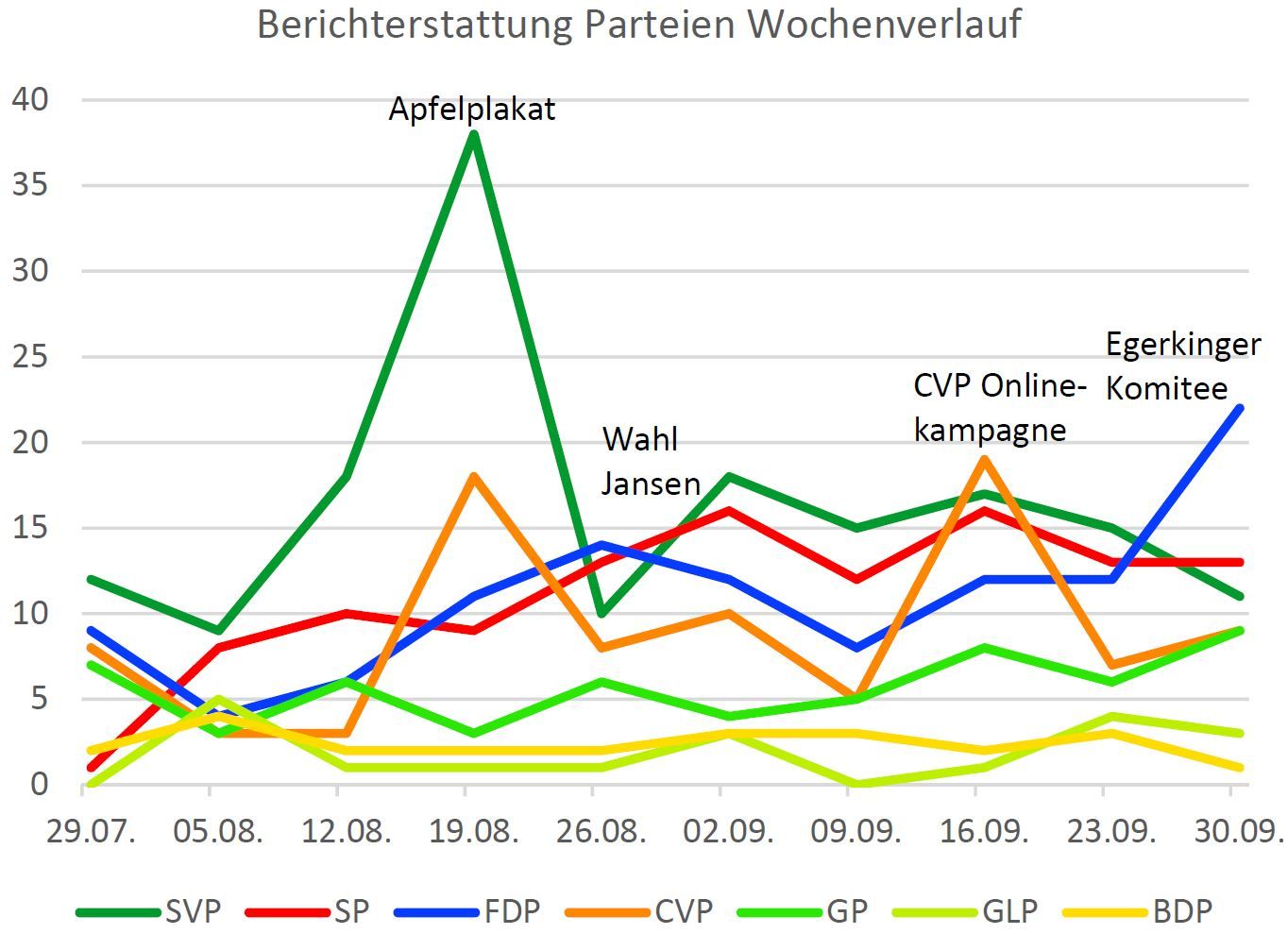
The other parties did not generate as many media events as the SVP, writes APS. The controversy surrounding the CVP's online campaign, in which the party reported negatively on the positions of candidates from other parties on a seemingly neutral website, only generated around half as many newspaper articles as the SVP poster.
The FDP's complaint against the poster by the Egerkingen committee received the second most attention in the print media during the period examined. The poster accused FDP members of protecting Islamists in Switzerland. Party President Petra Gössi responded by taking the committee to court.
Greens unable to take advantage of the climate
The SP was only able to make a few waves with the election of Ronja Jansen as the new president of the Young Socialists. The Green Party and the Green Liberal Party, on the other hand, were unable to turn the hottest current election issue, climate policy, into additional newspaper articles. (SDA/hae)