
Crans-Montana: Swiss Press Council urges media to be considerate
The Swiss Press Council calls on media professionals to respect the privacy of the victims and their families when reporting on the fire disaster in Crans-Montana. The victims are not public figures, and sensationalist reporting should be avoided.


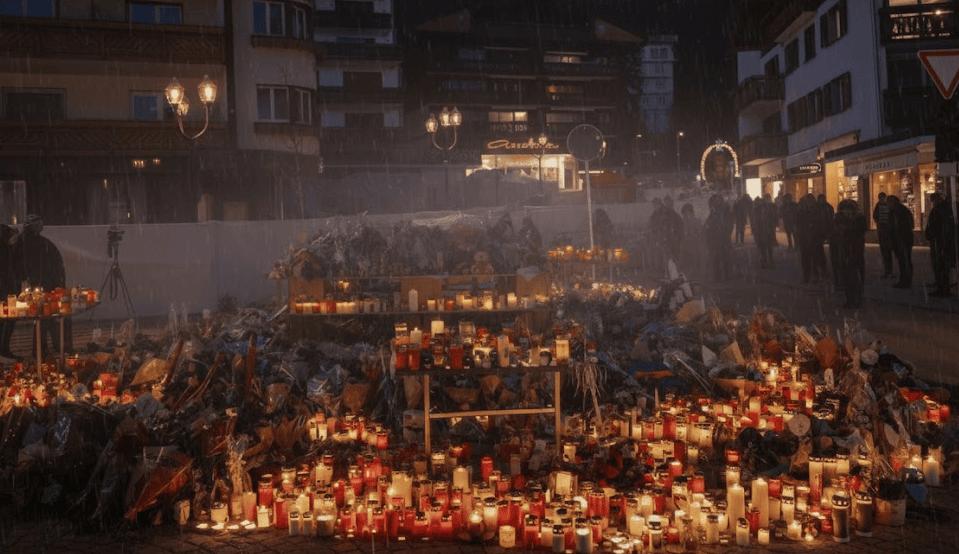
The tragedy in Crans-Montana poses a journalistic challenge: How can the media do their job in such a context and at the same time adhere to established journalistic rules? The Swiss Press Council urges media professionals to respect the privacy of the victims and their families when reporting.
The victims of the fire disaster are not persons of public interest. There is no need to publish their names or pictures. The Journalism Code prohibits any sensationalist portrayal that degrades people to mere objects, be it in pictures, text or sound. Journalists should also respect the suffering of those affected and the feelings of their relatives when reporting, as they are in an absolutely exceptional situation.
Guidelines from the year 2012
In a statement issued in 2012, the Swiss Press Council set out guidelines for fair reporting in such a situation. 28 people - mainly children - died in a bus accident in the canton of Valais. At the time, some excessive pictures of the victims were published. In its leading decision at the time, the Press Council stated: "It is disproportionate and goes beyond the bounds of professional ethics for an editorial team to systematically scrutinize the private lives of those involved after an accident."
In principle, "it is permissible to show pictures of deceased victims of a traffic accident, provided the relatives explicitly agree to the publication and make the photos available". However, people react differently to tragic events and strokes of fate. "While many people want to be left alone with their grief, it helps some people to share their suffering and enable others to sympathize," the Press Council wrote in its statement at the time. Especially when relatives are still in the shock of an event, consent should not be assumed lightly.
Protect privacy
As a matter of principle, the privacy of those involved - provided they are not public figures and the reporting is related to their public activities - must be respected, even in the case of high-profile accidents, crimes and disasters.
Annik Dubied, Vice President of the Swiss Press Council, talks in the RTS program PointJ about how journalists report on such events in a media-ethically correct manner. The broadcast will be available from January 7, 2026 at the following link: https://www.rts.ch/audio-podcast/2020/emission/le-point-j-25000806.html


