"We offer inspiration and a change of perspective"
For the sixth time, creative young people were honored as part of the ADC Young Creatives Award competition. In 2012, Cailler once again served as a prominent sponsor and challenge organizer.


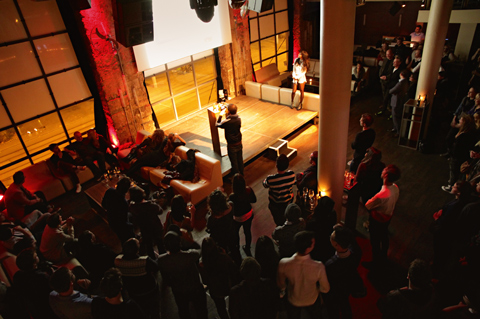
In partnership with the youth channel Joiz, the prizes were presented at the Mascotte in Zurich on November 14. In the competition, teams of two create fictitious campaigns according to the specifications of the main sponsor. In addition to the Film, Outdoor, Cyber and Alternative Media categories, the 18-member jury also awards a special prize sponsored by Goldbach for creative mobile applications. As the winners qualify for the Young Lions Competition in Cannes, participants may not be older than 28 in the following year. According to the rules, it does not matter whether the young creative talent comes from the advertising industry or from university. However, most of the participants are already anchored in agencies.
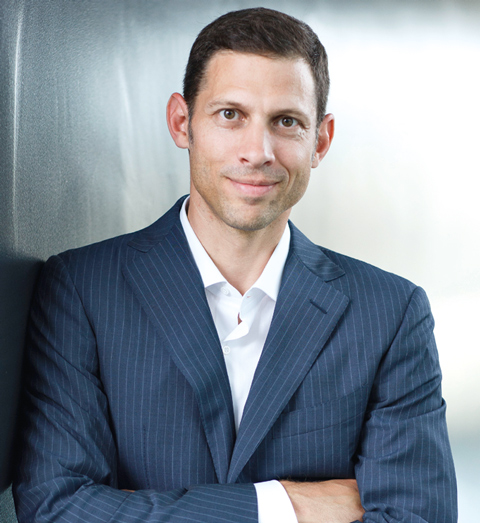
Werbewoche asked ADC board member Philipp Skrabal about the background to the competition and wanted to know, among other things, what roles the agencies play and what benefits the main sponsor derives from the involvement. The Executive Creative Director and co-owner of the Wirz agency was primarily responsible for the ADC Young Creatives Award for the third time this year.
WW: Most of the participants work in the industry. Is the Young Creatives Award even about talent scouting or is it more about which agency employs the best young talent?
Philipp Skrabal: It has nothing to do with the agencies, the works are explicitly submitted by private individuals. We are not interested in having entire agencies take part, as is the case with other competitions. We want to show what young people who are not seen anywhere else can achieve. And that's how we find the talent that we send to Cannes the following year.
Nevertheless, the question arises as to how much the agencies are involved in the background.
I can't judge that. My experience shows: The ambition of young people is so great that they want to do it without help. They want to show what they can do - this is more effective if you work independently. Of course, the boss may be asked what he thinks of an idea. At Wirz, opinions are sought - but only at the end, when the product is ready.
Do many young, unknown people from outside the industry - students, for example - take part?
This fluctuates and depends heavily on whether lecturers provide information about the competition and encourage participation. In percentage terms, however, it is actually a rather small proportion. Too small, for our taste. 30 percent would be desirable and realistic.
Do they have any chance at all?
Especially in the film sector, where craftsmanship is also important, people from outside the agency would have good chances. In the other categories, professional proximity is probably an advantage.
Keyword Joiz: What do you expect from the collaboration?
Our primary aim is to arouse curiosity about our industry. To do this, you have to offer young creatives a stage - Joiz is ideal for this. If just one viewer thinks that this could be a career for them, it's already been worthwhile. What's more, it is certainly exciting for the participants to sit on the Joiz sofa for once. If only for the recognition in their social environment.
What happens to the winning entries? Will they be used by the sponsor?
Nothing is planned. The main sponsor is primarily involved because it wants to utilize the potential of the uninhibited youngsters. Unlike a pitch, what counts here is an honest, unfiltered opinion. The youthful diversity of ideas is like a change of perspective, an inspiration. It is not impossible that ideas will be implemented. However, the focus is on the 80 or so works that deal with the brand each year. And through a different lens than that of the people who are paid to do it every day.
Is the search for the main sponsor easy? After all, well-known brands have always been won over so far ...
The search is difficult. Sponsorship is equated with increased visibility. Despite Joiz and other media appearances, we can't offer that. But we can offer inspiration. A good that is difficult to quantify. The commitment therefore also has something idealistic about it. Fortunately, we have been successful in our search every year and have been able to attract Amnesty International, Migros, McDonald's, Mars, Swisscom and now Cailler. We are already looking for a sponsor for 2013 and interested companies are welcome to get in touch.
"Something idealistic" - so it also needs some goodwill on the part of the sponsors, as the benefit cannot be derived directly?
I think you can derive it very directly. This is shown by the exchange with previous sponsors, who have had extremely positive experiences: They were able to learn something about their brand themselves. A pitch quickly costs more money - but political solutions are delivered by agencies that want to win a budget. From this point of view, the commitment is a good deal. But you have to want to take your own brand further. In short, you have to see the value of this tool. Not everyone does.
Finally, a completely different question: the award in the form of a hand grenade - is there any negative feedback on this?
(laughs) The brain grenade, exactly. I took over the award in 2010 and the visual appearance has remained unchanged since the first edition. It symbolizes the "impactful" idea. Of course, that can polarize people. But the high recognition value replaces larger advertising campaigns, for which we lack the resources. If the grenade appears in 20 Minuten or in Werbewoche, people know: aha, it's that time again. But if there were any complaints, they probably wouldn't get through to me anyway (laughs). But I think people are relatively painless about it.
Interview: Thomas Häusermann