
Smartphone is becoming increasingly important for young people


Cell phones and the Internet have become an integral part of young people's lives: 97% of young cell phone users in Switzerland own a smartphone, as the 2014 JAMES study by the ZHAW and Swisscom shows.
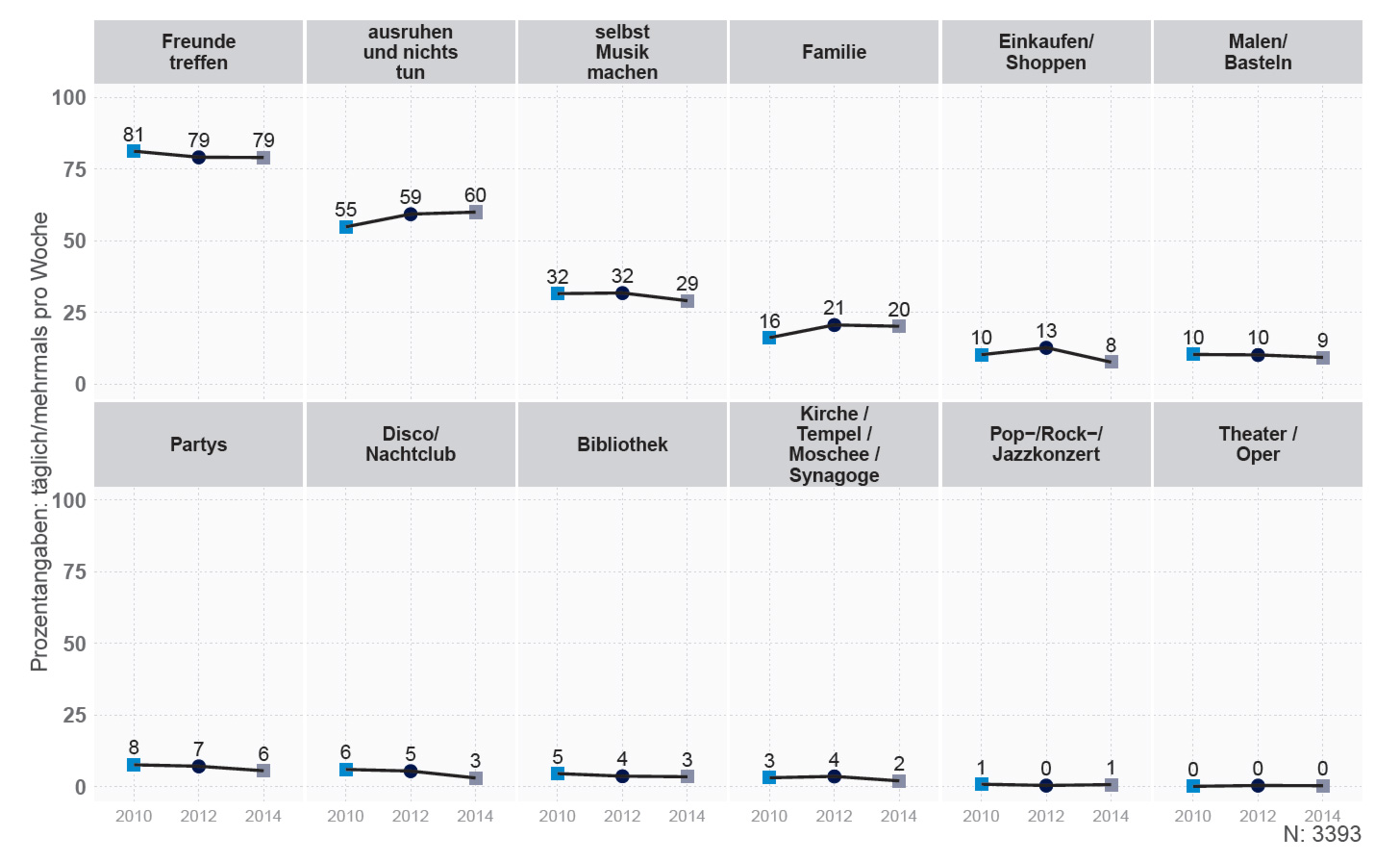
The leisure behavior of young people has remained constant since 2010.The smartphone finally established itself among Swiss young people in 2014: 98 percent own their own cell phone, of which 97 percent have a smartphone. In 2010, just under half of young cell phone users had a smartphone (2012: 79 percent). This is shown by the current JAMES-study, which was conducted for the third time since 2010 and is thus able to identify trends for the first time. Every two years, the ZHAW Zurich University of Applied Sciences on behalf of Swisscom over 1000 young people aged 12 to 19 in Switzerland's three major language regions on their media behavior.Surfing on the move instead of making phone callsWith the advent of the smartphone, cell phone use has also changed dramatically since 2010. Young people not only use their smartphones to make phone calls, they also use them to listen to music, surf the web, snap photos, check their e-mail or play games. "As mobile devices combine more and more functions and increasingly offer unlimited access to the mobile Internet, they are used less and less often in the sense of their original function," says ZHAW researcher and study leader Daniel Süss, who conducted the JAMES study with co-project leader Gregor Waller and his team. The use of the mobile Internet has changed the most: Whereas in 2010 only 16 percent of the young people surveyed surfed the net daily or several times a week with their cell phones, today this figure is already 87 percent (2012: 68 percent). By comparison, frequent phone calls declined from 80 to 71 percent over the same period (2012: 81 percent).Surfing time remains constantYoung people in Switzerland do not lack access to the Internet even without a smartphone: 99 percent of the households in which they live are equipped with a computer or laptop with Internet access. Meanwhile, two out of three households also have a tablet. At around two hours, however, the daily surfing time during the week has not changed over the last few years, and at the weekend it has also remained constant at three hours a day. Three out of four Swiss young people regularly exchange information on the Internet via social networks. 89 percent are registered with at least one social network. Facebook remains the most popular in 2014, but is closely followed by Instagram. Google+ and Twitter have also gained user numbers in recent years. "The decline in Facebook membership suspected in some places cannot be detected among Swiss young people in 2014 either. However, it is interesting to note that among the youngest respondents, Instagram, a network specializing in photos and videos, is more popular than Facebook," adds Süss.Young people mostly surf safelyOn social networks, 81 percent of the young respondents have activated the privacy setting, and 56 percent update these settings regularly. Although awareness of the need to protect one's own data on social networks is consistently high, negative experiences online have not declined in recent years: 22 percent said that someone had tried to bully them online (2012: 17 percent; 2010: 20 percent). Insulting or false information was spread about 12 percent of respondents (2012: 3 percent; 2010: 10 percent). In addition, one in five young people had been approached on the Internet with unwanted sexual intentions. "It is therefore important that young people are guided in their use of the media and actively engage with it. Swisscom is therefore strongly committed to promoting media literacy," says Michael In Albon, Swisscom's Youth Media Protection Officer.Friends do not come too shortDespite smartphones, tablets and the like, non-media leisure activities have remained constant since 2010. 79 percent of respondents continue to meet friends very frequently, while 60 percent do nothing at all sometimes. "Media-related leisure activities have an accompanying function and cannot replace young people's need to be together," Süss is convinced.News portals catch up with free newspapersChanges in the ranking of the most popular leisure activities, on the other hand, can be seen in newspaper consumption: There is a trend toward reading fewer paper newspapers and magazines. Just 35 percent of the young people surveyed still read free newspapers daily or several times a week (2012: 49 percent). On the other hand, daily newspapers are increasingly being consumed online: Almost one in three often reads on news portals on the Internet (2012: 26 percent).


