Heads of the week: The green men of Obfelden
Who thinks about the environment in times of tight budgets? Werner Stulz and Ruedi Jäger. The Eventgroup, which the two event professionals founded at the beginning of the year, implements corporate events according to ecological criteria. Because if you don't act sustainably, you'll soon be out of business for good.


The food and the decoration, the delivery of the food and the arrival of the guests, the event building and the lighting - almost everything at an event can be ecologically well thought out. Or it may not. "Even companies that produce sustainably rarely think about the environment when designing their parties or incentives," says Werner Stulz, one of the two heads of Eventgroup. In this context, it is also financially ill-conceived to bring the catering from Zurich and the cleaning company from Aargau for a party in Lucerne. This is the awareness that Stulz and his business partner Ruedi Jäger want to raise among their customers. For 50 to 500 participants, they organize motivational and integration events, employee events, product and information events, corporate events, specialist conferences and congresses according to green standards. Alternatively, they advise companies on the ecological implementation of their events. Their clients can choose between one and one hundred percent green: Anything is better than not thinking about the environment at all.
At home on any parquet
With Stulz and Jäger, real event professionals are at work. Werner Stulz was supposed to take over his father's locksmith's shop in 1970. But he knows early on that this is not his dream for the future. Stulz trains as an electromechanic, but even this job doesn't grab him. "I never worked in that profession," he says. "I was drawn to the show and entertainment business." In the mid-1970s, Stulz tours Switzerland, Germany and Austria with Pepe Lienhard's band. He manages the tour and, as stage technician, is responsible for everything that is under power. During this time, Stulz gets to know many well-known artists, for example Catarina Valente, Shirley Bassey, Katja Epstein, Gitte, Bill Ramsey and Udo Jürgens. In 1977 and 1978 Stulz worked as a stage technician at the Schauspielhaus Zurich, after which he founded the company Disco Light Center, which planned and set up sound and lighting systems for artists, discotheques and dance events. In the 1980s, Stulz works as a salesman for electronic components, department administrator for office technology equipment, artist agent, artist consultant, event manager, advertising manager for a computer school, night watchman, bodyguard for VIP artists, disc jockey, presenter, juggler and limousine chauffeur for businessmen. In addition, he founded an event agency, which mediates artists of all kinds and organizes events. After a three-year excursion into the "normal working world", as Stulz calls the employment relationship, the jack-of-all-trades still completes his commercial diploma before returning to the stomping ground of events and artists in 2001: Stulz founds the event and artist agency Event & Consulting, which has been an important pillar of the Eventgroup since the beginning of 2009. "I split my two areas of expertise, artists and events, again and brought the event theme onto the green track together with Ruedi," says Stulz. Eventgroup's clients benefit not only from Stulz's expertise as an event organizer, but also from his twenty years of experience with artists and his contacts with hundreds of creative artists, from solo entertainers to magicians to big bands.
Ruedi Jäger is a trained electrician. He completed his apprenticeship in 1977 and worked for three years in the profession he had learned. At the same time, he continued his education in the field of electronics. From 1980 to 1986 he worked as a service technician for security systems, after which he took over the management of the computer center at Marc Rich for five years. Additional training as a marketing planner and buyer opens new doors for Jäger: Between 1991 and 1996, he works at Bakosysteme and as logistics manager at Beringer Hydraulik. In 1996, he is looking for a new direction. "I opened the newspaper, stumbled across an ad and bought a company: High Tech Electronic, which was later renamed Mobile Games," says Jäger, summarizing his career in the mid-1990s. Mobile Games rents out more than 200 games, from bouncy castles to foosball tables and various simulators to roulette tables, and is the number 1 in this segment in Switzerland.
Jäger has also been planning the events surrounding his games for young and old for twelve years. "Mobile Games provides active entertainment - as opposed to the passive listening and watching that Werner provides with his artists," says Jäger. "So we complement each other wonderfully."
Stulz and Jäger met ten years ago at the Swissevent trade fair. Stulz is advertising his event agency with sweet sugar cookies, and Jäger wants to treat himself to a little bag of this treat. "Stop, stop, stop," he hears as he walks away. Stulz hurries after him, because he still wants to explain to the visitor why the confectioner is standing at his booth. "That was our first contact," Jäger says. Since then, the two men have worked together at many events: If Jäger is looking for an artist, Stulz organizes the right one. If Stulz needs a rodeo machine or a pinball machine, Jäger has the Spielwerk ready. The synergy slowly develops into a symbiosis. More and more frequently, the two also discuss the topic of ecology during their collaboration and on joint trips. "Finally, it was clear to us that green action would have to be the focus when we teamed up for an event agency," says Jäger.
Green events are the future
Why are Jäger and Stulz coming up with events and organic in the middle of the crisis? In German-speaking countries, a lot is already being done for the environment, says Stulz: "A lot is happening in climate-neutral work and production. In Switzerland, the initiative has so far mostly come from the Federal Office for the Environment, but increasingly companies are paying attention to environmental compatibility themselves." That's good to begin with. "But sustainable thinking in event planning has been lacking," Jäger laments. "That's why we have specialized in green events. There was really no need for another agency that organizes classic events. We are now the first Swiss agency to offer green events. But let's be clear: We didn't take up the topic of the environment because it's a market niche. We're focusing on it because we've realized how important environmental protection is: we only have one environment."
Stulz and Jäger are convinced that no area of life is possible in the long term without acting ecologically. Both drive a hybrid car, their brochure is printed on environmentally friendly paper, and their office is located in the middle of nowhere in green Obfelden. But the two are no militant eco-enthusiasts with a rakish beard and Birkenstock sandals. Nor do they chain themselves to railroad tracks to lend weight to their demands. Stulz and Jäger belong to a new generation of environmentally conscious people for whom green is no longer eco and organic, but a lifestyle, a state of mind. "Green has nothing to do with grain pickers," Stulz emphasizes. "Green is high-tech." Stulz and Jäger firmly believe that environmental protection is on the rise and will eventually become daily business. In fact, environmental protection has been coming since the early 1970s - but only ever a little bit. Topics such as waste separation and energy conservation have been with us since childhood. Nevertheless, they have not yet become second nature to us.
Foresight in every area
Even in public spaces, environmentally friendly actions have long since not been a matter of course, but are enforced by law: Organizers of street parties or festivals, for example, usually have to submit a waste plan, and that's usually where it stops. "Instead, you could make the entire event environmentally friendly without making it more expensive," says Jäger. "A completely green event also promotes the regional economy and brings media attention - organizers should also consider these aspects." Jäger cites the 2008 European Football Championships as a good example of an environmentally friendly major event. The organizers wanted to implement as many ecological measures as possible and thus set up a sustainable event.
Ecological wholeheartedly
When it comes to the environment, a lot is done half-heartedly - also because politics lacks tangible support. "Currently, many companies are engaged in 'green washing': they give their products an ecological coat of paint, even though they are not environmentally friendly," criticizes Jäger. However, these times should soon be over: Companies are coming under increasing pressure to justify their every move with the environment in mind. And private individuals also have a responsibility. "By 2012 at the latest, when the Kyoto Protocol is renewed, there will be a new kick for environmental protection," Stulz is convinced. "Then companies will have to comply with new mandatory environmental regulations. They should start preparing for this now, step by step, for example with Green Events."
Jäger and Stulz are ahead of the curve: "The more we deal with ecological event planning,
the hotter we get on the subject," says Jäger. "And although we've already acquired a wealth of knowledge, we ourselves are always surprised by what else is related to the environment." The green team's latest idea is to set up an online store for ecologically valuable giveaways. At the moment, Swiss companies still have to go to various stores to find promotional gifts that fit in with their (new) green self-image. But not for long: the signs are green.
At home on any parquet
With Stulz and Jäger, real event professionals are at work. Werner Stulz was supposed to take over his father's locksmith's shop in 1970. But he knows early on that this is not his dream for the future. Stulz trains as an electromechanic, but even this job doesn't grab him. "I never worked in that profession," he says. "I was drawn to the show and entertainment business." In the mid-1970s, Stulz tours Switzerland, Germany and Austria with Pepe Lienhard's band. He manages the tour and, as stage technician, is responsible for everything that is under power. During this time, Stulz gets to know many well-known artists, for example Catarina Valente, Shirley Bassey, Katja Epstein, Gitte, Bill Ramsey and Udo Jürgens. In 1977 and 1978 Stulz worked as a stage technician at the Schauspielhaus Zurich, after which he founded the company Disco Light Center, which planned and set up sound and lighting systems for artists, discotheques and dance events. In the 1980s, Stulz works as a salesman for electronic components, department administrator for office technology equipment, artist agent, artist consultant, event manager, advertising manager for a computer school, night watchman, bodyguard for VIP artists, disc jockey, presenter, juggler and limousine chauffeur for businessmen. In addition, he founded an event agency, which mediates artists of all kinds and organizes events. After a three-year excursion into the "normal working world", as Stulz calls the employment relationship, the jack-of-all-trades still completes his commercial diploma before returning to the stomping ground of events and artists in 2001: Stulz founds the event and artist agency Event & Consulting, which has been an important pillar of the Eventgroup since the beginning of 2009. "I split my two areas of expertise, artists and events, again and brought the event theme onto the green track together with Ruedi," says Stulz. Eventgroup's clients benefit not only from Stulz's expertise as an event organizer, but also from his twenty years of experience with artists and his contacts with hundreds of creative artists, from solo entertainers to magicians to big bands.
Ruedi Jäger is a trained electrician. He completed his apprenticeship in 1977 and worked for three years in the profession he had learned. At the same time, he continued his education in the field of electronics. From 1980 to 1986 he worked as a service technician for security systems, after which he took over the management of the computer center at Marc Rich for five years. Additional training as a marketing planner and buyer opens new doors for Jäger: Between 1991 and 1996, he works at Bakosysteme and as logistics manager at Beringer Hydraulik. In 1996, he is looking for a new direction. "I opened the newspaper, stumbled across an ad and bought a company: High Tech Electronic, which was later renamed Mobile Games," says Jäger, summarizing his career in the mid-1990s. Mobile Games rents out more than 200 games, from bouncy castles to foosball tables and various simulators to roulette tables, and is the number 1 in this segment in Switzerland.
Jäger has also been planning the events surrounding his games for young and old for twelve years. "Mobile Games provides active entertainment - as opposed to the passive listening and watching that Werner provides with his artists," says Jäger. "So we complement each other wonderfully."
Stulz and Jäger met ten years ago at the Swissevent trade fair. Stulz is advertising his event agency with sweet sugar cookies, and Jäger wants to treat himself to a little bag of this treat. "Stop, stop, stop," he hears as he walks away. Stulz hurries after him, because he still wants to explain to the visitor why the confectioner is standing at his booth. "That was our first contact," Jäger says. Since then, the two men have worked together at many events: If Jäger is looking for an artist, Stulz organizes the right one. If Stulz needs a rodeo machine or a pinball machine, Jäger has the Spielwerk ready. The synergy slowly develops into a symbiosis. More and more frequently, the two also discuss the topic of ecology during their collaboration and on joint trips. "Finally, it was clear to us that green action would have to be the focus when we teamed up for an event agency," says Jäger.
Green events are the future
Why are Jäger and Stulz coming up with events and organic in the middle of the crisis? In German-speaking countries, a lot is already being done for the environment, says Stulz: "A lot is happening in climate-neutral work and production. In Switzerland, the initiative has so far mostly come from the Federal Office for the Environment, but increasingly companies are paying attention to environmental compatibility themselves." That's good to begin with. "But sustainable thinking in event planning has been lacking," Jäger laments. "That's why we have specialized in green events. There was really no need for another agency that organizes classic events. We are now the first Swiss agency to offer green events. But let's be clear: We didn't take up the topic of the environment because it's a market niche. We're focusing on it because we've realized how important environmental protection is: we only have one environment."
Stulz and Jäger are convinced that no area of life is possible in the long term without acting ecologically. Both drive a hybrid car, their brochure is printed on environmentally friendly paper, and their office is located in the middle of nowhere in green Obfelden. But the two are no militant eco-enthusiasts with a rakish beard and Birkenstock sandals. Nor do they chain themselves to railroad tracks to lend weight to their demands. Stulz and Jäger belong to a new generation of environmentally conscious people for whom green is no longer eco and organic, but a lifestyle, a state of mind. "Green has nothing to do with grain pickers," Stulz emphasizes. "Green is high-tech." Stulz and Jäger firmly believe that environmental protection is on the rise and will eventually become daily business. In fact, environmental protection has been coming since the early 1970s - but only ever a little bit. Topics such as waste separation and energy conservation have been with us since childhood. Nevertheless, they have not yet become second nature to us.
Foresight in every area
Even in public spaces, environmentally friendly actions have long since not been a matter of course, but are enforced by law: Organizers of street parties or festivals, for example, usually have to submit a waste plan, and that's usually where it stops. "Instead, you could make the entire event environmentally friendly without making it more expensive," says Jäger. "A completely green event also promotes the regional economy and brings media attention - organizers should also consider these aspects." Jäger cites the 2008 European Football Championships as a good example of an environmentally friendly major event. The organizers wanted to implement as many ecological measures as possible and thus set up a sustainable event.
Ecological wholeheartedly
When it comes to the environment, a lot is done half-heartedly - also because politics lacks tangible support. "Currently, many companies are engaged in 'green washing': they give their products an ecological coat of paint, even though they are not environmentally friendly," criticizes Jäger. However, these times should soon be over: Companies are coming under increasing pressure to justify their every move with the environment in mind. And private individuals also have a responsibility. "By 2012 at the latest, when the Kyoto Protocol is renewed, there will be a new kick for environmental protection," Stulz is convinced. "Then companies will have to comply with new mandatory environmental regulations. They should start preparing for this now, step by step, for example with Green Events."
Jäger and Stulz are ahead of the curve: "The more we deal with ecological event planning,
the hotter we get on the subject," says Jäger. "And although we've already acquired a wealth of knowledge, we ourselves are always surprised by what else is related to the environment." The green team's latest idea is to set up an online store for ecologically valuable giveaways. At the moment, Swiss companies still have to go to various stores to find promotional gifts that fit in with their (new) green self-image. But not for long: the signs are green.
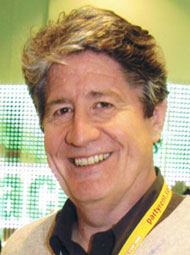
Werner Stulz has made his passion for entertainment his profession and works according to the pleasure principle. When he's not taking care of events or artists, he likes to go on city trips and capture his impressions in pictures.
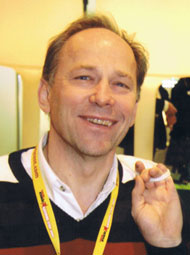
As a boy, Ruedi Jäger would have liked to become a truck driver, but now events are his obsession. "I don't really need any free time," he says. But when he does, he likes to sit in his garden with a beer.
Anne-Friederike Wilhelm