
Europeans' purchasing power on the rise


The purchasing power of Europeans is increasing by 1.9 percent. The average purchasing power is highest in Liechtenstein, Switzerland and Iceland, while people in Belarus, Moldova and Ukraine have the least money at their disposal.
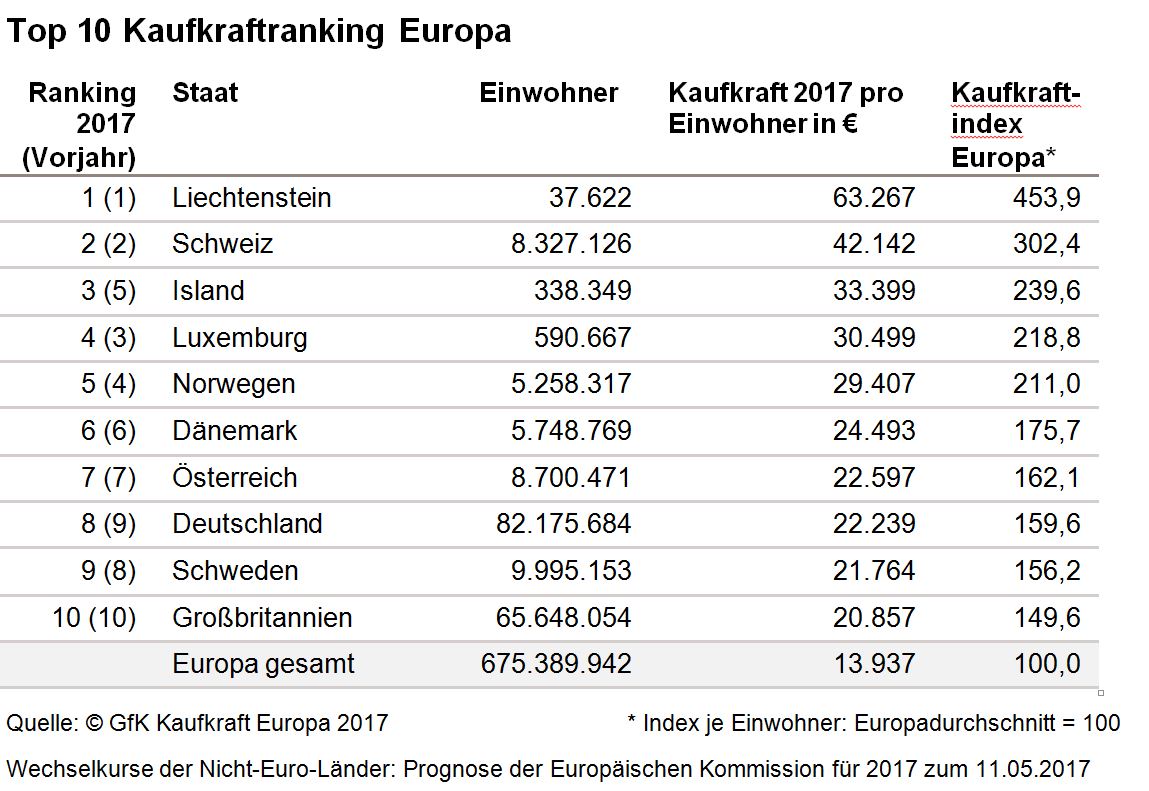
In total, Europeans have around 9.4 trillion euros at their disposal for 2017, which they can spend on food, housing, services, energy costs, private pensions, insurance, vacations, mobility and consumer wishes. This corresponds to an average per capita purchasing power of 13,937 euros. This means that per capita purchasing power grew moderately by 1.9% in 2017, but is significantly higher than in the previous year. Some countries deviate from this value: Iceland, for example, recorded strongly above-average growth of more than 37%, while countries such as Liechtenstein and Switzerland recorded stagnating growth rates. However, the amount consumers have available for their consumer spending varies greatly from country to country, as a look at the top 10 shows. In Liechtenstein, which as in the previous year leads the purchasing power ranking well ahead of all other countries, per capita purchasing power amounts to 63,267 euros. This puts Liechtenstein more than 4.5 times above the European average, with Switzerland in second place with a purchasing power of 42,142 euros per capita. This means that the Swiss have more than three times the purchasing power of the average European. All other countries in the top 10 also have very above-average per capita purchasing power, which is 1.5 times the European average or more. 17 countries in total are above the European average - including Spain, which has only slightly above-average purchasing power at EUR 14,080 per capita. On the other hand, there are 25 countries with below-average purchasing power per capita, with Ukraine bringing up the rear: in the country with the lowest purchasing power in the study, people only have EUR 949 per capita and less than 7 percent of the European average at their disposal. This means that Ukraine's per capita purchasing power is less than one sixty-sixth of that of Liechtenstein's. As far as the places within the top 10 are concerned, there have been some changes compared to the previous year - mainly due to exchange rate effects. Luxembourg and Norway move down one place each to fourth and fifth place, while Iceland moves up two places to third place. Germany and Sweden swap places in the European ranking: Germany overtakes the UK this year and takes eighth place.About GfKGfK stands for reliable and relevant market and consumer information. The market research company uses this information to help its clients make the right decisions. GfK has many years of experience in collecting and analyzing data. Around 13,000 experts combine global knowledge with analyses of local markets in more than 100 countries. GfK uses innovative technologies and scientific processes to turn large volumes of data into intelligent information. This enables GfK's clients to increase their competitiveness and enrich the lives of consumers. >>>here>>


