The picture maker
Of 248 awards, he recently consigned 200 to the dumpster. But this is not the only reason why Dietmar Henneka is considered an "enfant terrible". It is above all his views and work that have made him an icon of image design. Werbewoche met the star photographer at Photo15.


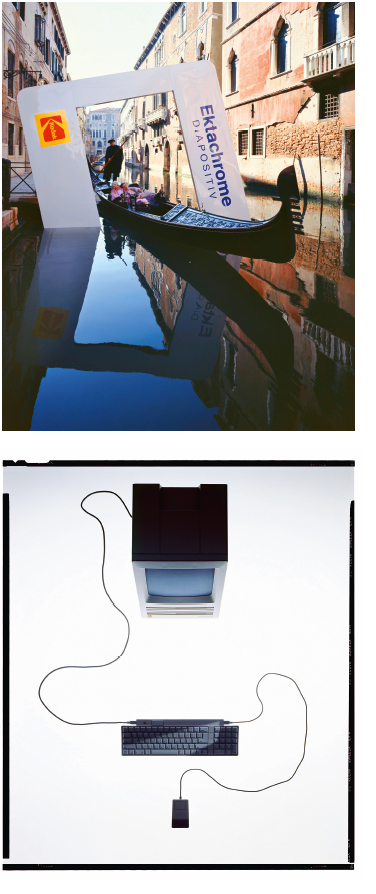
For his series ≪artCars≫ Dietmar Henneka had everything replicated on the set. ≪We had no other choice with Hopper's Nighthawks. There were no 3-D programs back then. But maybe that was also our chance, that we could create real emotions with our images with real people in a real set. And you can't get images for a big image campaign to work without the big emotions.
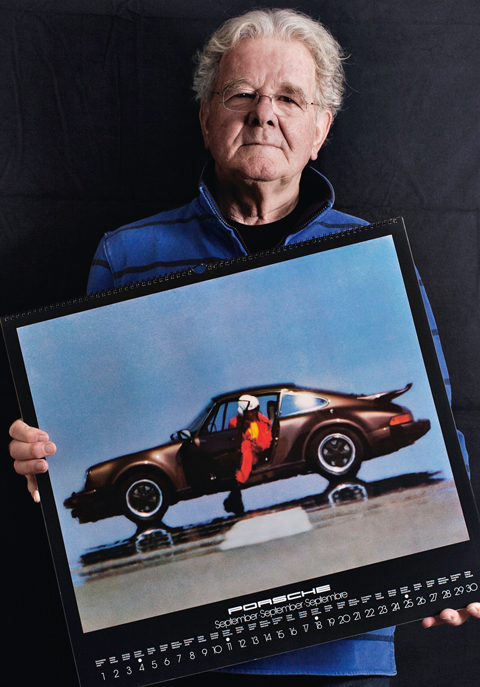
WW: Photography used to be a craft, but today it's an add-on function on a cell phone. What do you think about this development?
Dietmar Henneka: So you have to delete the word "art. Photography is primarily a craft. Or it was, until the cell phone came along. The development? You have to look at it much more broadly. Today, anyone can steal pictures from the Internet, change them a bit creatively, and then use them photographically. This impression is confirmed for me when I look at certain images here at Photo15. There are many "photos" among them, where the photographer has forgotten what his original picture looked like. But you wanted to know my relationship to the cell phone. The camera built into it only has a photographically creative function if the operator has learned that beforehand. Not technically, but the eye. Just stalling, that's still nix. Using it in this way will only cause the cell phone to waste away. But I can trust myself to do something clever with the cell phone. Because I know that a picture is created in the head, not on the chip.
You said in your presentation at Photo15 that you no longer use a large camera, but only the iPhone for taking photos.
Of course, I still have my equipment, but I love downsizing with the Sony RX100 pocket camera, not those heavy professional things. My credo is: It doesn't matter with which camera you take pictures. The main thing is that the picture has an idea. During my almost daily observations with the cell phone, I have also noticed that the format of the iPhone suits me much better. It's like the TV format, after all. I recently photographed an entire wine reportage for a Swiss magazine using only my cell phone.
Are you still working every day?
I'm not out yet. But I just finished a sabbatical. Nonsense. I just did nothing for a year. That could still happen to me in 2015. Although it's also possible that I'll work in the automotive sector again. I'm 73 now and have no desire for more hamster wheel years. I could do a bit of landscape art now. But I don't want to do that at all. I enjoy doing nothing. I finally want to go to Florence, like a normal Kuoni traveler, without a photo crew, layout specifications and AD supervisors. I want to visit former locations with my wife, which she only knows from my photos. I want to be free and travel now. In ten years, I might not like traveling anymore - or the bones will be gone.
You've won 248 awards in your career, and now you've thrown 200 of them into the bucket. Why?
I only did that because I have no more space on my studio walls. I didn't throw the trophies away in anger, but asked myself: what else do you want with them? So I kept only the best ones: Fame is fleeting, but namelessness is forever.
What were important drivers for your career?
Since I was in Stuttgart, rather Germany's last zipfele for top 10 advertising agencies, I did a lot of self-promotion, for example in Lürzer's Archiv. That at least made me known. It was also the grace of my name. Hennekas are very few in Germany. As Otto Müller, I would possibly never have become known in such a lasting way, quite apart from my skill.
What are the criteria for someone to become a star photographer today, when thousands are vying for such dream jobs?
I had no star mission consciousness. I could have been an optician in the same way. It was sheer coincidence. It didn't come from my parents' house. But this creative aspect was probably in me somewhere. In retrospect, I say: 50 percent is for the talent, 50 percent for the person. That's the crazy thing. And I'm sure it's especially important that I always said: Don't get caught in the frying pan or rather open a rowing boat rental shop on Lake Constance.
You talk about the relationship with the customer?
There are many art directors today who like to show up with me and then reminisce about the good old days. But back then, with an AD, they were rarely really good. In any case, I preferred to drink with other creatives than with these ego-binder boss fuzzies. In the 80s/90s I worked a lot in Zurich. In the studio Maur at the Greifensee. There I had to learn that the Swiss are consensus people. They say: You don't always have to "uusrüefe". But consensus to me means palaver. "If you're not willing, I'll need violence," was my emergency ripcord on the set. That's why I can hardly remember an art director today with whom things were only peaceful on the set. But most ADs and quite a few colleagues today are rather introverted. I'm just extro and try not to run over my client, though. But sometimes there were situations where I had to assert myself. Unfortunately, this has alienated some of my agency clients. But that's just my South Baden-Alsatian nature.
Have you turned down many jobs?
I've turned down very few jobs. The battle takes place on the set, not like in film. There, everything has to be arranged beforehand because the team is much bigger. In photography, the team is smaller and therefore more agile. I can then convince the people involved more easily that they are working in my direction.
Even the customers?
The customer is not just the CEO, but the advertising manager and the hierarchy around the advertising manager. You don't learn how to deal with them at a university. You learn that as an altar boy, head altar boy, boy scout and later as a private in the German armed forces. There I had to serve! Here I learned how a hierarchy works. I can also bring this knowledge about the mechanics of hierarchies into play when pushing through an idea.
You are considered to be the photographer who was the first to place the car in an art set for Mercedes advertising. Did that take a lot of convincing?
Normally, this is done by an advertising agency. They have the idea and then give the job to a photographer. As early as the mid-90s, I noticed how I could propose much more creative solutions when negotiating directly with the client. I said to the people at Mercedes: There's still a little corner open that you could do yourself as an advertising, marketing or sub-department manager. Here you could contribute creatively for once, without having the agency suggest everything every time. And then they liked that. That's how I was able to design many calendars for Mercedes. The departments and I simply had a more direct, common connection than with the youngsters at the agencies. At important meetings with agencies, 10 men/women would fly in at a time. Now only the Henneka came, not with the usual reinsurance-agency-speech, but loosely from the rather private stool, instead of defining restrictions for the briefing. I took the meetings to another level by challenging the client to decide for himself whether an idea was good or not. For the implementation, I was mostly given a free hand; they trusted me. The managers have studied business administration or something similar, rather than art education or training in image design. But they could decide whether they liked an idea. Unlike many art directors, who only felt obliged to follow layout guidelines on the set. So later I was able to work a lot with direct clients. But that didn't work at all with Porsche. S
ou are considered a photographer who designed early on according to today's buzzword "storytelling. How did you stage your images?
Not in the non-auto sector. A photo has to tell a story. When I'm commissioned to take a picture for a winery, the first question is: How can I implement this so that the viewer gets a dry palate? That's the message, which in today's jargon now means "storytelling". But I don't have to arrange the scene for that. I say: Have a party! And then I go through the people with my cell phone and capture the best moments. You find a similar technique in street photography. If I get it right, the quality of the cell phone with its number of pixels is technically already enough for a double-sided display today.
You designed most of the subjects without Photoshop. What do you think about image editing?
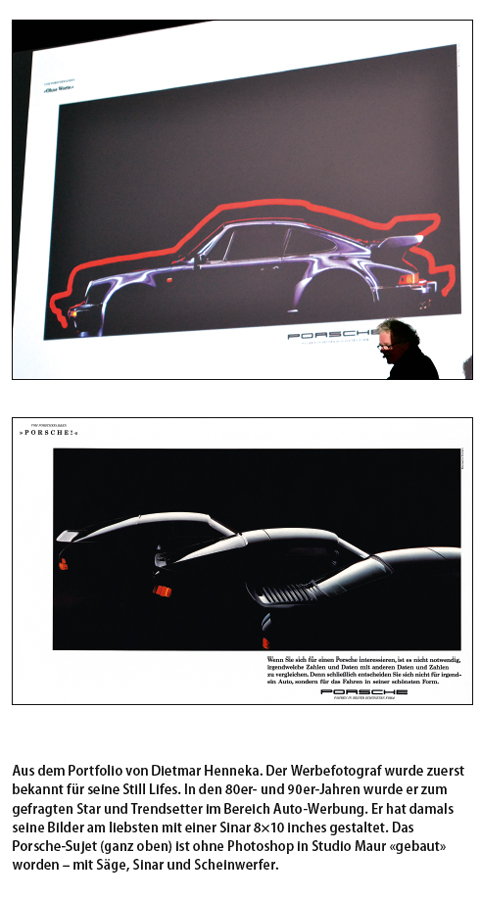
I have nothing against it at all. You can be very creative with it. I myself once Photoshopped an Audi convertible off a cliff by the sea, over the precipice into the waves, so that the rear wheels looked as if they were in the sea 20 meters below. Such an illogical creation stands out and leads to a statement. There is an idea behind it. Photoshop makes sense when it actually improves the image - not technically in the sense of retouching, I'm not even talking about that. But if a so-called new world of images is to be created by force, in many cases today it only looks artificial - but not artistic at all. Photoshop also existed in the past, it was called retouching. Today it's done digitally. The message remains the same. Because you can't bring an idea into an unimaginative picture, even with Photoshop. You have to see Photoshop as a tool. Or then I am an image director. I don't take photos anymore, I look for CGI backgrounds and frieze my image together myself. That's fine. But it's not my world.
Interview: Andreas Panzeri