Text Academy Podcast #43: «AI is a mirror of humanity» - Selena Calleri on language and AI
Blonde jokes in cultures where they never existed—a small example that explains a lot. AI isn’t neutral; it reflects back what we’ve fed into it. Computational linguist Selena Calleri on the podcast «AI and Society.».


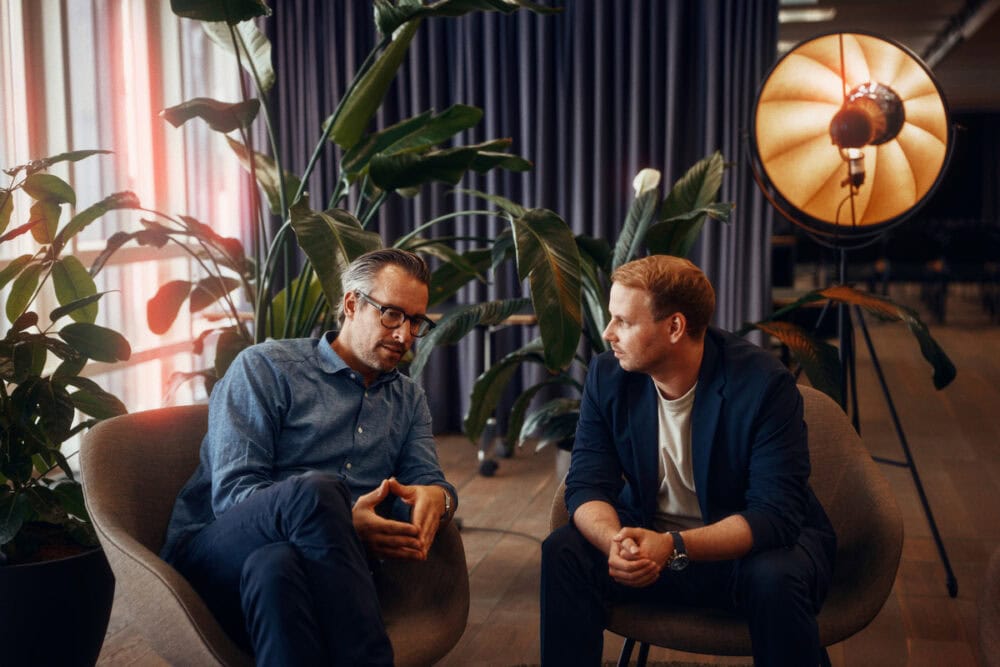
Selena Calleri is a computational linguist, legal theorist and in-house AI consultant at the TX Group. In the podcast «AI and society - paths into the new world», she talks about a question that is on many people's minds: Does AI really understand language - or is it just simulating?
For Calleri, the answer is clear: «It's actually always just an educated guess. The AI tries to statistically predict what the best possible answer is.» Anyone who has studied computational linguistics, as she has, was immunized against the hype early on. Language models have always been tools for language modeling - now they are simply better because they have more data and more powerful algorithms. She believes that talking about a «thinking being» is a confusion of categories.
A thousand perspectives - and none of your own
She calls what is missing «situatedness». A person is embedded in their history, their experiences, their relationships - all of this shapes their perspective, whether they like it or not. A language model, on the other hand, is a mixture of a thousand perspectives, but has none of its own. The philosopher Donna Haraway aptly describes this blind spot as a «view from nowhere» - the claim to an objective view from everywhere and nowhere at the same time.
Blonde jokes as a symptom
Calleri's assessment of the much-vaunted neutrality of AI is particularly pointed. «AI is no more neutral than we are - it simply reflects all opinions in the world.» The training decides what goes in, and therefore also what comes out. As an example, she cites multilingual models in which blonde jokes suddenly also appear in language areas where such stereotypes simply do not exist culturally - a side effect of multilingualism that transfers cultural imprints unnoticed. In short: language models hold a mirror up to us - and it shows our own prejudices.
The mirror does not lie, it only shows us
How can this be improved? Calleri does not advocate technical patent remedies, but rather more diversity - in teams, in training data, in discourse. More perspectives at the table and a willingness to tolerate contradictions instead of rushing to force a consensus. «There is no absolute truth,» she says with the composure of a philosopher who means it.
Her view of the next ten years is sober: she expects a growing social divide between a hyper-digitalized class and a counter-movement that focuses on sovereignty and self-determination in technology. This tension will increase noticeably in Europe in particular. What can help? Creating spaces in which people can talk to each other who don't normally do so. «Community building», says Calleri - and suggests, not entirely tongue-in-cheek, eating together as an underestimated means of democratization.
The video podcast «AI and Society—Paths to a New World,» hosted by Christoph Soltmannowski, is produced by the Text Akademie Foundation. Two episodes are released each month on Spotify, YouTube and the major other podcast platforms. Produced by Castalavista.