Women are underrepresented in German streaming series
In German streaming series, men play twice as many leading roles as women. Only 35 percent of the central roles are cast with women. This means that German productions fall below the global average of 42 percent female leads, as a study by the University of Rostock shows.


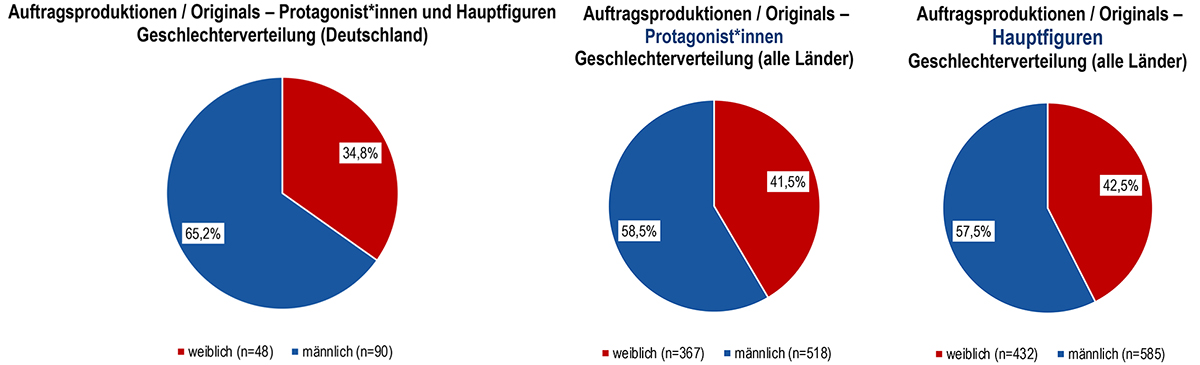
According to the study, the diversity of female roles in German streaming offerings also leaves a lot to be desired. Women are not only seen less frequently, but are mostly young and slim. 49 percent of their roles are in romantic formats. The report by the University of Rostock, funded by the Film- und Medienstiftung Nordrhein-Westfalen, the Malisa Foundation and ZDF, states that they pursue professions that "emphasize their emotional competence"
"The study shows once again how important it is to confront perceived truths with facts," explains Maria Furtwängler, actress and co-founder of the Malisa Foundation. It is a shame that the public still has to do without female role models.
The survey also showed that 89% of the central roles in German productions are played by people of white skin color. None of the main characters in the series surveyed were black or Asian, with the remaining eleven percent belonging to the Middle East.
For the study, the University of Rostock examined almost 200 series from Netflix, Amazon Prime, Sky and TNT Germany that were released between January 2012 and July 2019. (SDA/swi)
The study "Gender representations and diversity in streaming and SVOD offerings" was conducted under the direction of Prof. Dr. Elizabeth Prommer from the University of Rostock and sheds light on the gender and role models that can be seen in series from streaming providers on the German market. The study was funded by the Film- und Medienstiftung NRW, the MaLisa Foundation and ZDF. The The full results of the study can be found on the MaLisa Foundation homepage.