The six success factors in cross-media campaigns


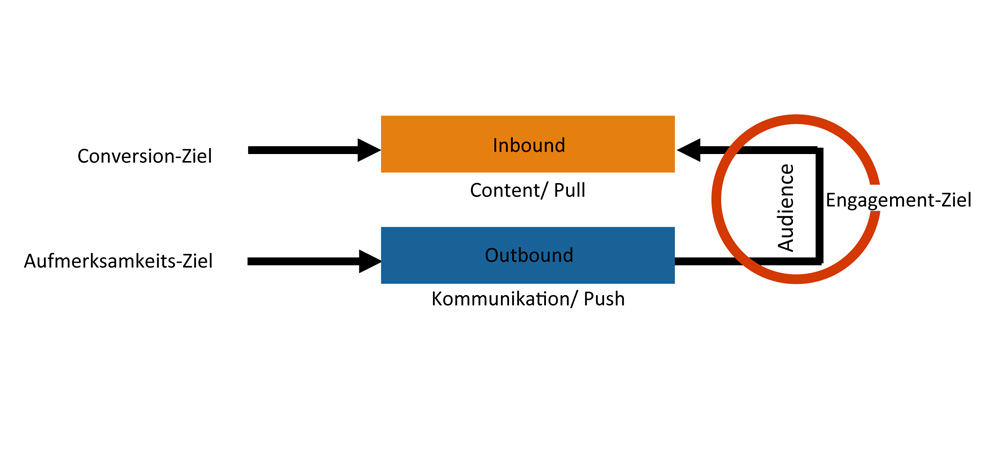
1. extended target group consideration
Cross-media approaches require precise knowledge of the target group due to the interaction goals. This can be prepared well using the personas approach, for example, in which four to five typical people in the target group are depicted in detail with regard to their socio-demographic profile, psychographic criteria, and their behavior from a brand- and media-specific perspective. In addition to these core target groups, the key opinion multipliers or online influencers (e.g. bloggers) must also be identified and taken into account.
2. more differentiated target group approach
Based on the extended target group analysis, a differentiation is made into a sub-public-specific storytelling for the different user segments as well as a subdivision into different target phases. The weighting of the target phases depends on the initial situation of the brand. In the first phase, the focus is on creating awareness and a liking for the campaign among a broader target group (We are looking for the target group). Following this, it is important to engage the active segments of the target group with suitable media productions and to lead them to take up the messages in their own social networks by means of suitable participation offers. Building on this, the messages are to be staged in a further phase in such a way that a core target group is bound to the company in the long term (The target group is looking for us).
3. process-defining storyline and dramaturgy
The basis of good cross-media campaigns is a storyline that realizes the creative central idea. It determines the course of the campaign and stages the messages in an emotional form. It is based on the principles of storytelling. Derived from the storyline, the dramaturgy defines the plot structure of the campaign. The focus is on the systematic development of user engagement. Among other things, targeted calls to action are essential. In addition, high-reach networks are to be included for the viral social dissemination of the content. At the center is a "hub" as the heart of the campaign, to which all channels refer. Essential for the sustainability of the messages is a media leap in the form of offline actions, such as events, since successful online campaigns are rarely purely online campaigns.
4. communicative bracket
To ensure that the campaign is recognizable, it is essential to focus on a few design elements such as a key image or a protagonist and a claim. Campaign-specific elements such as protagonists, jingles or campaign logos are much better suited for this than cross-company CI/CD elements. A good example here is the ibex as the figurehead for Graubünden.
5. systematic campaign planning and resource allocation
Already in an early planning phase, it is important to bring all disciplines - strategic planning, media, creation, IT - to a "round table" and plan the campaign together. Creation, media planning, campaign architecture and SEO/SEM must be closely coordinated. It is essential that the project management remains in the hands of the company and a responsible person or department. High value must be placed on well-developed briefings that provide the agencies involved with all the information they need.
6. success control
It is also essential to plan for the evaluation of results right from the start of campaign planning. Accordingly, the appropriate measurement points, measurement variables, measurement methods (e.g. panels, media response analyses, web analytics, CRM data) and tools (e.g. Google Analytics) as well as their combination must be planned. With regard to the measurement methods, it must be ensured that these reach those people who have actually seen the campaign, since cross-media campaigns often have lower reach and are aimed at precisely defined target groups.Authors: