Hour of rebirth
The successful restart of the trade fair and event industry after the 2021 summer break sends a convincing signal to the exhibiting industry: trade fairs are irreplaceable in marketing. Thanks to 3G, exhibitors and visitors can meet again without masks and look forward to their trade fair renaissance in 2022.


»At Art Basel in Basel, we finally rediscovered the pleasure of experiencing art in real life rather than through a screen,« explained an exhibitor in September 2021. »Finally, trade shows are back, and we’re making in-person connections with our buyers—and our order books are full. What more could you want?« said an exhibitor at Ornaris in August 2021. There’s no doubt about it: Now, after »online fatigue,” the business world wants to meet in person again. It needs trade shows once more.
Swissbau as a Barometer
In the trade fair sector, Swissbau in Basel, taking place from January 18 to 21, 2022, will serve as a barometer of sentiment among exhibitors and trade show visitors regarding the coming year. The number of exhibitors at Swissbau 2022 is expected to decline compared to 2019, as many exhibitors are still undecided about participating due to the pandemic.
This trend could shift after Swissbau 2022. Observers expect a large number of visitors to attend the trade show, and that could mark a turning point in the mistaken assumption that trade shows will be replaced by virtual platforms, providing a new, additional boost to the trade show format. The only uncertainty is the pandemic, which is still holding exhibitors back from committing to trade shows as a medium. However, 88 percent of industry professionals surveyed by Swissbau say that attending trade shows will remain a fixed date on their calendars. Of the 4,300 survey participants, nearly 90 percent even stated in August 2021 that they are looking forward to returning to Swissbau in 2022.
«I've never been so happy about a glass that's half full»
Statements like the one quoted at the beginning run like a common thread through the comments from exhibitors and visitors during the 2021 fall trade show season. Switzerland’s largest public trade fair, Olma, describes the event as a «successful relaunch with 220,000 visitors from October 7 to 17, 2021»—compared to 350,000 guests before the pandemic. This suggests that exhibitor and visitor numbers could return to pre-pandemic levels in the future. Olma Director Christine Bolt said at the press conference ahead of the event, «I’ve never been so happy about a glass that’s half full.».
The usual lines at the entrances were on display at Vitafoods, held October 5–7, 2021, at Palexpo in Geneva. From September 14 to 17, 2021, 530 exhibitors took part in the EPHJ technology trade show. Still, 12,000 visitors attended—compared to 20,000 in a typical trade show year.
«Now that people are getting tired of being online, the business world wants to meet in person again.»
A second, highly anticipated barometer for the Swiss—and even the international—trade show industry is the Geneva International Motor Show, which was canceled twice during the pandemic and has now been canceled for 2022 as well. People are now wondering whether—and in what form—it will ever return.
Auto Züri, once considered the «poor cousin» of the Motor Show, could be the big winner in this situation. After last year’s hiatus, it returned to Messe Zürich from November 4 to 7, 2021. The organizer used the pandemic-related hiatus to implement a completely new exhibition concept focused on functionality and sustainability.
A fresh start without a mask? Sure thing!
Exhibition centers were among the first to respond to the pandemic by developing their own safety and hygiene protocols. Thanks to the 3G rule (tested, vaccinated, recovered) and a well-thought-out hygiene plan, visitors can now attend virtually all trade shows without wearing a face mask. To gain access to Olma, visitors aged 16 and older were required to present a valid COVID certificate. Thanks to this solution, trade shows were able to operate in the fall of 2021—as was the case at all Swiss trade fair venues—without restrictive safety measures such as mandatory masks or social distancing rules.
«Event organizers have used the pandemic as an opportunity to develop entirely new concepts.»
Join the community in just three clicks
Despite the resurgence of trade shows, the topic of «digital expansion of trade shows» is finally being taken seriously by trade show organizers because, in the wake of the pandemic, they can no longer avoid it. This will not lead to trade shows being replaced as a medium. However, organizers must now take on the task of connecting their exhibitors and visitors more effectively. The Bernexpo Groupe masterfully demonstrated what networking means in the trade show industry at Sindex, held from August 30 to September 1, 2021. It used the COVID era and the time leading up to it to reposition itself digitally. At Sindex, visitors could connect with exhibitors and other attendees via the «Networking» menu—even on their smartphones—with just three clicks. At the same time, it enabled networking even without attending the trade show (!)—thereby breaking down the previous limitations of trade shows in terms of space (exhibition hall) and time (duration of the event).
At Ilmac, held in Basel from October 19 to 21, Conteo’s latest digital initiative (see interview)—the Ilmac Community—was launched. It is an example of what exhibitors and visitors can expect from trade shows: an industry hub available 365 days a year.
The digital events organized by Messe Luzern under the motto «Prepare digitally, meet in person,» such as AM-Expo and the Swiss MedTech Forum—which, due to the pandemic, will now take place simultaneously on September 14–15, 2021—were already established before the pandemic and had generated 42,000 page views just one week before the fair began. With 81,000 page views, the AM-Expo website became the central source of information and inspiration for visitors preparing for the trade show.
The Conclusion
During the pandemic, one thing has become clear: with a few exceptions, trade shows are irreplaceable for the economy. People want to meet in person again. Digital extensions of trade shows will serve as an important bridge to the live experience. But they won’t replace the handshake that seals a deal or the unexpected, unplanned event. Only live encounters can do that.
INTERVIEW
«Nothing in the world can replace face-to-face communication»

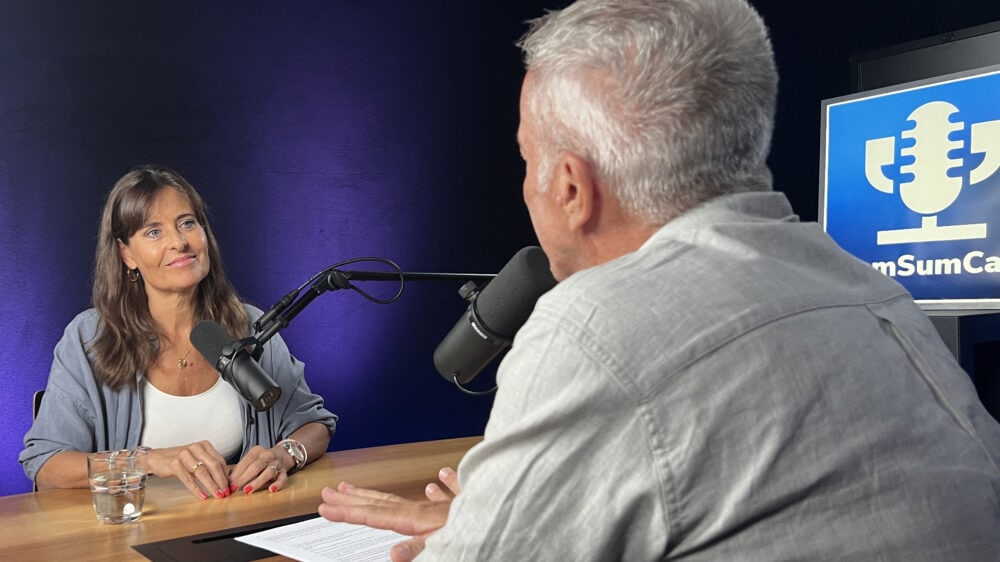
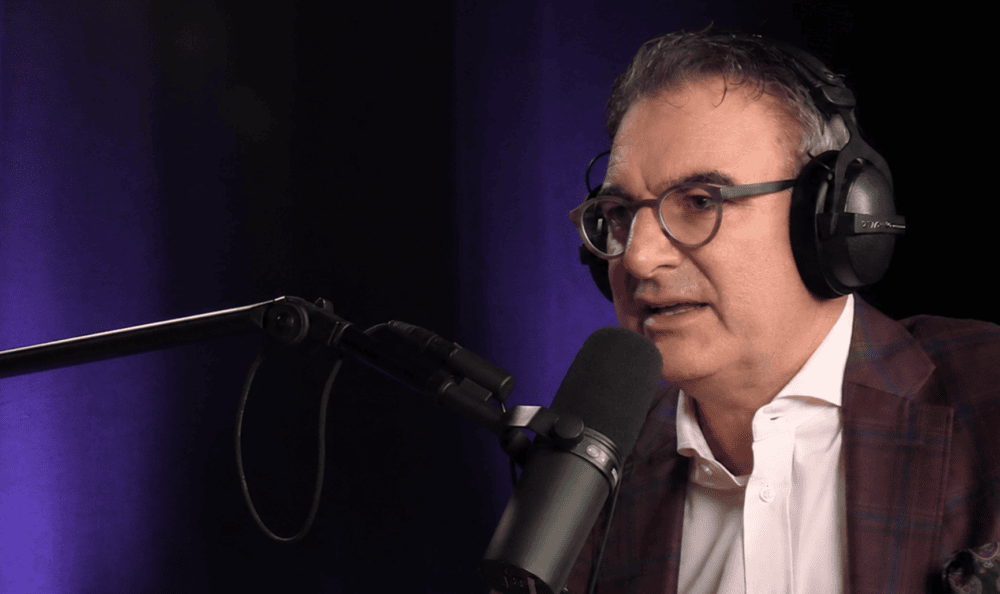
Michael Mätzener, organizer of the marke[ding] promotional products trade show and owner of the agency die werbeartikel, on the importance of tactile experience and the realization that messages on a screen simply fall flat these days.
What does this mean for your company?
I’d like to speak here as the organizer of marke[ding]. The 2020 and 2021 editions both had to be postponed to August—and on both occasions, we saw a decline in both visitors and exhibitors. In response, we created a new platform called Digital marke(ding), but we quickly realized that nothing in the world can replace live communication, especially in the tactile world of advertising. People want to touch things to understand them. Attendance at the digital trade show was disappointing.
We are excited to host the trade show at the Kongresshaus Zürich in the future. This means it will be even more centrally located in the vibrant business hub of Zurich. We’re also rethinking a few things and will certainly go even further in adding value for visitors—for example, with workshops. Visitors have a lot to look forward to and will soon be able to register for free.
Will promotional items take on a different significance in the future than they have in the past?
The importance of haptic boosters—that is, promotional items—certainly remains a key element in advertising. However, there are certainly even more extensive—and increasingly deliberate—ways to engage customers, and to an even greater extent, employees, with a tactile message. After all, we all know that a message simply gets lost on a screen these days…