Quo vadis, marketing?
The challenges facing marketers have grown enormously - and not just since the start of the pandemic. They have to drive data-driven transformation, try out new things ever more courageously, move from the product's inside view to the customer's outside view. And, most importantly: think entrepreneurially.


The doomsday predictions that the position of Chief Marketing Officer is «dead» have become significantly more common in recent years. According to critical voices, most CMOs no longer really focus on marketing; and that creating and delivering value for customers has gradually taken a back seat over time. More and more marketers are said to be downright «constrained» within their organizations, focusing more on public relations and communications than on product development and pricing. CMOs are constantly having to be careful not to encroach too heavily on the territory of the Chief Innovation Officer or the Chief Financial Officer. What is the truth behind these claims? And what conclusions can we draw from them regarding the future of marketing?
More strategic responsibility
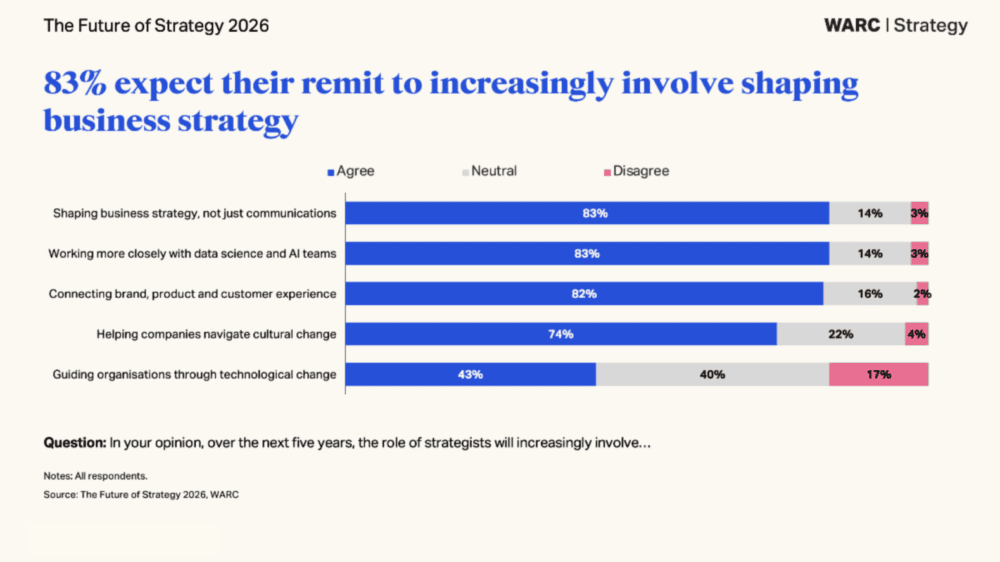
One person who doesn’t think much of such undifferentiated criticism is Rolf Rellstab. The lecturer at the Zurich University of Applied Sciences (ZHAW) does not believe that marketing is losing its importance—but he does believe that the roles of marketers are undergoing a fundamental transformation: «While marketing was traditionally situated at the end of the value chain and, as an executive function, focused on brand management and advertising, modern CMOs today participate in discussions about the company’s strategic direction and share responsibility for its growth targets,» explains the expert.
«When interpreted correctly, the scope of work for marketing professionals is more important than ever.»
Interpreted correctly, the field of marketing professionals is today «more important than ever.» Rolf Rellstab continues: «The globalization of competition, the enormous influence of digitalization, technological convergence, the erosion of industry boundaries, and the rising expectations of consumers are, to put it mildly, challenging.» Companies must respond to these changes, adapt their strategies, and redesign their business models. «Marketing is responsible for ensuring that this transformation does not overlook customer needs,» says the ZHAW lecturer.
«Chief Collaboration Officer»
Jennifer Chase, CMO of the global tech company SAS, echoes this sentiment. She says she has the impression that, for a long time, marketing was viewed in many companies as an «executive arm»—a kind of service that supports the company’s strategy through implementation measures. «Now, however—and I can speak for SAS at least—we use marketing to help shape the company’s strategy.» One of marketers« »superpowers« must be to become »Chief Collaboration Officers«: Tech manager Jennifer Chase says she now spends considerably more time with her colleagues from various departments to understand the challenges they face. »How can I help them with marketing, and how can we achieve a goal together?”
Mr. and Mrs. «Jack-of-all-trades»
Achill Prakash, the former head of marketing at Swisscom, agrees: «The role of the CMO is becoming increasingly important.» As markets become more complex, he says, marketing is also becoming more multifaceted and interesting. «Perhaps the CMO should even be the Chief Market Officer.»
Prakash also brings up the title “Chief Commercial Officer,” which he believes best captures the role. In the past, Chief Marketing Officers would discuss great advertising with agency heads over expensive lunches and at glamorous events. But those days are over; marketers have now been entrusted with numerous new responsibilities. Today, they must be customer experts, Google specialists, innovation drivers, process optimizers, complexity simplifiers, growth generators, campaign designers, product salespeople, digital media specialists, cost cutters, and much more.
«It’s unbelievable what CMOs have to be able to do these days!» But because while their tasks have expanded, their scope of responsibility hasn’t kept pace everywhere, the role of the Chief Marketing Officer has never truly matured. «Tasks, responsibilities, and authority are often not aligned,» as the marketing expert says.
Prakash, who is now self-employed and runs the consulting firm Better Studio in Zurich, describes the role of the CMO as «vague by nature.» «It’s no wonder that the Chief Marketing Officer’s personality and the power of the discipline get lost in the day-to-day corporate madness.» But it would be short-sighted to blame others for this. «If the CMO’s role isn’t strong enough, we only have ourselves to blame,» the 44-year-old makes clear. (See the points discussed later in this article.).
Digital and data-driven
The pandemic has acted as a catalyst for transformation and significantly accelerated the pace of change on the market and customer sides. According to Jan-Hendrik Völker-Albert, the pandemic has ensured that even the last marketing department has realized it must drive forward its digital and data-driven transformation. «How consistently and boldly this is done will determine success or failure in the future,» explains the head of marketing at PricewaterhouseCoopers Switzerland. PwC advises clients on all aspects of customer-centric transformation and marketing.
«The roles, responsibilities, and authority of CMOs are often not aligned.»
According to Völker-Albert, the importance of marketing today depends on the industry and sector. «The marketing function supports the achievement of corporate goals and, through revenue directly influenced by marketing, often makes a contribution to the company’s success that is vital to its survival.» Every Swiss company should have one person who takes responsibility for market development and marketing—ideally at the executive or board level: «The marketing function gains greater visibility and influence the more effectively those in charge can demonstrate, based on data, how they impact revenue targets and corporate success.»
To strengthen the marketing department’s position within the company, Jennifer Chase of SAS relies on «marketing for marketing,» as she calls it with a wink: «I can only recommend to every CMO that they launch an internal »marketing-to-marketing campaign’ so that senior management—and then the rest of the organization—understand exactly what we do.” This can be achieved in a few very simple steps: For example, the head of marketing sends a message to the entire executive team once a week, outlining what they can expect from the marketing department in the coming week. “That might sound like a bit of a tactic, but how else are we supposed to communicate with our colleagues?” Something as simple as a weekly email could solve the problem.
Jan-Hendrik Völker-Albert, who previously served as head of marketing at SBB, is convinced that as the importance of marketing grows, the demand for the right talent and the appeal of marketing roles at all levels of the organization will continue to rise. «The pandemic has shown how important the marketing function is to a company’s survival—especially when physical interaction with customers is no longer possible or is only possible to a limited extent,» said the PwC executive.
Effectiveness of Campaigns
How can you quantify a marketing campaign? How do you determine whether the capital invested has led to an increase in actual sales? According to Rolf Rellstab, a senior researcher at the ZHAW Institute for Marketing Management, it is relatively easy to measure the awareness generated by a marketing campaign. But that alone is not enough. After all, you also want to know whether attitudes among the target audience have changed, whether concrete interest in purchasing has been sparked, or whether sales and loyalty have increased. For various reasons, particularly due to the time lag, it is often difficult to demonstrate a concrete impact on purchases. «So we have to live with the uncertainty that marketing campaigns may ultimately not be as effective as we had hoped,» explains Rellstab.
«Modern CMOs have the courage to try things out, test them, and make mistakes.»
What, in the lecturer’s view, defines a good CMO? To succeed in this new role, CMOs need to combine analytical skills with creativity and be both technically savvy and willing to collaborate. «Modern CMOs have the courage to try things out, test them, and make mistakes. They can inspire others and win them over to an idea. A good CMO can generate emotions from data, with the goal of delighting customers.» Chief Marketing Officers thus also become experience designers, as the 42-year-old concludes.
Theses: The Cardinal Mistakes of Marketers

When marketing executives fall behind in their companies, they share the blame—according to former Swisscom CMO Achill Prakash. He has identified four fundamental mistakes that should be avoided.
«No opinion of my own»
Very few CMOs have an opinion they’d be willing to express publicly. You rarely hear them make thought-provoking contributions, neither on LinkedIn nor at conferences. Marketers only step into the spotlight when it comes to advertising, but: «CMOs need to be provocateurs. They need to always be three steps ahead and tell others about it.»
«Too sluggish, too slow»
Many marketing executives today are moving too slowly. But what’s needed are leaders with the character and skills to keep their footing in fast-paced markets. «CMOs can’t just do marketing—they have to be Chief of Speed,» sums up the founder of Better Studio.
«Wanting to be able to do everything»
Another problem, he says, is that many marketing executives «want to be able to do everything.» Because marketing has become such a complex discipline, they have surrounded themselves with a multitude of internal and external specialists. However, these specialists are embedded within a hierarchical structure, and the final decision always rests with the highest authority. But this approach is outdated and reckless today. «CMOs must find new structures in which highly competent experts can make decisions on their own.»
«Not enough entrepreneurship»
Marketing is a craft that thrives on a willingness to take risks. «But we make decisions based on data; we copy others» strategies—and worse still, we just rehash our own old strategies.” That’s why the expert urges us to take more risks and to be able to weather the storm if we happen to make a wrong decision.
This article first appeared in m&k extra for Direct Day 2021.