Live events: Back in contact
In-person events are making a comeback. But competition is getting tougher, and attendees expect top-notch networking and tangible added value—and they demand sustainability.


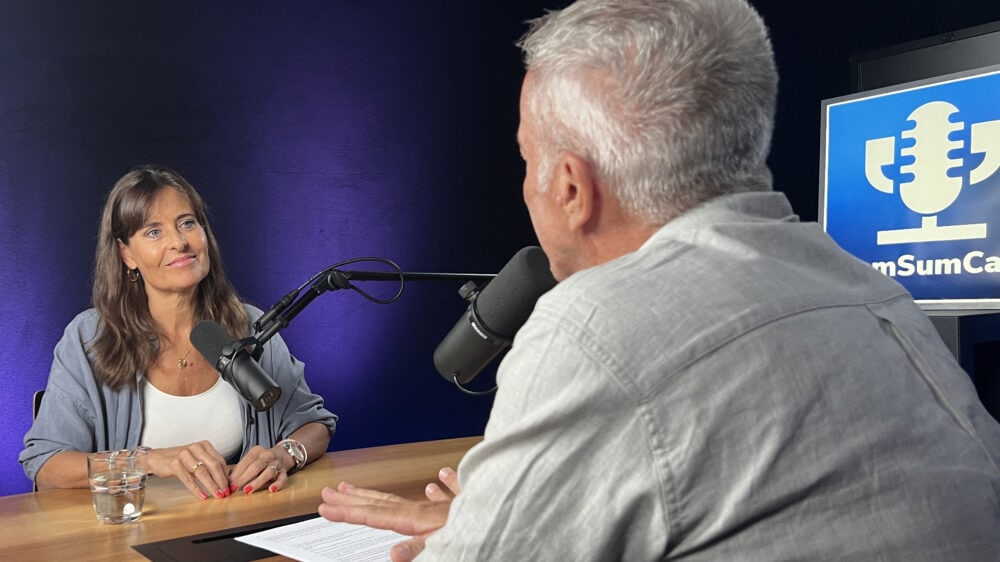
When around 40,000 people flocked to the exhibition grounds in Cologne-Deutz in September 2024, Verena Gründel made her debut as the new host of the annual digital marketing event DMEXCO. The manager had spent a long time preparing for her debut and had traveled extensively to exchange ideas with industry leaders. ’The market is changing at a breakneck pace, which is why the challenges are constantly evolving,« explains Gründel, who is now touring the DACH region once again. After the event is before the event.
Just recently, Gründel sat down with her team to brainstorm new focal points and a fitting theme for September 2025. «Prompting the Future» was the theme of the last conference, where the ever-present superpower of artificial intelligence was a recurring theme across many sessions. But who knows right now what spirit will be sweeping through the industry next year?
Events need to keep up with the times
«It’s important to constantly refine our event format,» Gründel says. Through intensive dialogue with marketers, agency heads, and startup founders, she gains insight into what’s driving the industry. After all, the conference is only relevant if it hits the mark. And only then will attendees—who are eager to meet in person again after the pandemic—show up. This isn’t just true for DMEXCO: conventions, conferences, trade shows, and the like are back in full swing. According to the «Meeting & Event Barometer 2023/2024,» last year’s 2.15 million events represented three-quarters of the 2019 level. This corresponds to a 25 percent increase compared to 2022. Of these, 1.8 million events were held exclusively in person, while 328,000 were designed as hybrid formats—taking place both on-site and online simultaneously. ’The market for in-person events is making a comeback,« says Gründel, who sees her gut feeling confirmed by the numbers.
Event organizers can be pleased with this tailwind—though they must share the market with an ever-increasing number of competitors. On top of that, the money to pay for attendance and perhaps even a booth on-site isn’t as readily available as it used to be. «Companies are scrutinizing their return on investment more and more closely,» observes Gründel. Smaller congresses and conferences, in particular, are struggling. The numbers confirm this: According to the latest Meeting and Event Barometer, smaller events with fewer than 100 participants are on the decline, while larger events are growing more rapidly.
Less leeway for spending
Rising procurement and personnel costs are leaving less and less room in Switzerland for expenses that can be put on hold if necessary. For Adrian Erni, however, measuring success solely by visitor numbers doesn’t go far enough. For the spokesperson of the national association Expo Event Swiss LiveCom Association—which has around 180 members from the events industry—the motto «quality over quantity» applies today more than ever. Erni cites the Suisse Caravan Salon, Switzerland’s largest trade show for camping and caravanning, as an example. Exhibitors don’t measure success by how many of the nearly 60,000 visitors stopped by their booth, Erni explains. «What matters is how many leads and deals were generated.» That wasn’t always the case: For many years, events were planned with the aim of attracting visitors’ attention through a lot of fanfare, as the Expo-Event spokesperson describes it. This led to the events being rated, at best, as entertaining but not very relevant. For some, this meant the end of the road.
«Ultimately, a conference is only relevant if it hits the mark.»
In contrast, budgets today are precisely calculated. The focus is clearly on the results achieved. To optimize these results, it’s important to understand your target audience and know what they expect from live interactions. Through her numerous conversations with managers at advertising companies, marketers, agencies, software developers, and tech platforms, Verena Gründel has identified these needs. While younger target groups tend to seek professional development, decision-makers—who make up about two-thirds of the attendees—focus on networking. She therefore offered the next generation a platform for networking and knowledge exchange with the new «Digital Pulse» format. For marketers, a CMO Summit with a VIP area was held for the first time to facilitate targeted networking among attendees. According to Gründel, return on investment is also increasingly a focus at DMEXCO, which is why the entire two-day event is tailored to a «business first» approach. «This makes it easier for our visitors to justify to their companies why they should attend our event,» said Gründel.
This explanation to bosses may be easier for those interested in the 4Gamechangers Festival in Vienna. Because the three-day event is hybrid, attending online eliminates the costs of travel, lodging, and meals. By allowing participants to join from home, the organizers—ProSiebenSat.1 Puls 4—are also pursuing another goal: they want to expand their target audience and reach as many influencers and visionaries as possible. Beyond industry boundaries, 4Gamechangers aims to provide a platform for jointly discussing societal challenges, explains Claudia Krügel, Head of B2B Marketing at the broadcasting group and deputy director of 4Gamechangers. «We’re achieving this hybrid approach through our livestream and our streaming platform Joyn, as well as through TV broadcasts on the channels Puls 24 and our co-organizer ORF and its channels.»

How is performance measured?
With such a diverse target audience, measuring performance seems to be more complicated. But the organizers have found a way. «In addition to traditional KPIs like visitor numbers and reach, we rely heavily on feedback and qualitative insights from the audience and our partners,» explains Krügel. Digital engagement and its reach are also analyzed. «This ongoing evaluation helps us precisely manage the relevance and impact of our festival,» explains the manager. In May 2025, when the 4Gamechangers Festival takes place again, discussions, interactive experiences, and networking opportunities will once more take center stage. According to Krügel, the essential elements that audiences expect today include modern event infrastructure, digital resources for follow-up—and sustainability.
For Adrian Erni, this represents one of the major future trends in live communication. Setting up trade show booths and conference stages for a few days and then tearing them down again is a thing of the past, according to the spokesperson for Expo Event. «In the future, there will be regulations from the state and local governments to make events more environmentally conscious,» says Erni, pointing to recyclable tableware and compostable promotional gifts. «Anyone who doesn’t address the issue of sustainability will be left behind in the future,» Erni is certain. The Expo Event association is helping with concrete guidelines and certifications.
«Unlike in the past, budgets are tight these days.»
However, holding events—for the sake of sustainability—entirely virtually again, as was the case during the pandemic, is not a solution for him. «These days, you no longer have to fly around the world to exchange ideas. But when it comes to maintaining relationships and moving things forward, there’s no getting around face-to-face meetings.»
It’s great when guests and hosts no longer have to start from scratch. In addition to blogs, podcasts, and social media channels, Verena Gründel personally keeps her DMEXCO community informed through her own newsletter. There, she lists all the relevant news she learns through her interactions with the industry. «That, too, is part of a modern event strategy today,» she says. «We’re partners to the industry all year round.»
INTERVIEW
«Don't keep changing the strategy»

Philipp Westermeyer is the founder of Online Marketing Rockstars (OMR).
m&k: They suffered during the pandemic, but now in-person communication formats are making a comeback in many industries. What’s behind this new desire to meet in person—and how are you experiencing it?
Philipp Westermeyer: Stadiums are selling out like rarely before, and in the B2B sector as well, we’re seeing visitor numbers at many trade show formats that in some cases exceed pre-pandemic levels. Of course, there are differences between industries, depending on how much they are growing themselves. But overall, the in-person format has made an impressive comeback. This confirms what we suspected during the pandemic: in-person events cannot be completely replaced by digital alternatives. We’re naturally pleased about that.
What is the OMR Online Marketing Festival's approach to its visitors?
For years now, OMR has been much more than just a one-time event—we’re a year-round media brand. Through newsletters, podcasts, articles, and smaller events, we stay in close contact with our target audience throughout the year. That way, we know exactly what interests them. Once a year, everyone comes together at the OMR Festival in Hamburg. This approach has also carried us through the COVID-19 pandemic: Despite a three-year hiatus, we were able to pick up right where we left off because our media structure fosters a continuous connection—across a wide variety of platforms and touchpoints.
How important is it for you to keep refining the right strategy?
Developing the right strategy and continuously refining it is important, but you shouldn’t change it too often. Rather, the goal is to continuously optimize rather than make fundamental changes to everything. That’s our approach to building a modern media company. There isn’t just one “right” strategy; instead, you need a general idea of where you want to go and the flexibility to respond to changes.