Artificial intelligence needs ethical principles


Ethical further development of AI as a social necessity
The formulation of ethical principles for artificial intelligence is now more urgent than ever in light of global consumer concerns about AI. The call for transparency in data collection and use has become the focus of social debate in recent months, and the newly published position paper builds on the basic principles for ethically responsible AI that Sage published in June 2017 as "The Ethics of Code" and is now driving the discussion around the ethical development of AI. Shortly after the publication of "The Ethics of Code", Sage was asked by the UK Parliament's specialist committee focusing on AI to comment on the issue. Subsequently, Kriti Sharma was invited to the Obama Foundation's first summit in Chicago at the end of 2017 as a result of her work for Sage.
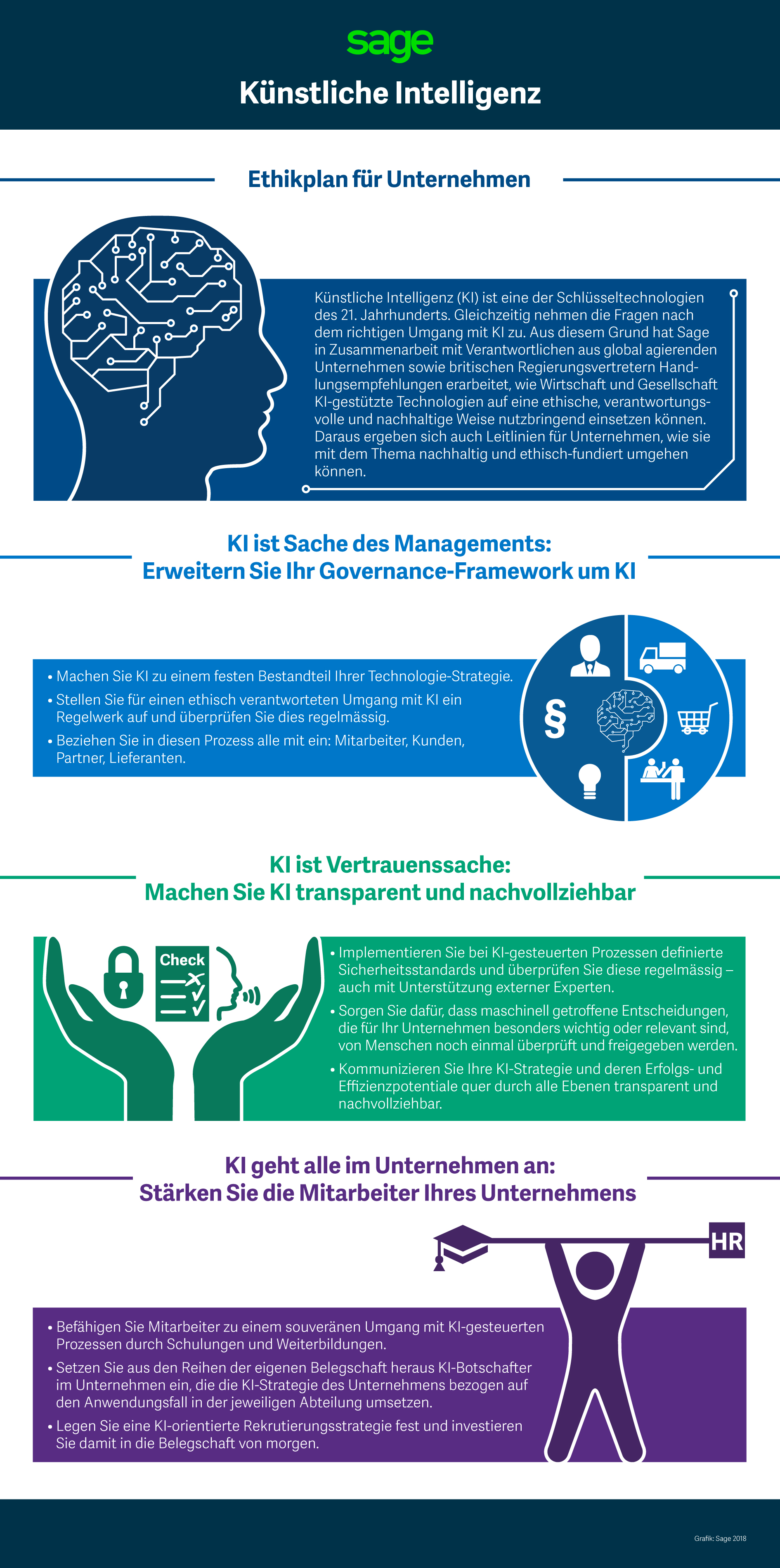
Practical recommendations for companies
The industry's next challenge is now to change the direction of the global discourse on AI: Away from its image as a replacement and threat to humans. Instead, companies should see AI as a complement to human creativity. Management boards and executives in companies have a special responsibility to promote this alternative view of AI. Among other things, they can define ethical principles to guide AI development in companies, industries and markets. Business and government leaders should also work closely with AI experts to define key ethical guidelines for practice. The aim here is to formulate practical recommendations for companies on how they can implement the new technology in the interests of business growth, but also in a sustainable and responsible manner.To the Withepaper