Attention!
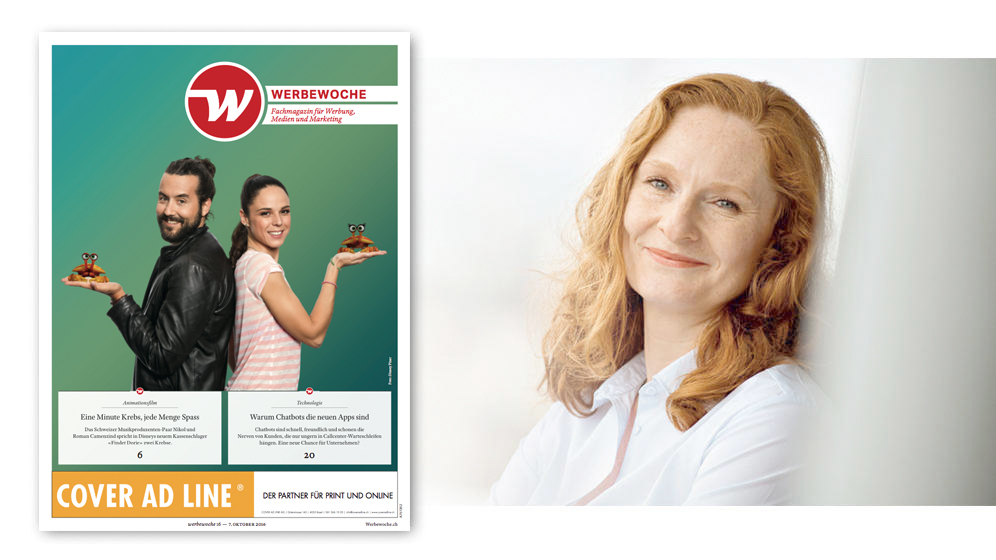
"Information has become a whore that anyone can have at any time." The editorial by Editor-in-Chief Anne-Friederike Heinrich from Werbewoche 16/16.


We're used to print products costing something. Sure, there's 20 minutes. But we still pay for the newspaper or magazine of our choice at the kiosk without giving it much thought. And we also pay the bill for the papers we subscribe to at home, of course. For now. Because we're just as used to paying nothing for everything that's available to read online.
We now know that it was a huge mistake to make all content available free of charge when the Internet emerged in the early 1990s. Publishers wanted to be part of the development, to reach the masses; print still functioned as a cash cow and could refinance online content that was given away. One would never have dreamed that this would change.
Now we have the salad - and have been trying since the turn of the millennium at the latest to get our print subscribers to voluntarily pay extra for online; and to get people who have poached online so far to buy a hunting license. In the meantime, it's clear: we can forget it! No one voluntarily pays for something they previously got for free. Or for something that he continues to get for free elsewhere.
Publishers and media providers are looking for ways out of this valley of sorrow, and in doing so they are using a wide variety of payment models: Reading licenses, one-click-buy offers, daily and monthly subscriptions, article financing via crowdfunding - with the risk that the most exciting stories are never told and the best storytellers resignedly give up.
All models have one tenor in common: good reading and information material is no longer worth anything. Opinions, statements, and overviews are only right if they are cheap, or even better: if they cost nothing. Information has become a whore that anyone can have at any time. And it must constantly be offered for less, so that it is taken at all. Journalists brainstorm for hours, days, weeks about topics, narrative approaches, formulations, often for very little money, in order to then sell the highlights of their work at the public bazaar - torn between the desire to at least be read and the compulsion to earn a living with letters.
Somewhere along the way between the "old" and the "new" world, we all lost something very important: Respect. Respect for the knowledge, work and opinions of our fellow human beings. Anyone who respects journalists (and, of course, other professions as well!) and recognizes their contribution to the stability of our democracy is also prepared to pay for reading material, regardless of whether it is served on paper or digitally.
The slide from noble feathers and noble press status to the lying press has been rapid and is symbolic of our age of devaluation and dehumanization: if the person we're talking to isn't an ultra-fun bomb, we just chat a bit on the side. If we don't want to have to repair the first few defects in our car after five years, we'll just lease a new one every year. If love no longer works, we just go back to Parship every two years. If quality costs money, we'll just read 20 Minuten. Is it still in vogue to attach value to something? And how do we regain the respect we have lost? Certainly, by continuing to deliver high-quality work. But also by putting a price on this work again. A price that must be paid.
For journalistic offerings, this no longer works in a lone wolf manner. All publishers in Switzerland, and ideally in Europe, should join forces and close their reading offerings to non-payers. So that the value of what's behind the paywall is brought back into consciousness. The EU Commission recently announced its intention to give publishers more rights to online content, similar to the rights given to film and music producers. In Switzerland, too, the imbalance in the value chain urgently needs to be corrected. If there is no other way, with political support.
A utopia, do you think? I think it's the only way to secure the future of journalism in the long term.
Anne-Friederike Heinrich, Editor in Chief