The campaign against the money gambling law comes from Helvetiaplatz
To convince voters to vote “No” on June 10, the nonpartisan committee opposing the bill is relying on a campaign by the agency Heimat Zürich.


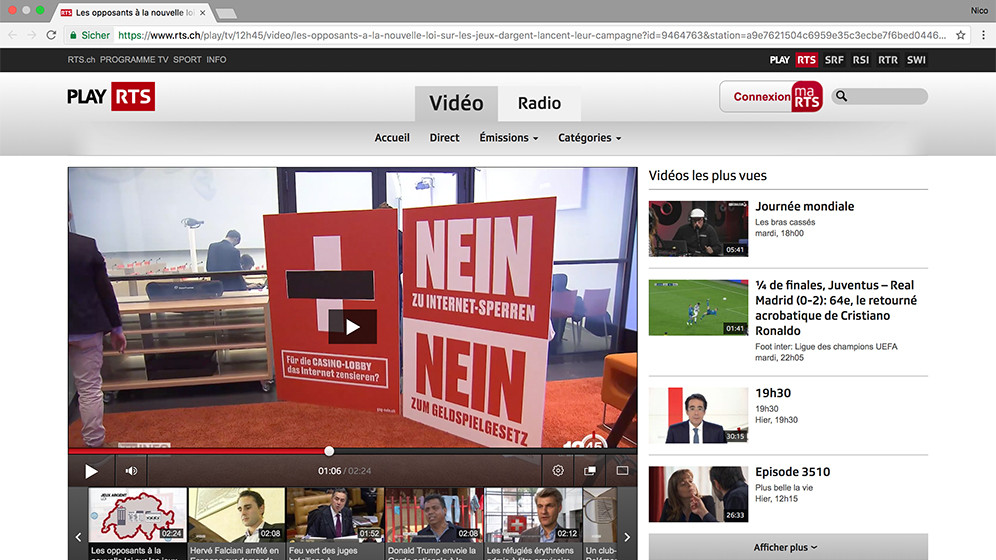
The campaign of the young parties against the money game law officially began on Friday with a press conference in the Federal Parliament. The first measures of the campaign were also presented. The creative agency Heimat Zürich is responsible for this, having won the project mandate in a pitch. The client is a non-partisan committee against Internet censorship and digital isolation. It is flanked by a growing number of parent parties (the FDP has just decided to vote no and join the committee) and associations, e.g. Swico (business association for digital Switzerland), Simsa (industry association of Swiss Internet service providers) or Economiesuisse.
Andri Silbeschmidt, president of Jungreisinnigen Schweiz and co-chairman of the campaign committee, explains the cooperation with Heimat Zurich as follows: "With Heimat, we were able to engage a partner who not only perfectly implements the creative requirements, but also demonstrates political tact when it comes to spontaneous campaign measures."
Simon Rehsche and Nico Ammann, Managing Partners at Heimat, say: "Campaigns with political goals are not our core area. Normally, we give emotional meaning to brands and their offerings. But in essence, this project is about the same thing for us, the targeted influencing of attitudes and behavior with creative means. We are motivated by the clients' willingness to use surprising, intelligent and touching communication; we usually experience political campaigns as rather predictable. Politicians and we will learn a lot from each other in the coming intensive weeks."
The campaign aims to convince the public that the law is failing to achieve its goals for a number of reasons and therefore needs to be revised.
The measures presented at today's press conference are the first of a diverse range of further implementations that will be deployed across all channels. The dominant and problematic role of the Swiss casino lobby in drafting the law will also be addressed.
The successful referendum against the Money Gambling Act surprised Swiss politicians and the media last fall. At the beginning of the collection of signatures, the chances of this happening were considered very slim; the supporters of the law seemed too powerful and too broadly supported. Since its passage, the No camp has been gaining increasing support, most recently in the form of diverse media coverage focusing on the problematic aspects of the law.
The opponents of the No camp, also a non-partisan alliance of parties and associations, have mandated Goal for their campaign. The agency has made a name for itself with its work for the German AfD, for example.