
With bundled knowledge into the web future
Web 2.0 has barely become part of society when its successor - Web 3.0 - is already making a name for itself.


The Internet - the virtual world of unlimited possibilities. It has long been no secret that all communication and advertising is increasingly shifting to the World Wide Web. With Web 2.0, companies have realized that they must increasingly integrate users into the process and offer them the opportunity to express their opinions and make suggestions on their websites. Nike, for example, allows visitors to create their own sneaker on its website by choosing any model and color. On the website of eyewear manufacturer Ray Ban, customers can log in with a web cam to find the right pair of glasses by measuring their face. Ray Ban then uses the data to present suitable glasses. They can try them on virtually and click through the range of suggested glasses. In contrast to Web 1.0, which users only used for surfing and browsing, Web 2.0 is much more comprehensive. The one-way communication between provider and consumer that once existed in the 1990s is now a thing of the past.
Web 3.0 - a generational change
Since the emergence of Web 2.0, the hyper-intelligent versions have been constantly expanded. Today we have arrived at Web 3.0. It is an extension of the WWW and stands for semantic and intelligent searching in 3D worlds and 3D media. This includes, for example, the Tin¬Eye tool, a search engine for images from the company Idée Inc. If you enter an image or a link to an image, TinEye returns all pages in which the image or its modified versions appear. Each image is examined as it is entered and sent through the pattern recognition process. The result is then compared with a database. The search engine's image database currently contains almost five million pictures. Wikitude, a system for T-Mobile G1 cell phones that will already be installed on Google phones, works in a similar way. It is a mixture of GPS orientation, travel guide and panoramic views. By entering the locations of your stay via a dedicated button. A map view appears on which all hits are listed. The immediate surroundings are displayed in map mode, including points that are provided with Wikipedia articles and provide the user with information.
Tim Berners-Lee, the inventor of the World Wide Web, contributed to the creation of Web 3.0. Web 3.0 is about gaining more information for the user by bundling the world's knowledge and gaining new knowledge from it. Today, computers can only reproduce searched terms, but the semantic web goes further. It makes the meaning of information usable for the computer so that data on places, people and objects can be linked together. The semantic web therefore relies more on the meaning and context of the searched terms than simply on networking, as was previously the case in Web 2.0.
Doubts about artificial intelligence
However, not everyone trusts the intelligent web. Scientists speculate that AI (artificial intelligence) will enable machines to recognize errors independently and correct them immediately. Since the further development of the web, voices have been raised that robots and computers could one day control humanity if they have intelligence. For scientists, this would be the fulfillment of their dream; for skeptics, it remains the wishful thinking of mad professors.
Adriana Zilic
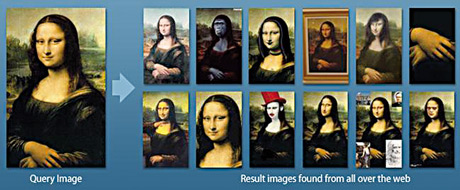
Search for one image, find many images: TinEye makes it possible.


