
Instant photos defy the dominance of smartphone cameras
As surprising as it may sound, classic instant photos are not extinct. It's not just fashion labels that use them in advertising campaigns. There are even camera models that combine old and new technology - albeit at a hefty price.


The era of instant photography seemed to have come to an end. With the insolvency of pioneer Polaroid in 2001 at the latest - and its successor company a few years later - it looked as if people were no longer interested in holding a photo print in their hands. Photos are taken with a smartphone and can be shared immediately online on Facebook, Twitter or Instagram.
The former size of the market will never return - at the beginning of the 1990s, Polaroid alone sold around four million cameras a year. But the instant photo idea steadfastly refused to die out and at least secured itself a place in the niche.
On the one hand, Instagram's adherence to the square image format and popular color filters ensured that the aesthetics of the old Polaroid photo remained present. At the same time, the fashion industry, among others, discovered the appeal of quick pictures. Last year, Burberry and Boss, among others, used them in their advertising campaigns.
Remote shutter release via app
The fact that this was technically possible at all is not only due to the remaining stock of old cameras and films. There are now also modern newcomers in the business. The Impossible Project, which presented a completely new camera last year that combines classic instant photo technology with modern digital conveniences, has attracted the most attention. The first model, the I-1, can be set and controlled via a smartphone app, including the remote shutter release.
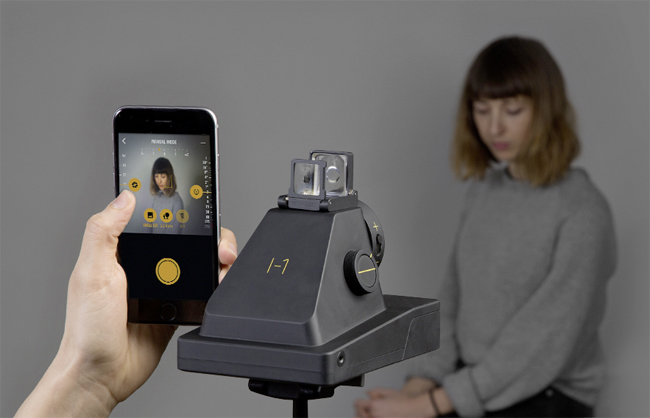
"The attraction is that a unique moment is captured every time and you can't change anything," says Impossible boss Oskar Smolokowski, who, as a man in his mid-twenties, has probably only just experienced the foothills of the instant photo era. Compared to the fact that you can take practically endless pictures with a smartphone for free, taking pictures with the I-1 is an expensive pleasure. Not only does the camera itself cost 299 euros - each cartridge with eight instant pictures costs a further 18 euros. And the development time is not exactly "instant" either: a color picture takes 20 to 30 minutes, a black and white photo five to ten.
Although Impossible uses former Polaroid machines in the Netherlands, the chemical composition of the films had to be partially redesigned.
Mini printer for smartphone photos
Camera specialist Fujifilm has kept its Instax brand on the market, which has been competing with Polaroid cameras since the 1990s. And is also trying to turn smartphones into instant cameras: since 2014, there have been mini printers that can use the same technology to print snapshots from cell phones onto paper.

The first experiments with instant pictures were carried out in the early days of photography, and the first forerunner of later cameras was presented by the inventor and Polaroid founder Edwin Land 70 years ago, on February 21, 1947. The idea is that the chemicals for developing the pictures are contained in a single layer on the paper and are activated when the picture is taken.
The first models went on sale in 1948 and were an instant hit. At the height of its popularity in the 1970s, photo giant Kodak also tried to gain a foothold in instant photography, but was thwarted by Polaroid with a patent lawsuit. At the same time, Land wanted to break through a technological barrier with the Polavision system for moving instant film. However, it was an expensive flop, while video cameras with cassettes prevailed instead. In the end, the Polavision debacle cost Land the leadership of his company. (Andrei Sokolov/DPA/SDA)


