
Council of States does not want a ban on advertising for tobacco products
A setback for Health Minister Alain Berset: The Council of States wants to send the Federal Act on Tobacco Products back to the Federal Council. The upper chamber wants nothing to do with an advertising ban.


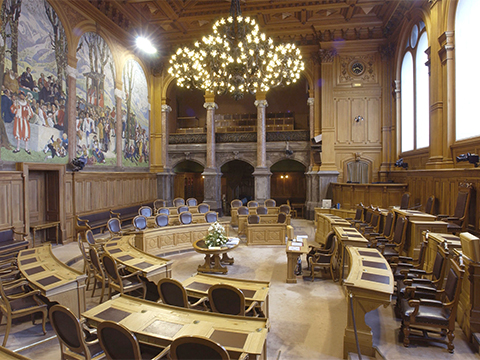
The free market economy should be given more weight than prevention. By 28 votes to 15, the small chamber followed the majority of its health committee. The latter had requested the referral back to the government by 6 votes to 4 with 2 abstentions. Berset only received support from the left-wing camp. This means that the Federal Council will probably have to go through an additional round. If the National Council also rejects the bill or the Council of States decides to reject it a second time, the government will have to go back to the drawing board.
"There is a limit"
The Federal Council wants to alleviate the problem of addiction with the Tobacco Products Act. Parts of the new law were already controversial during the consultation process. The Council of States is calling for a new bill that only includes undisputed elements of the current Tobacco Ordinance, such as the protection of children and young people. However, the small chamber wants nothing to do with restrictions on advertising in cinemas or on posters, sales promotion and sponsorship. In particular, the reporting of advertising and marketing expenditure should also be dispensed with. A clear center-right majority in the Council of States warned against an "attack on the free market economy". It had not been proven that general advertising bans caused a reduction in smoking. It would also give the Federal Council too much power. "There is a limit," said Joachim Eder (FDP/ZG).
No differentiation
It is also difficult to see why the same strict rules should apply to nicotine-containing e-cigarettes or chewing tobacco snus as to conventional cigarettes, which are more harmful. "We lack differentiation," said committee spokesperson Josef Dittli (FDP/UR). The Federal Council issues advertising bans regardless of the risk potential. The civil parties also complained that the Federal Council's draft bill would curtail the powers of the cantons. "The bill regulates so much at federal level that it restricts the cantons' scope for action," said Dittli.
Let the facts speak for themselves
Only the SP and Greens as well as two centrist politicians considered the draft law to be a useful basis for parliamentary work. "We should bring ourselves to discuss the differences in the detailed consultation," said Hans Stöckli (SP/BE). Advertising bans in a number of cantons were already proving effective. In cantons with stricter rules, the smoking rate is lower, said Stöckli. "If you fail to recognize this, as those rejecting the law do, you must be in a very clouded area." Federal Councillor Berset focused on the hard facts in his fiery plea for the bill. Smoking causes health, economic and social damage, he said. "The rejection of the bill is not a compromise, but the stance of one pole."
Law for the protection of minors
The nationwide ban on the sale of cigarettes to minors is not controversial. A majority stated that they expressly welcomed this measure to protect children and young people. A legal basis must be created for test purchases. Most also consider a ban on advertising aimed specifically at minors to be sensible. At the presentation of the proposals, Health Minister Berset said that advertising has a particularly strong influence on young people. According to a German study, the risk of young people starting to smoke increases by 46 percent if they are exposed to tobacco advertising.
Strict rules in many cantons
Today, there is a ban on tobacco advertising on radio and television. Tobacco advertising explicitly aimed at minors is also prohibited. Some cantons have stricter rules than the federal government. In 15 cantons, poster advertising for tobacco products is already prohibited. In ten cantons, cigarettes may not be sold to minors, and in a further twelve cantons the sales age is 16. Every year, over 5 million people worldwide die as a result of tobacco consumption. In Switzerland, this figure is around 9500. This makes tobacco consumption the most common preventable cause of death. (SDA)


