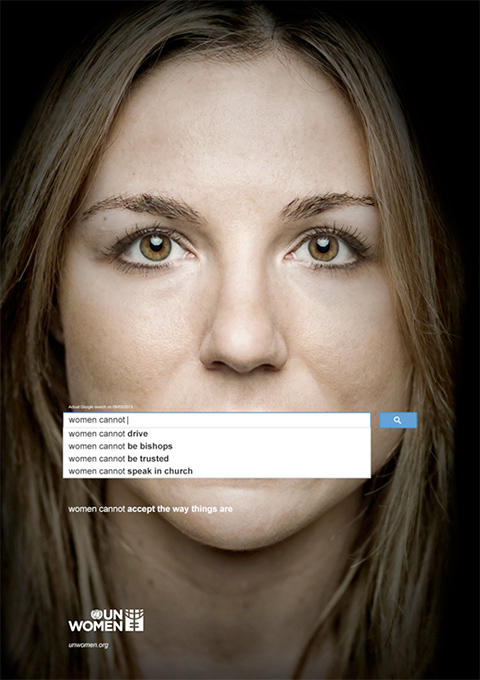
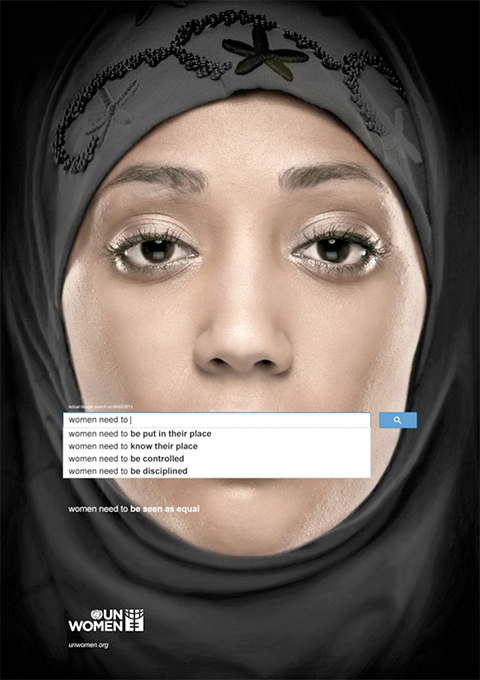
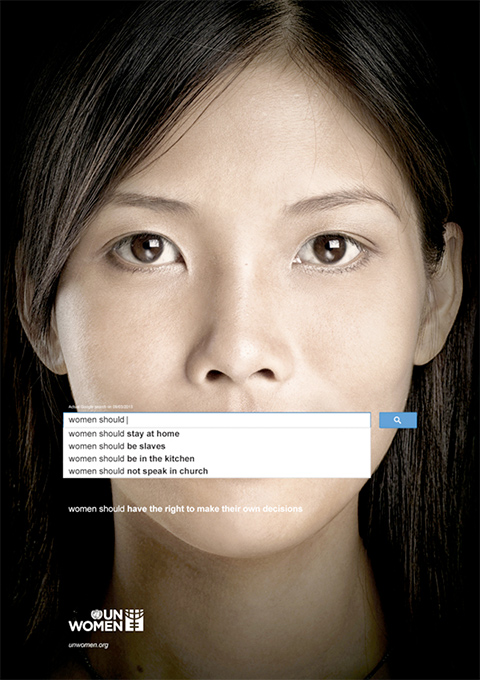
Last but not least: Look up women
Ogilvy & Mather Dubai highlights the kinds of suggestions Google's autocomplete feature makes when it comes to women in a thought-provoking campaign for UN Women.


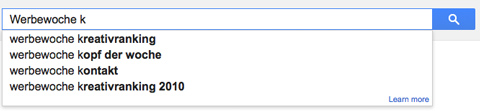
As ingenious as the algorithm is in most applications, it can be unpleasant in individual cases. This is because it relentlessly reveals - taking into account some of Google's requirements - what is often searched for and in what context. Take Bettina Wulff, for example: Dubious rumors about a possible red light past were persistently immortalized in the search terms suggested by Google as soon as her name was entered. The wife of the former German president subsequently became embroiled in a tough legal battle. Google removed some terms from the Wulff search suggestions - purely voluntarily and without legal pressure, of course. In May 2013, the Federal Court of Justice ruled in a similar case However, it states unequivocally: "If a data subject informs the operator [of a search engine] of an unlawful infringement of their personal rights, the operator is obliged to prevent such infringements in the future."
Ogilvy & Mather Dubai is taking advantage of the fact that the autocomplete function shows how the masses really think and search. For the women's rights organization UN Women the agency googled expressions such as "women should", "women shouldn't" or "women need to" and saw what suggestions the search engine came up with to complete the search. Of course, the answers depend on the location of the Googler and cannot be reproduced in this country. (hae)