
Life with the Mouse: How Logitech’s «Ctrl Tomorrow» Study Falls Short in Measuring Our Control Over Our Digital Tools
Those who have their gadgets under control have their lives under control—following Gutenberg and Windows 95, the age of artificial intelligence will inevitably usher in a new era in which technological mastery has become a fundamental issue of survival and prosperity


There is an almost painful irony in the air: While smart algorithms and artificial intelligence are permeating our everyday lives at record speed, a quiet unease is growing in offices and living rooms—the fear of losing control over our own digital tools. It has long been evident that mastery of hardware and software ranks on the same fundamental level as the classic cultural skills of reading, writing, and arithmetic. Anyone who falls behind technologically today finds themselves left behind in the digital world. The global Logitech study «Ctrl Tomorrow» brings this to light: there is a measurable correlation between digital competence and personal well-being that noticeably accelerates the pulse of our society..
The New Everyday Classroom: Between Control Dividends and Control Taxes
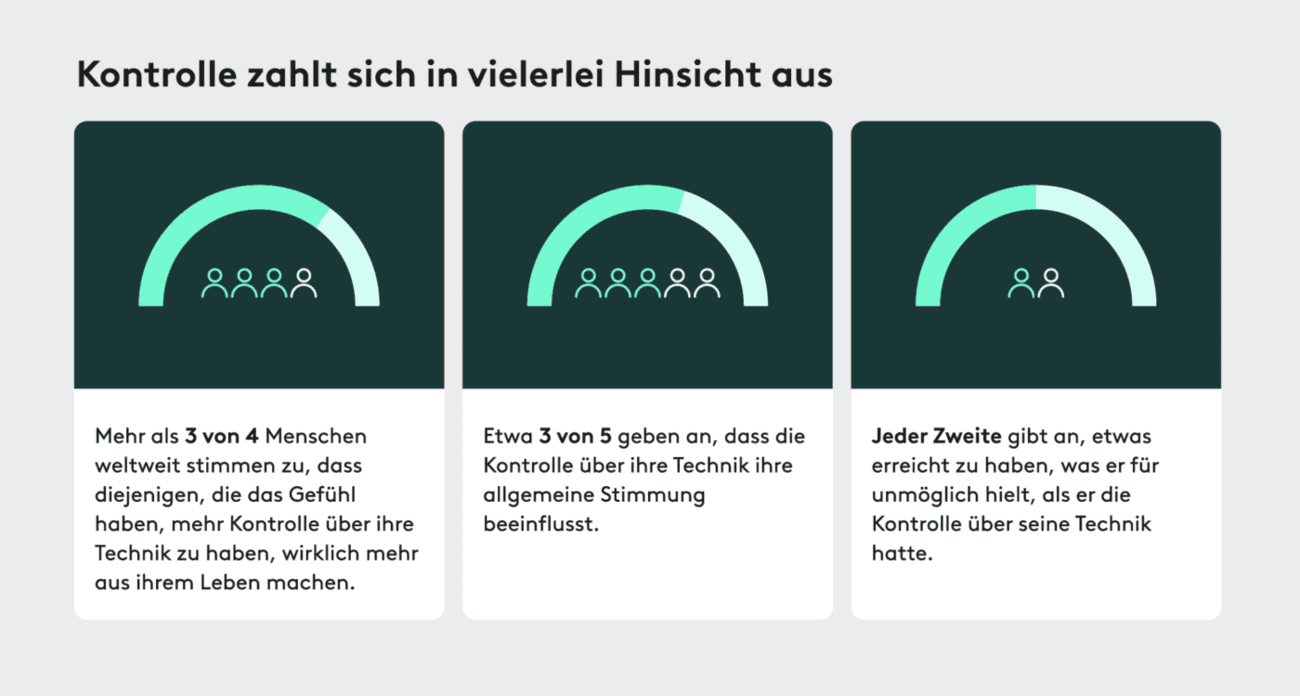
The global study conducted by the communications agency Burson in May and June 2026—based on over 9,000 respondents in nine countries as well as a special survey of IT decision-makers—examines the relationship between humans and machines in an exemplary manner. At the heart of it all is a fascinating phenomenon: the so-called "control dividend". Those who have mastered their tools—especially physical devices—intuitively benefit from tangible psychological and physical advantages. Self-confidence, productivity, creativity, concentration, inner peace, and physical well-being are the rewards of digital sovereignty.
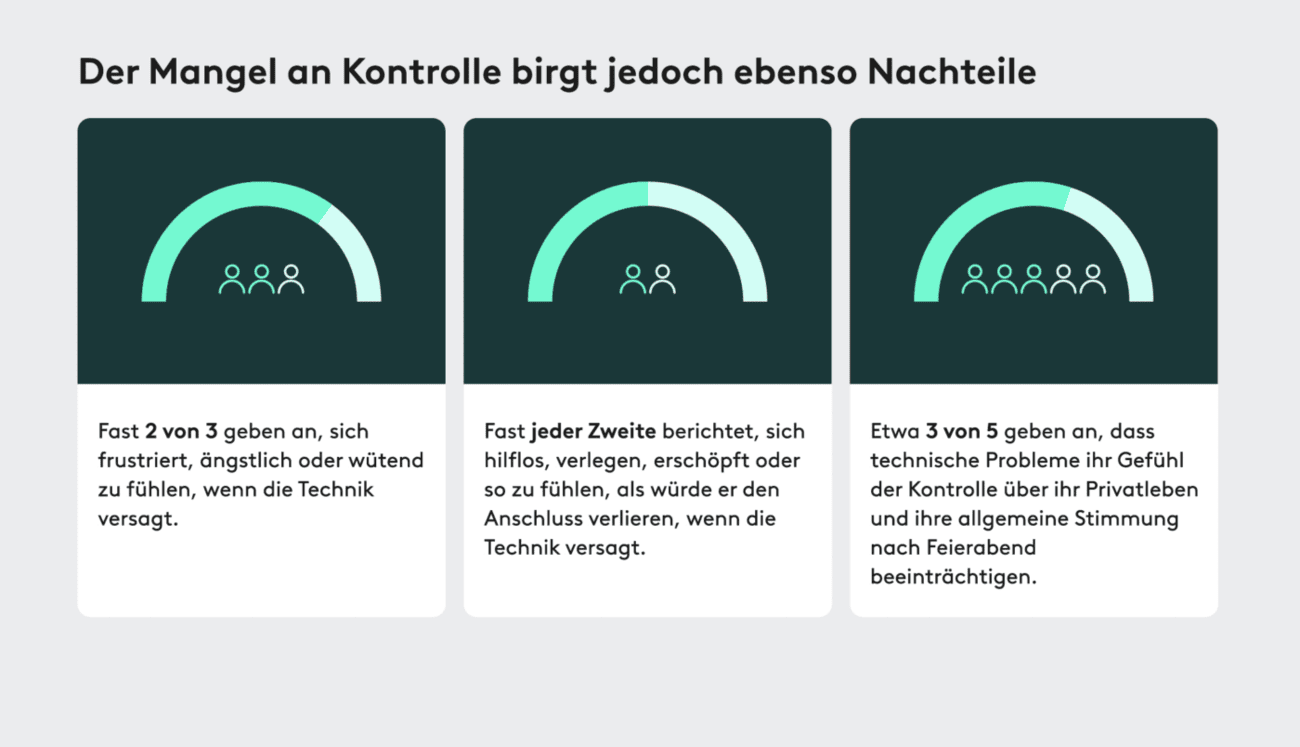
But there is a drastic downside to this, which is treated as a control tax. When technology fails, frustration strikes mercilessly: On a global average, 64 percent of respondents say that technical glitches have a massive negative impact on their overall mood after work and their sense of control over their personal lives. Almost as many (64 percent) feel overwhelmed by frustration, fear, or anger when their computer malfunctions. About 46 percent even report feelings of helplessness, shame, exhaustion, or the painful sense of being left behind.
The New Tech Currency: The «Ctrl Score» and the Anatomy of a Loss of Control
To make this phenomenon more tangible, Logitech has developed the «Ctrl Score»—the world’s first composite index that makes technological agency measurable and improvable. The score is based on three dimensions: conscious technical proficiency (intentionality), personal attitude and openness toward new tools, and one's perspective on one's own potential.
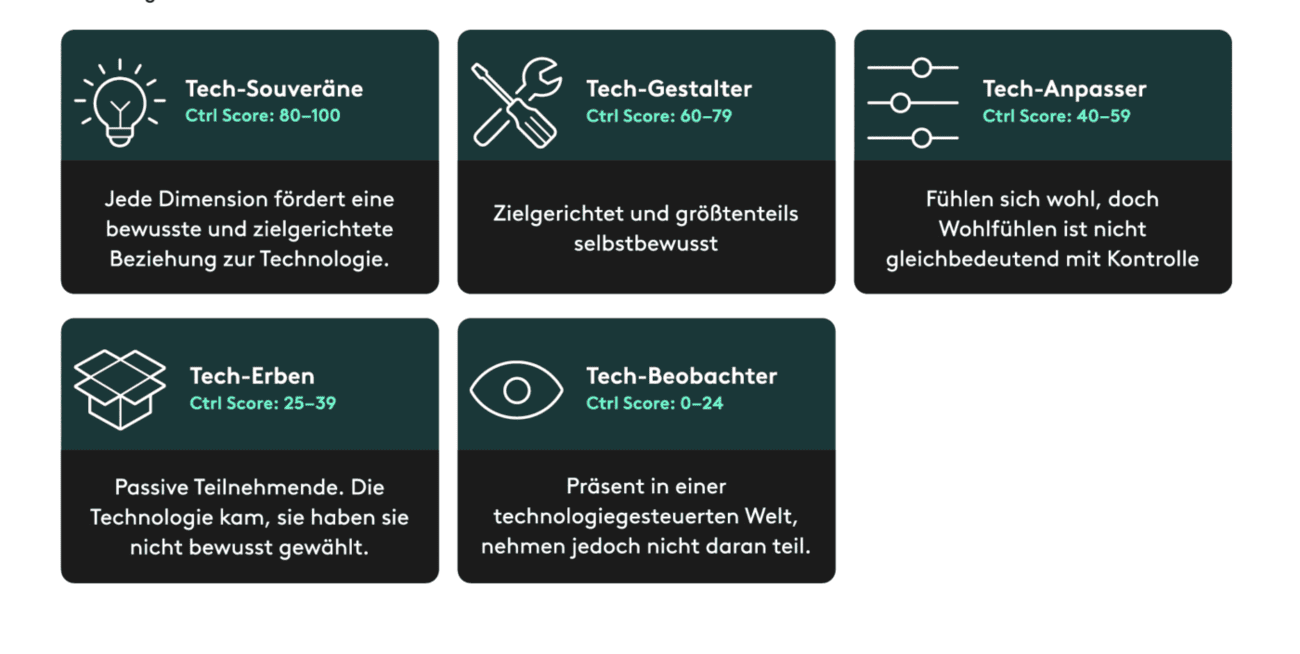
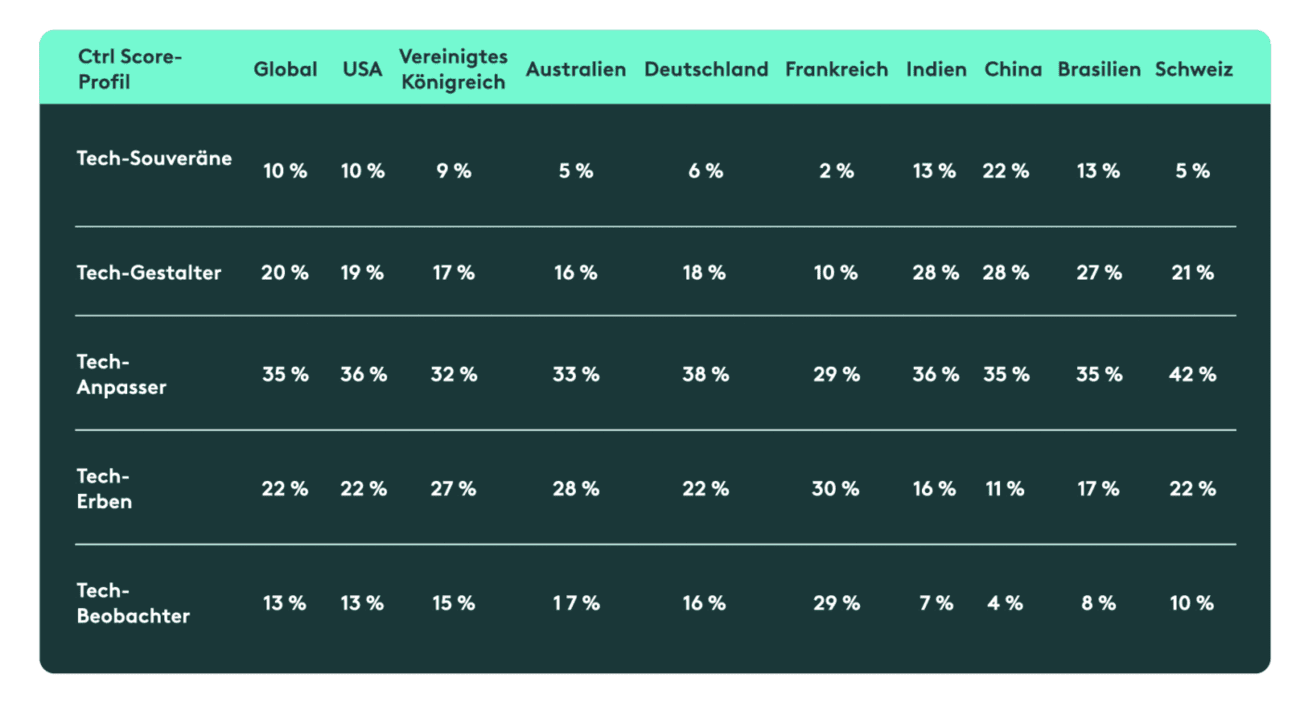
The global survey categorizes people into five distinct profiles, ranging from the 10 percent who are “tech sovereigns,” to the 20 percent who are “tech shapers,” and the broad group of 35 percent who are “tech adapters,” all the way to the remaining 35 percent who are “tech heirs” and “tech observers.”. Worldwide, this amounts to approximately 4.2 billion people who, as passive participants, are at risk of being left behind. It is particularly revealing to examine the "money fallacy": Contrary to popular belief, control cannot simply be bought. Only 21 percent believe that the wealthy have the most control, while 44 percent are convinced instead that people with genuine technical expertise hold the reins.
Haptic Anchors in an Abstract World: Why Hardware Saves the Day
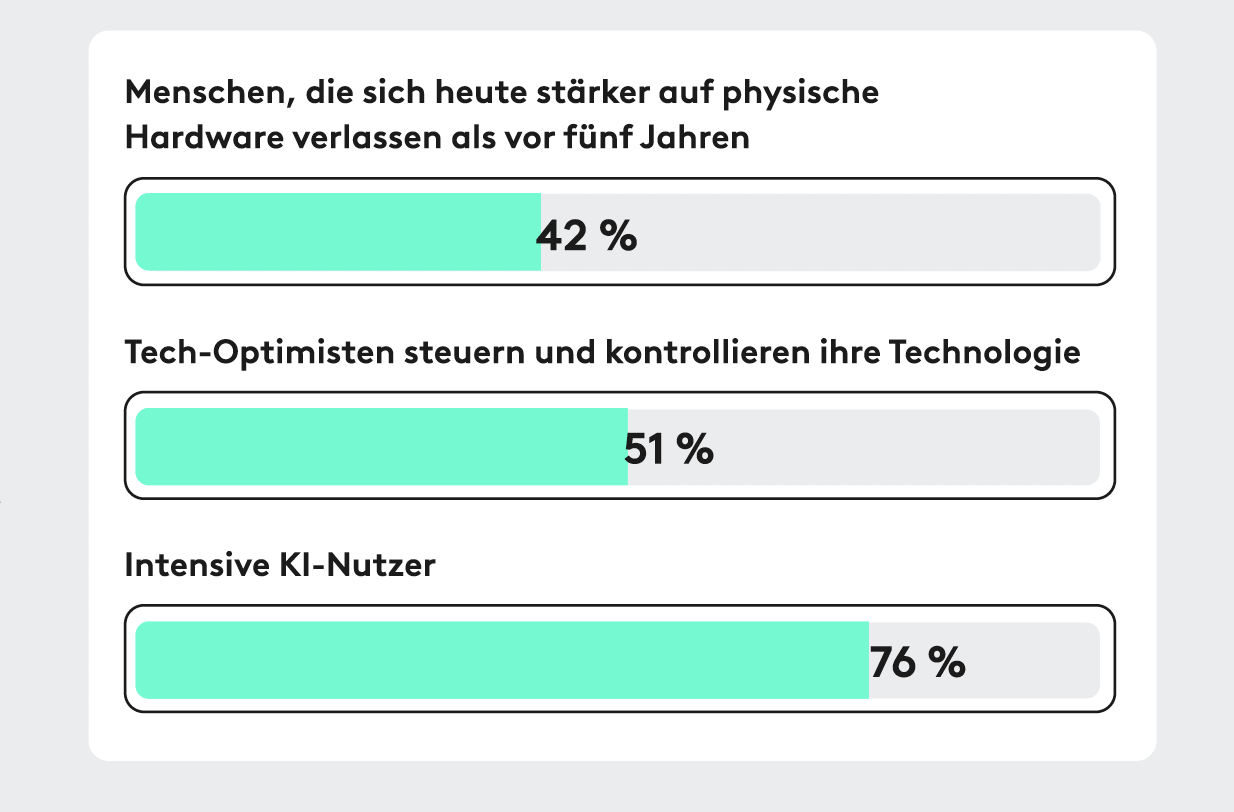
The more abstract software, cloud computing, and artificial intelligence become, the more people cling to the tangible. Nearly two-thirds say they feel the greatest sense of control when interacting with physical hardware. Today, 42 percent of all respondents rely more heavily on physical devices than they did five years ago—among heavy AI users, this figure soars to a staggering 76 percent.
This also highlights the phenomenon of gamers as role models: Gamers spend an above-average amount of time optimizing their environments. 81 percent of them confirm that gaming boosts their self-confidence in everyday life, reduces anxiety, and helps them keep their cool in high-pressure and chaotic situations. The confidence gained through gaming directly carries over into everyday work life.
Office vs. Home: The Workplace as a Control Desert
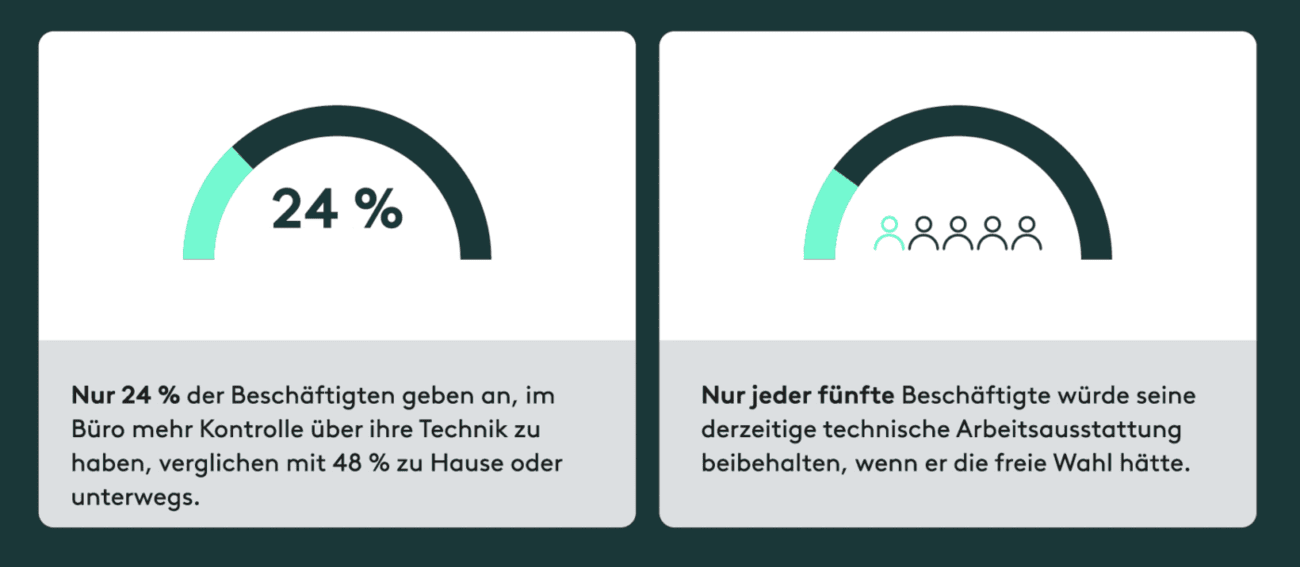
This is where perhaps the greatest point of failure in the modern workplace becomes apparent: While employees have often created a customized, highly functional, comfortable environment for themselves at home, the office, in the eyes of many, has been relegated to the bottom of the list.. Just 24 percent of employees feel they have more control over their technology at the office than at home or on the go. Only one in five employees would voluntarily keep their current office technology.
The consequences are serious: Discrepancies between personal autonomy and frustration with bureaucratic technology hinder concentration, energy, and ultimately employee retention.. While IT decision-makers recognize the problem—after all, 64 percent of them identify as gamers and understand the power of good hardware—only 35 percent formally and regularly track the human impact of their IT decisions using specific metrics.
The Drive for Success vs. Western Skepticism: Where Innovation Meets Fear
The study reveals, in particularly striking terms, the global differences in mindset when it comes to dealing with the future. While in Western countries technology is often viewed as an administrative convenience or a tool for streamlining processes, in emerging nations such as India, China, and Brazil, it serves as the primary driver of social and professional advancement. In India and Brazil, 84 percent of respondents in each country are firmly convinced that technology creates new opportunities rather than new pressures. China (80 percent) and Brazil (78 percent) lead the world in agreement that technology enhances personal potential.
In stark contrast to this cross-national trend, the Old West reveals a potentially fatal skepticism: In France, optimism about technology has dropped to a meager 60 percent, and only 45 percent believe at all in the ability of these tools to make life easier. This discrepancy is also evident when it comes to brand-new artificial intelligence: While 41 percent of people in India are wildly enthusiastic about how AI expands their possibilities, the figure is a meager 16 percent in the U.S., 15 percent in the United Kingdom, and just 13 percent in Australia. Skepticism threatens to become a barrier to innovation in this country, while the Global South is advancing inexorably.
Looking Beyond National Borders: Where Does Switzerland Stand?
Switzerland continues to play its customary special role within the European context: The Swiss consistently rank in the upper middle tier of European countries, yet they operate with a calm, measured approach and a focus on quality.. For example, 73 percent of Swiss people are convinced that greater technical proficiency enriches their lives (global average: 77 percent). When it comes to artificial intelligence, Switzerland—with 23 percent of respondents expressing enthusiasm for the expanded possibilities—is noticeably more open-minded than its major European neighbors (Germany: 13 percent; France: 12 percent), though it remains far behind the momentum of growth in Asia and South America.
Exclusive: Your m&k Payment Service
-
77 percent Of those surveyed worldwide, many are convinced that the better people are at mastering technology, the more they get out of life.
-
64 percent state that technical problems have a negative impact on the overall mood after work and on their personal lives.
-
52 percent Through their mastery of technology, they have already been able to achieve things they previously thought impossible.
-
30 percent People around the world have a high degree of autonomy over their technology; only 10 percent act like confident tech professionals.
-
4.2 billion people Worldwide, they fall into the group of less aware or self-assured users who are at risk of feeling left behind.
-
42 percent Today, users rely more heavily on physical hardware (such as keyboards and mice) than they did five years ago to maintain control.
-
73 percent of the Swiss population agree that better mastery of technology leads to a higher quality of life (global average: 77 %).
-
64 percent of the IT decision-makers surveyed identify as gamers, compared to only 28 percent in the general population.
-
35 percent IT decision-makers formally and regularly monitor the impact of their technology decisions on employee well-being in the workplace.


