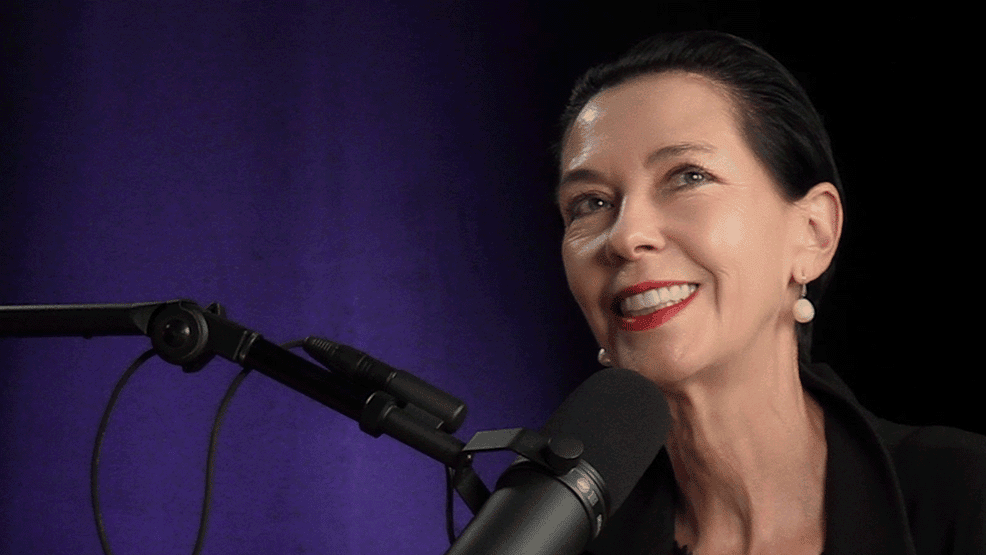
Who has to learn whose language? That’s the wrong question—says Marcus Schögel
Prof. Dr. Marcus Schögel, president of the Society for Marketing and a professor at the University of St. Gallen, debunks a persistent management dogma and explains why marketers don’t need to learn the «language of finance»—but rather, CFOs and CMOs should work together to find a new one.


It is one of the most consistent recommendations in management literature: Marketers must learn «the language of finance» in order to be taken seriously within the company. Anyone who wants to justify budgets must be able to think in terms of ROI, EBITDA, and contribution margins. Anyone who wants a seat at the strategy table must understand the CFO’s logic. Financial literacy is said to be the key to marketing’s relevance in corporate management.
At first glance, it’s hard to argue with that. In fact, many marketing departments lack a solid understanding of financial concepts. Brand budgets are defended by citing «awareness» and «consideration,» without being able to quantify their contribution to value creation. In such an environment, the call for financial expertise is understandable. But upon closer inspection, it becomes clear that this demand obscures a fundamental problem: it assumes that the language of finance is the «correct» language of corporate management—and that marketing must subordinate itself to it.
An Asymmetric Obligation to Deliver
The call for financial literacy implies a one-sided effort to adapt. Marketing is expected to align itself with the financial function’s way of thinking and language—not the other way around. This tacitly accepts a hierarchy in which Finance sets the standard and Marketing, at best, «supplies» it.
This asymmetry is problematic for several reasons. First, it reduces the complexity of market-oriented decisions to financial metrics. Not everything that is relevant to long-term market success can be meaningfully reflected in a quarterly P&L. The impact of brand positioning, the depth of a customer relationship, and creative differentiation from the competition—all of these factors are, to some extent, beyond the scope of purely financial logic. Second, this asymmetrical accountability reinforces an already existing power imbalance: In many companies, the CFO effectively has a veto over marketing investments—often without a substantial understanding of how brand-building, customer experience, or creative campaign development work. Third, this one-sided alignment undermines marketing’s ability to make its own case. A CMO who forces their actions into the logic of the DCF model may win the budget battle, but loses the ability to lead the company with genuinely market-oriented initiatives. «Translating» into financial language is then not a bridge, but a capitulation.
The counterquestion is asked surprisingly rarely: Why don’t CFOs learn the «language of marketing»? Empirical research shows that the presence of a CMO on the executive team significantly improves corporate performance (Germann/Ebbes/Grewal, 2015). Nevertheless, the percentage of Fortune 500 companies with a CMO fell from 71 percent (2023) to 66 percent (2024). A CFO who does not understand the mechanisms of brand building and customer loyalty focuses on metrics they can measure and neglects those they do not understand. That is not rationality—it is a blind spot.
How ERP Systems Have Cemented Financial Logic
The asymmetry between the CMO and the CFO is not merely an organizational phenomenon; it also has a systemic cause. For decades, companies have consistently aligned their go-to-market model with the CFO as the central decision-maker. The value proposition of ERP systems—transparency, control, and measurability—speaks precisely the language of the CFO. Whatever can be mapped in the ERP system is considered «real.» What cannot be represented—brand perception, emotional customer loyalty, creative differentiation—is considered «soft» and, when in doubt, dispensable.
The shareholder value doctrine and the «financialization» of corporate management have deeper roots, but ERP systems have cemented this development at the operational level—they have translated financial logic from the boardroom into day-to-day work practices. When SAP dissolved its own marketing function at the executive board level in the summer of 2024, this was also a signal: in a company whose business model is built on the dominance of financial logic, marketing as a separate executive board function is apparently dispensable. «The irony is obvious,» writes Schögel.
How the Logic of Management Systems Has Cemented the CFO's Dominance
This asymmetry is not purely an organizational phenomenon. It also has a systemic cause. For decades, companies like SAP have consistently aligned their go-to-market model with the CFO as the central decision-maker in the buying center—in line with the classic model by Webster and Wind (1972). The value proposition of ERP systems—transparency, control, measurability, «single source of truth»—speaks precisely to the CFO’s language. What can be mapped in the ERP system is considered «real.» What cannot be mapped—brand perception, emotional customer loyalty, creative differentiation—is considered «soft» and, when in doubt, dispensable (see Davenport, 1998).
The shareholder value doctrine (Rappaport, 1986) and the «financialization» of corporate management (see Lazonick/O’Sullivan, 2000) have deeper roots. However, ERP systems have cemented this development at the operational level—they have translated financial logic from the boardroom into day-to-day work practices, thereby making it the «default language» of corporate management. When SAP dissolved its own marketing function at the executive board level in the summer of 2024 (SAP, 2024), this also sent a signal: In a company whose business model is built on the dominance of financial logic, marketing as a standalone executive board function is apparently dispensable. The irony is obvious.
Earn first, then count
What would be the alternative? The real question should be: How can the CFO and CMO find a common language that serves the company? In every corporate value chain, money must first be earned before it can be counted, allocated, or optimized. At its core, the finance function operates based on the results of upstream value creation. Without revenue, there is no cash flow. Without customer value, there is no corporate value. Without a market, there is no balance sheet worth reading.
Peter Drucker clearly articulated the starting point: «There is only one valid definition of business purpose: to create a customer» (Drucker, 1954, p. 37). From this—in the spirit of a reality-oriented management theory (Ulrich/Krieg, 1972; Tomczak, 1991)—a simple conceptual framework can be derived: create customer value, monetize customer value, manage financial results. The sequence is not hierarchical but causal. Each stage depends on the one that precedes it. Anyone who starts with financial optimization without having a solid grasp of the preceding stages is optimizing in a vacuum. Those who stop at customer value without financial discipline create value that the company cannot realize. The organization needs «both hands»—one that thinks in financial terms, and one that reads markets and anticipates customer needs. In the spirit of organizational ambidexterity (O’Reilly/Tushman, 2004), the key lies in integration, not in subordinating one perspective to the other.
Hilti demonstrates what this means in practice. With its fleet management model, the Liechtenstein-based company—controlled by a foundation—has undergone a transformation that is exemplified by this sequence (see Casadesus-Masanell/Gassmann/Sauer, 2017). The starting point was a consistently market-oriented insight: Professional users don’t need a drill—they need the assurance that the right tool will be available and in working order at all times. CEO Christoph Loos drove the transformation forward over the course of fifteen years. The central challenge lay in sales: Fleet management required fundamentally different capabilities than traditional equipment sales—a consultation-intensive sales process at the executive level rather than demonstrations of individual premium tools on the construction site. A CFO who had assessed this sequence purely from a financial perspective—short-term decline in revenue due to a model change, high upfront investments—would likely have halted it.
Marketing Is a Top Priority
The value creation sequence does not establish itself on its own. It takes someone to drive this integrative framework forward in terms of content. CEOs who consistently place marketing at the center of their growth strategy are twice as likely to achieve above-average revenue growth (Brodherson et al., 2024). A CEO who takes Drucker’s ideas seriously approaches the dialogue between the CMO and CFO differently: not «Justify your budgets to me,» but «Show me how we, as a company, create customer value—and how we ensure that we do so sustainably.» The CEO’s functional background plays a role here, but it is not the determining factor. A CEO with a finance background must actively develop a market perspective; a CEO with a marketing background must ensure that financial discipline does not become a burdensome side issue. What matters most is that the CEO leads the way in terms of substance—otherwise, the stronger function will dominate the agenda, and in most companies, that is the finance function.
Emanuel Probst, who led Jura Elektroapparate as owner and CEO for over three decades, exemplified this very principle. His credo: «Marketing philosophy and product innovation are a top priority» (Probst, quoted in Handelszeitung, 2015). The strategic focus on fully automatic coffee machines—and thus the decision to move away from the broad product range of the past—was a decision of enormous significance that could only be made by a CEO who understood both market dynamics and the business implications. The partnership with Roger Federer, which positioned Jura as a premium brand internationally, was not a marketing gimmick but rather an expression of a strategic mindset: the brand as a key value driver, not as a cost center.
It is hardly a coincidence that both Jura, as an owner-managed company, and Hilti, as a foundation-controlled corporation, have been able to implement this form of long-term, market-oriented management. Both ownership structures reduce the pressure of quarterly-driven financial markets and create the space needed for a strategy consistently focused on customer value (see Thomsen/Pedersen, 2000). Where the CFO must primarily serve the capital market, this asymmetry is exacerbated not only by ingrained ways of thinking but also by institutional pressure.
No More One-Sided Translation
The question isn’t whether the CMO will finally develop financial literacy. The question is whether the CFO will finally develop market literacy. And whether the CEO is willing to bring both of them to the table—not to negotiate budgets, but to talk «business» together. The conceptual foundations for integrated performance metrics—customer lifetime value, brand equity (Keller, 1993), and return on marketing (Rust/Zeithaml/Lemon, 2004)—have long been in place. What’s missing isn’t the toolkit, but the willingness to treat both perspectives as equal. The asymmetry between the CFO and the CMO is no coincidence—it is the result of organizational power dynamics, decades of technological influence by management systems, and a sales-oriented logic that has made the CFO the central decision-maker. Anyone who wants to overcome this asymmetry must not only change the language but also raise awareness that the supposed «objectivity» of the numbers is not a neutral truth, but rather a construct with its own history.
After all, it all comes down to a simple equation: Finance × Marketing = sustainable business success. And if one of these two factors is zero, even the greatest expertise in the other area won’t help much.