No coincidence? An answer
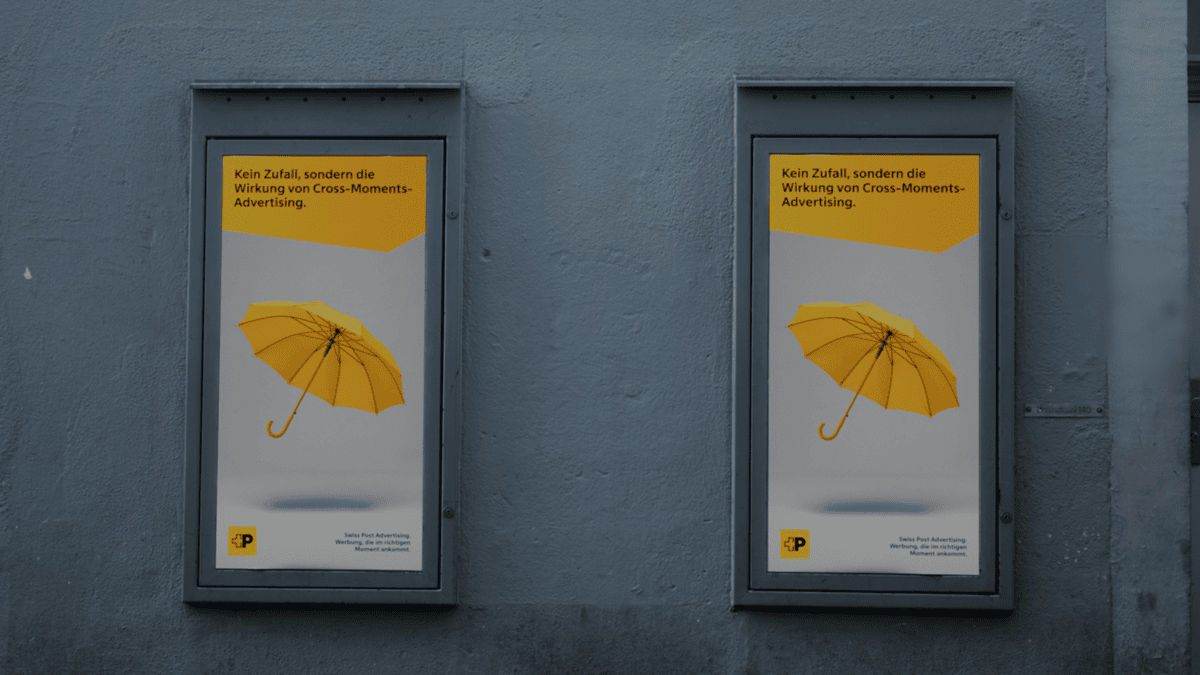
Two SME CFOs download the white paper „Costs down, output up“ on the 28th - both from the road. Three urban cyclists buy the same rain jacket - one hour after the bad weather report. A creative team likes the same coffee machine ad - the day before the pitch deadline. Coincidence? That was the central question of the April 1 article. Anyone who read the text will already have guessed that the AI model and experiment described were part of an April Fool's joke. However, the insight behind it was not. The article marked the launch of the new Swiss Post Advertising campaign Kein Zufall.



Two SME CFOs download the white paper „Costs down, output up“ on the 28th - both from the road. Three urban cyclists buy the same rain jacket - one hour after the bad weather report. A creative team likes the same coffee machine ad - the day before the pitch deadline. Coincidence? That was the central question of the April 1 article. Anyone who read the text will already have guessed that the AI model and experiment described were part of an April Fool's joke. However, the insight behind it was not. The article marked the launch of the new Swiss Post Advertising campaign Kein Zufall.
It has been proven for years that attention is situational. People are particularly receptive at certain moments in their everyday lives, characterized not only by who they are, but also when they are open to messages. This is precisely where cross-moments advertising comes in. The approach combines attention-grabbing advertising environments, from physical touchpoints to DOOH and digital channels, with data-based campaign approaches in the company's own ecosystem. This creates cross-channel orchestrated touchpoints along real usage situations.
The interplay of context and data is crucial: Opt-in-based first-party data with a transparent origin makes it possible to address real people with consent instead of merely statistical segments.
This shifts the perspective: today, impact is created less by pure target group logic than by the right interplay of context, channel and timing.
New campaign makes the approach visible
The Kein Zufall campaign illustrates how this change manifests itself in practice. Swiss Post Advertising developed the campaign together with the creative agency Brinkertlück. It makes this approach visible. The article from April 1 was part of the campaign and presented a fictitious AI model that seemingly eliminated chance from advertising.
The test with yellow umbrellas described therein comes from the campaign's case film. This staged a conspicuous yellow presence in the urban space: umbrellas in public spaces, coordinated accents on buses, at petrol stations and in front of residential buildings. The staging showed how cross-moments advertising combines various contact points into a coherent communication experience. A second campaign wave is planned for later this year.
«Chance has not disappeared. But in modern communication, it is becoming increasingly unnecessary to rely on it,» says Raphael Bratschi, Head of Business and Product Development at Swiss Post Advertising. «The April Fool's joke has brought this idea to a head: Impact today is not created by chance, but through the orchestrated interplay of context, data and timing.»