
JourTag.25: Journalism defies the poor mood in the industry with a commitment to quality
120 participants attended the JourTag on Thursday. The discussions suggest that, despite all the pessimism, nothing is lost.


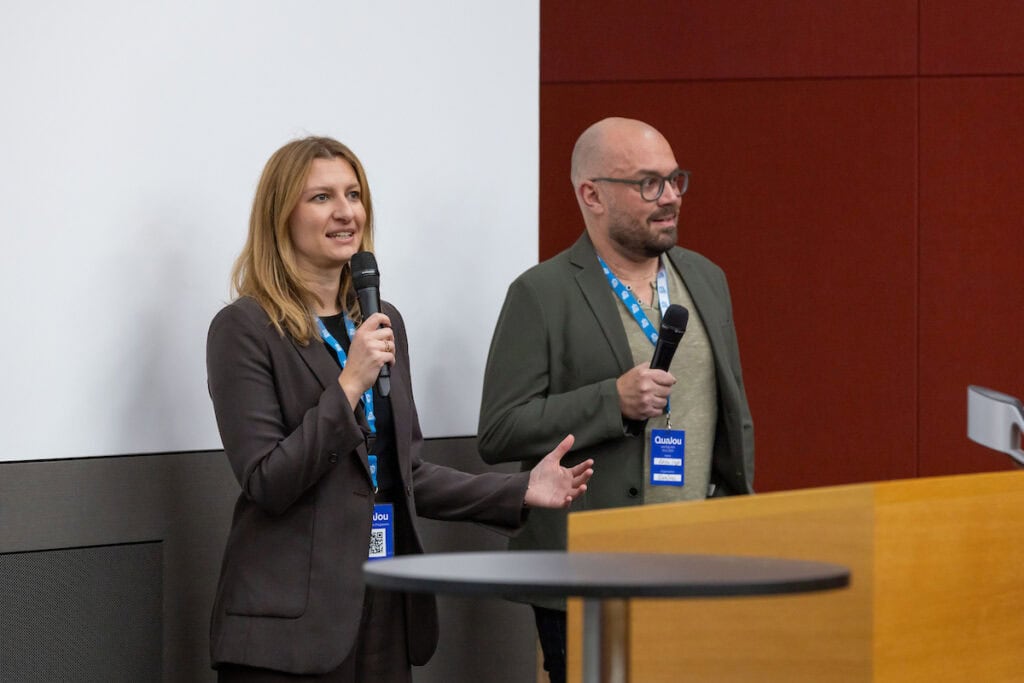
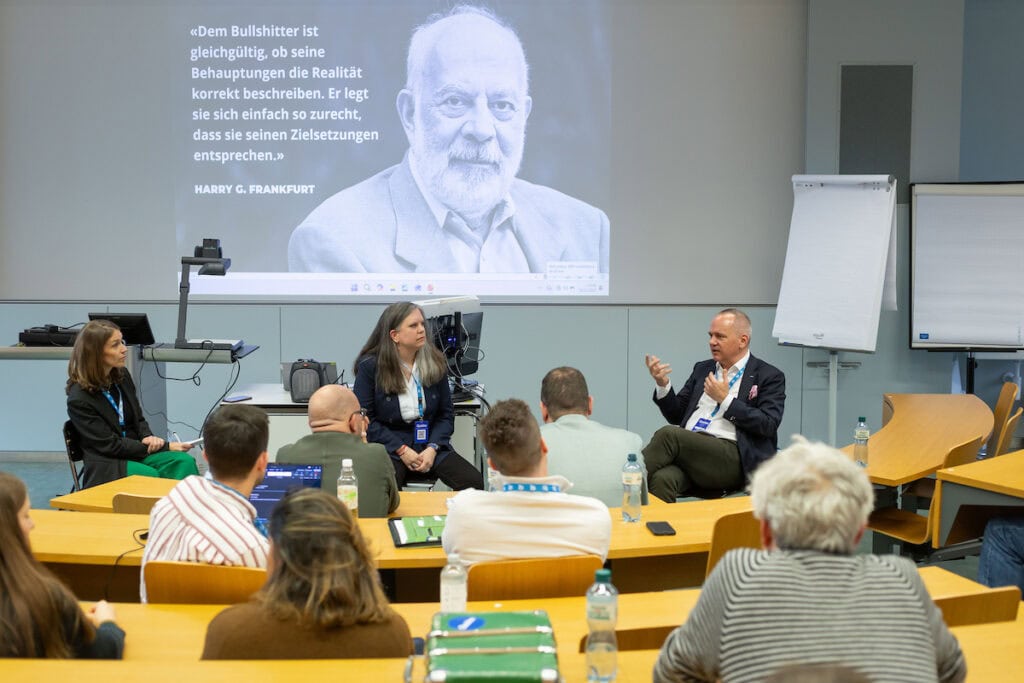
Bullshit in media releases is a nuisance that all journalists have to deal with. "Why is that?" asked TEDx speaker Ivana Leiseder during a panel at JourTag 2025, where she crossed swords with Andreas Hugi, founder and CEO of the Furrerhugi consulting agency.
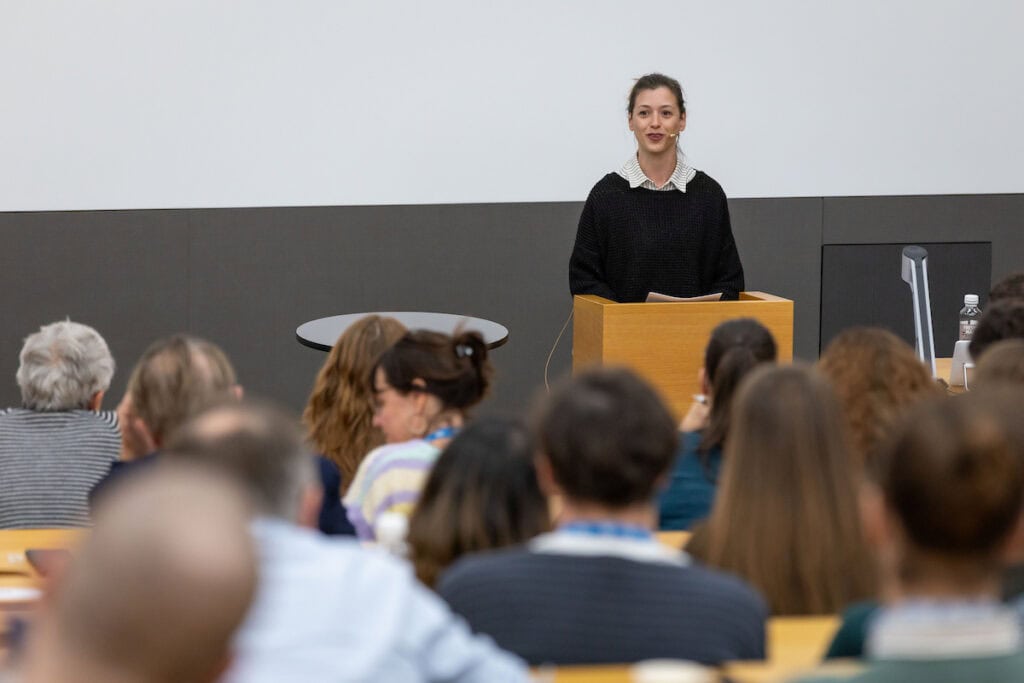
That was funny, but not entirely wrong. And yet the following panels showed a very different picture of the industry: exponents from different companies and with different tasks agreed that quality journalism is the only way out of the crisis, precisely because of AI.
Proximity still helps
For example, the youth: Simona Boscardin (On fire) and Tizian Schöni (WNTI) explained that traditional journalism is not bad. However, while Boscardin wants to do the translation work for the young and produce "cool shit" from serious topics, Schöni explained frankly: "We don't do anything new or crazy. But we do it, that's the difference." The two then also formulated things that are feasible for everyone as recipes for success: The joy of doing and trying things out, and proximity to customers.
Tina Huber (Tamedia), Leo Helfenberger (Watson) and Flavio Razzino (Blick) nevertheless agreed that preparing for a world without Google can only work with good content. "Writing articles just for Google makes no sense," said Helfenberger, for example. It's about reaching people via Google. And that happens through good content. "Surprising approaches to a topic" is Tina Huber's recipe for success. And all three agreed: for all the importance of SEO, there are also topics that need to be addressed, even if they don't achieve optimal figures. There are topics and formats with which
The best is at the end
Christoph Zimmer is Head of Product at Spiegel in Hamburg. He also emphasized in his closing keynote: "We are not in competition with any chatbot, but with arbitrariness." And from this he generated his learnings for the future of media companies. It is about sharpening the profile and offering classification. Media must also become more approachable and recognize the importance of communities. And that can be understood both digitally and physically.
Incidentally, the discussion between Andreas Hugi and Ivana Leiseder did not provide any real answers as to why media releases are the way they are. However, the two did find a few things in common. One of them was that the best content can always be found at the end of a media release.
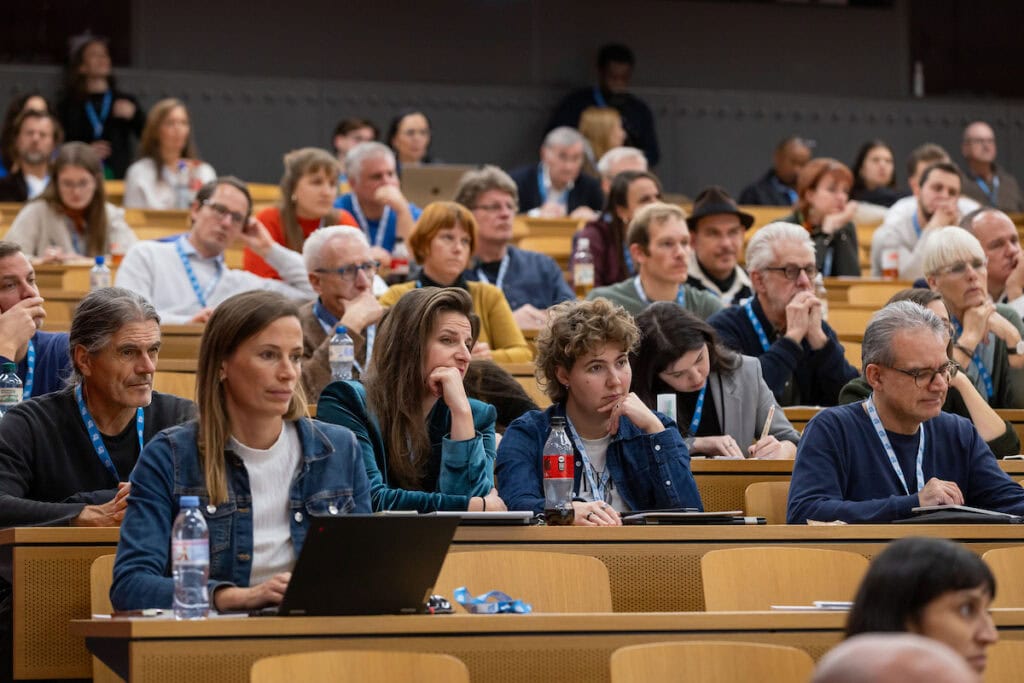
The JourTag is organized by the Quality in Journalism Association (QuaJour). The association is co-chaired by Alexandra Pavlović and Reto Vogt.


