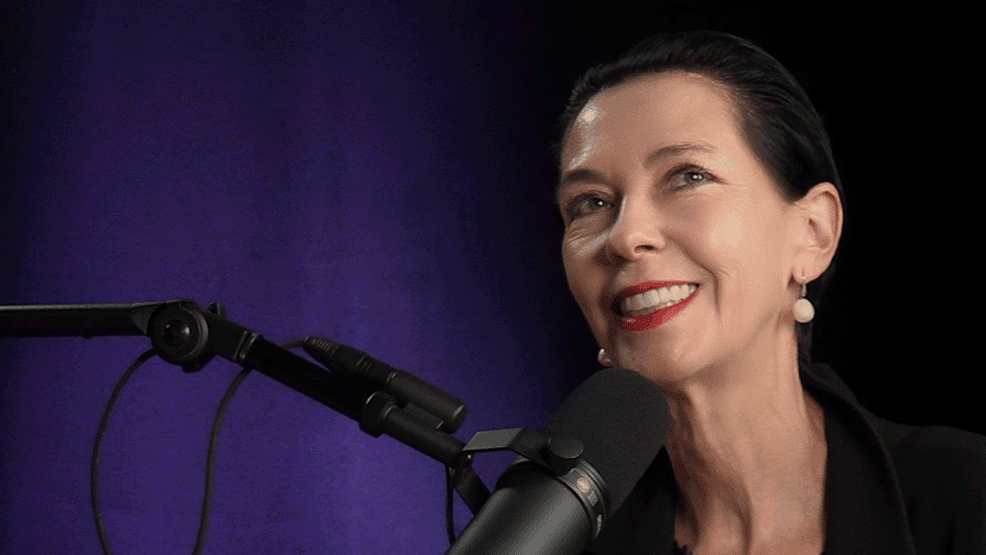
Roman Reichelt: The Firestarter
He's at his goal - and at the same time at the beginning: Head of Marketing at Credit Suisse is "a dream job," says Roman Reichelt. But the brand's potential is far from exhausted.


m&k: Roman Reichelt, you were responsible for marketing at Migros for almost ten years before moving to Credit Suisse in 2018. Was the "orange giant" a good school for international finance?
Roman Reichelt: My time at Migros was one of the best lessons in customer centricity. At management level, the motto was always: "Fulfil the customers' wishes and then look at how you can optimize costs in the second step." Not the other way around, that they wanted to market profitable but irrelevant products. That really shaped me: to act with a lot of brain, heart and gut feeling based on the needs of the customers.
What hardly anyone knows is that your job at Migros not only taught you these lessons, but also earned you gold and platinum records. At least I don't know of any other CMO in Switzerland who can make that claim.
You studied the wall behind me in the Zoom call very carefully. (laughs) The panels have been hanging there unnoticed for years because no guest ever came into this room. Now it's the most public. Perhaps I should say that I'm the member of N'Sync that nobody remembers, and rightly so ... (laughs) The truth is: I was involved in the Christmas song that Roman Camenzind wrote for Migros a few years ago. Roman and his team let me have a little say in the lyrics, melody and choruses. Hitmill was then kind enough to include me in the credentials.
So why the change of industry? You could have stayed on and co-composed more Christmas hits ...
Do you think so? (laughs) On the other hand, I knew that after ten years you can get into a certain routine. You can do Christmas marketing eleven, twelve, thirteen times. But at some point... maybe you copy yourself? That's why I was open to something new.
And that was Credit Suisse. Love at first sight?
I was fascinated by how down-to-earth, smart, honest and likeable the people here at Credit Suisse are. If you don't come from banking, you have a completely different image and imagine distant conversations in cool conference rooms.
What content-related challenges appealed to you?
The challenge I saw for myself can be summarized with a simple question: Why should Credit Suisse be less known for excellent marketing than a retailer? There is no reason for that. We can be more daring, rethink ideas and concepts, and work in an even more client-centric way. The CEO of Switzerland at the time strongly supported me in this view even before I took up the position. We were and still are in agreement: there are not many brands that you can do as much with as Credit Suisse. A global brand with Swiss DNA, positioned on progress for the bold and the curious.
An emotional bank brand?
Where should I start? There are so many touchpoints in the relationship between bank and customer where things can get emotional. The message to entrepreneurs that we are there for them in an uncomplicated way during the Covid-19 crisis is emotional for those affected; the grandmother who comes to the branch with her grandchild to pick up a Digipigi ... but even the supposedly simple touchpoints such as the design of our debit card or the front end of our CSX app create brand loyalty. And now I haven't even mentioned Roger Federer, the national football teams, the CS Super League or our commitment to sustainability and diversity.

You are also fighting against fundamental prejudices against the sector. Do banks have an image problem?
There are certainly clichés that have become ingrained in people's minds over the years. However, these quickly dissolve when you join us - this was the case for me and for absolutely everyone I recruited from outside. You can see how things are tackled here; how passionate the employees are about what they do. That gives me an incredible amount of pleasure. I also want to convey this feeling to customers.
Hand on heart: how challenging have the past few months been?
Basically, our aim is to be part of the value chain and to support the company in all situations in order to be the first choice for its customers. As a football sponsor, I would perhaps say: sometimes it's all about getting the ball into the goal when you're performing at a superior level. And sometimes you have to deal with conceding a few goals and change tactics at short notice before going back on the offensive.
"A brand works like a person: it has DNA, but it can adapt to situations."
It is not only in these times that you are much more exposed as a global CMO today than in the past. What you do attracts more attention, in one direction or the other. Are you actually interested when people write about your work?
In addition to internal opinion, I am of course very interested in public opinion, but not so much in published opinion. I make a very clear distinction between what individual journalists feel at any given time and what the public and our customers think. Sometimes they are congruent, and then you have to question yourself. But if praise or criticism only takes place in bubbles that revolve around themselves, I don't really care. After all, a football coach doesn't react to every single comment on the sports show, he has to have a feel for whether the fans in the stadium are happy or about to boo.
Since you obviously like this metaphor, let's stick with it: if Credit Suisse were a soccer team, its "fans" would be very diverse. They would include millionaires in private banking as well as young people. A tightrope walk for your marketing?
It's more of a balancing act, you can overstretch yourself. For me, a brand basically works like a person: that means it has a personality, a brand DNA, but it can adapt to situations. It doesn't have to look identical everywhere, but it has to operate coherently. I myself behave differently in the stadium than I do at the opera, I even look different. Nevertheless, there is no contradiction. That's the beauty of it. As long as DNA, competence and purpose remain the same in the background, it is completely legitimate as a brand to talk differently to a teenager in the CSX app than to a British entrepreneur who wants to invest 100 million Swiss francs. BMW sells the 1 Series to students and the 7 Series to board members. Everyone finds that completely normal.
Because you gave the example: Do you take inspiration from other brands?
Sure. It suits me that I'm a total marketing junkie. I often deliberately watch commercial breaks on TV - my wife keeps asking me why we even have replay TV if we never use it. (laughs)
Many of your colleagues complain that the general scope of action for CMOs in companies is shrinking. What do you think is the reason for this?
If you allow people to come to the head of marketing just to say: "We need a funny poster - Reichelt, call the agency!", then that's the beginning of the end. Marketing is much more than that: knowing when, why and how a customer decides and influencing that. You have to come to the head of marketing and say: "We can't get enough external customers to switch their accounts to us." Then you have to immerse yourself in the customer's decision and choose your means from the arsenal of possibilities.
And then you need the courage to be creative?
Yes, and also the courage to make real insights that may be painful. I really have to listen: What does the customer want, what bothers them? Why do they decide against us? Is it the brand, is it the user experience or is it because their great-grandparents used to go to the competition? As CMO, I don't listen to the customer so that I can sell them more of the same. But to understand what they would want from me if I didn't yet have an offer. I have a fire in me to track something like that down.
A fire?
We want to set off fireworks. To do this, I first need to have fire in myself to light the first rocket. I have to be on fire for the product, for the company. Otherwise the end result will be mediocrity. You can't "fake" passion either - if you as CMO don't really care who you work for, then your output will also be generic. But if you are "on fire", then you work differently. And you lead your team differently; better.
Like a conductor who is himself enthusiastic about the music he plays?
A conductor who doesn't love the piece to be performed, but just says stoically: "Yes, I know, seventeen violins and three double basses have their cue then and then"... that's a miscast. When I go to a concert, I want the person with the baton to feel personally attacked if the orchestra doesn't put its heart and soul into it.
Roman Reichelt is Global Chief Marketing Officer of Credit Suisse. Prior to that, he worked at the Federation of Migros Cooperatives for almost ten years, first as a senior strategist, then as Head of Brand, Advertising, Sponsoring & Digital and later as Head of Marketing/Communications. Before that, he worked as a consultant for companies in several European countries. Reichelt is married and lives near Zurich with his wife and son.