
Living and working after 2020: DACH countries less accepting of new working models
The pandemic has turned the way we live and work upside down. What has it done to people? A recent study by Avaya in cooperation with the market research company Davies Hickman Partner explores this question.


The study provides insights into the acceptance of new collaboration models, the love-hate relationship with the home office, the new fears about the future and the reasons for them. It also takes a look at new consumer behavior and the associated service expectations of consumers. German-speaking countries differ from other countries on a number of points.
Home office and new collaboration models not so popular
The study participants from Switzerland, Austria and Germany are among the most conservative when it comes to embracing the new, hybrid working world 4.0. "Middle Eastern countries stand out as particularly committed technology enthusiasts. They emerge in the study as the most open to new technologies, change and new work. The UK and the US are in the middle of the pack, while the countries in the DACH region - Germany, Austria and Switzerland - are comparatively conservative in their enthusiasm for new forms of work," comments Rania Odermatt, Country Manager/Managing Director Alpine Accounts.
39 percent of Austrian and 43 percent of Swiss employees appreciate the new "work from anywhere" options and want to keep them. Globally, this figure is even higher, at around 46 percent. For 11 percent of respondents from Austria and 8 percent from Switzerland, a home office solution could not be implemented. Globally, this figure is 6 percent; in India, only 2 percent were even unable to implement home office. Two-thirds of respondents feel happier overall if they can (also) work in a home office. In addition, 12 percent of respondents from Austria and 11 percent of participants from Switzerland are skeptical about working from home. Internationally, this figure is 10 percent.
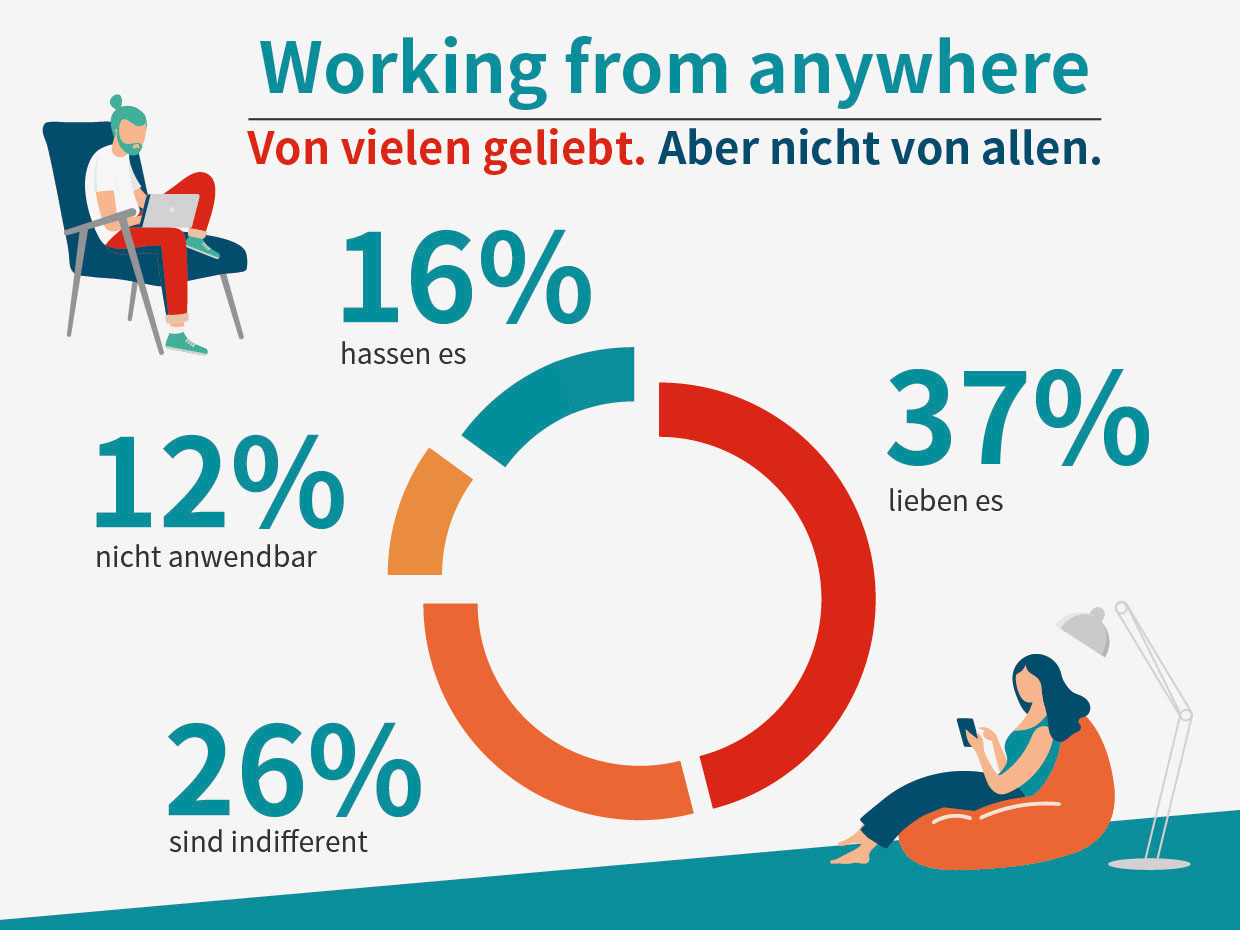
Frustration arises when employers skimp on technologies for efficient communication and collaboration. The loss of productivity due to inadequate technologies is described as a stumbling block by 48 percent of Austrian and 54 percent of Swiss participants. It seems to be a golden moment for digitization.
Employees become workaholics out of fear
The new opportunities for collaboration also have their downsides: Employees are becoming workaholics out of fear of losing their jobs. This has consequences for the psyche, as the global study shows.
41 percent of respondents from Austria and 35 percent from Switzerland said they were unhappier since the outbreak of the pandemic. Globally, this figure is even higher at 43 percent. Direct contact with others is particularly missed. In addition, money worries, fears and risk aversion are putting a strain on peace of mind. 22 percent of the study participants from Austria and 24 percent from Switzerland give priority to work over personal well-being. Globally, this figure is as high as 34 percent.
This is not without consequences: 27 percent of the employees surveyed from Austria and 34 percent from Switzerland describe themselves as workaholics. 36 percent and 32 percent of employees from Austria and Switzerland respectively struggle with their work-life balance. 41 percent of survey participants from Austria and 39 percent from Switzerland feel trapped in their daily routine. 44 percent of respondents from Austria and 46 percent of respondents from Switzerland would like to take it a little easier, but don't dare for fear of losing their jobs due to automation.
Customer expectation diametrically opposed to customer experience
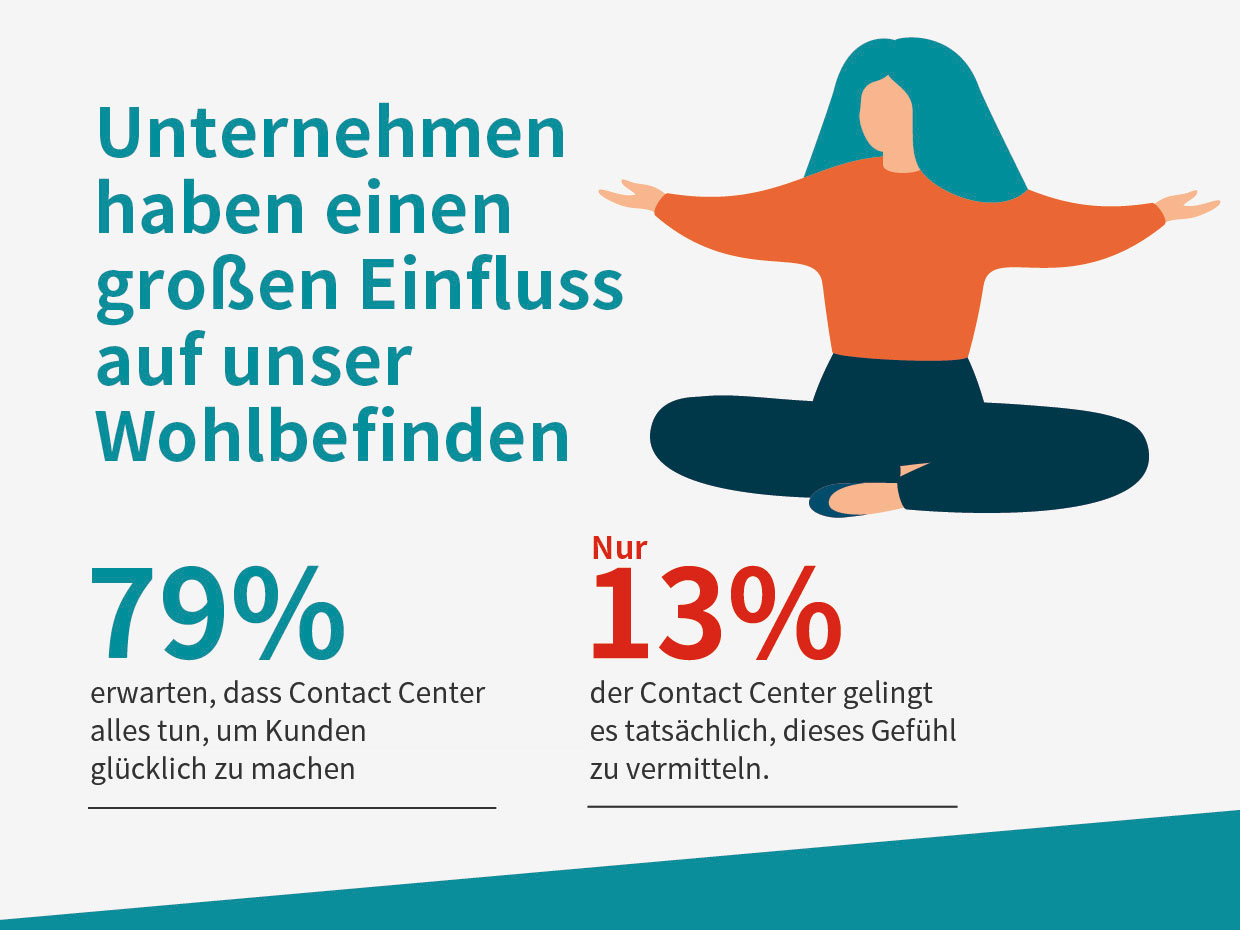
In times of e-commerce and "untouchpoints", the service center is gaining in importance. Due to lockdown, it is replacing personal consulting in many places. The expectations of customers are correspondingly high. So is disillusionment at the moment of truth, as the study makes clear. While 79 percent of customers expect a good customer experience in the contact center, only 13 percent of companies live up to this expectation. 69 percent of customers also think that companies should try to make their customers happy. 5 percent of companies from Austria and 7 percent of companies from Switzerland succeed in doing so.
Consumers in the DACH region are also more conservative about the use of new technologies in customer service: Messenger services such as Whatsapp would currently be used by just under a third (globally: 43 percent), while AI-supported chatbots would be used by only 19 percent of Austrian and 25 percent of Swiss consumers (globally: 34 percent).
After all, 27 percent of the Austrian and 20 percent of the Swiss participants (globally one-third) describe customer service employees as more warm-hearted and empathetic than in the pre-Covid year 2019. A good start - with plenty of room for improvement.
As part of the global study "Life and Work beyond 2020: The Change Makers." has the Market research firm Davies Hickman Partners conducted interviews with 10,000 consumers and employees in Austria, Canada, Egypt, France, Germany, India, Saudi Arabia, Switzerland, the United Arab Emirates, the United Kingdom and the United States. The study was sponsored by Avaya.


