
Know what will
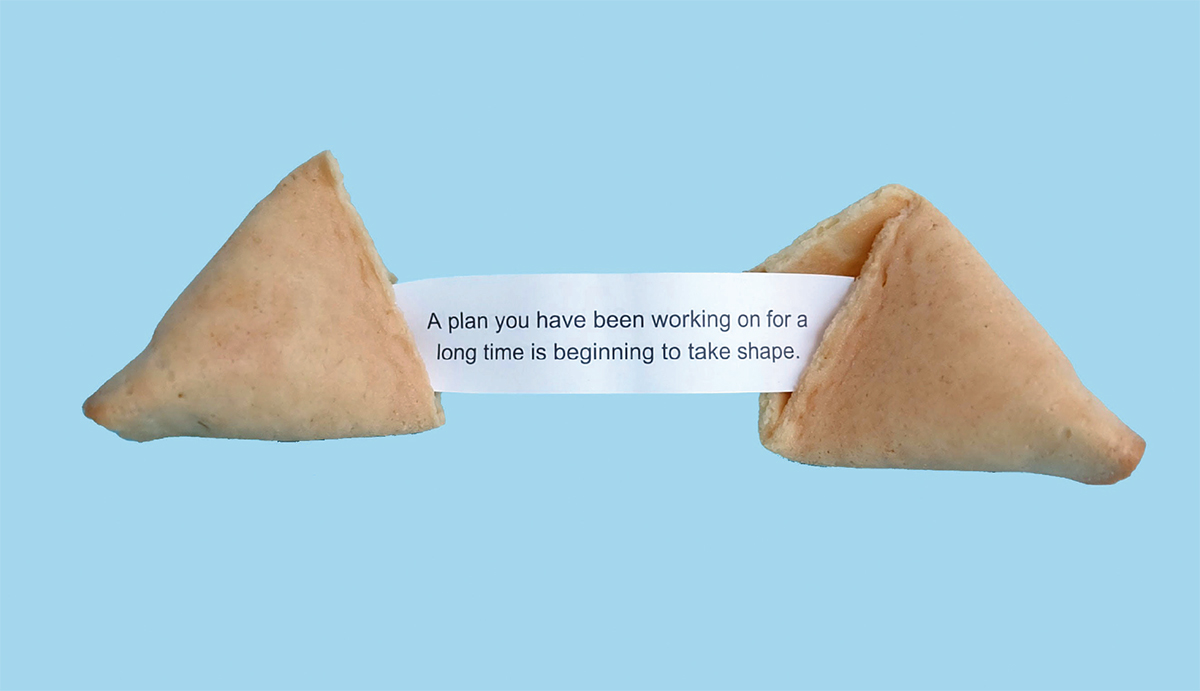
This is not the time for crystal balls and fortune cookies. According to futurists Georges T. Roos and Senem Wicki, anyone who wants to guide brands or companies into the post-COVID-19 future doesn’t need fortune-telling—but rather the tools of science.


Yes, surprises are part of life. We can't anticipate everything. However, Covid-19 shouldn't have surprised anyone. The danger of a pandemic was known, as was the fact that it would cost billions. Nassim Nicholas Taleb described completely unexpected, disruptive events as "black swans" in his 2007 bestseller of the same name. For Covid-19, a different animal is needed - elephants. "Black elephants" are potential events that are highly likely and highly visible ahead of us, but no one wanted to look.
What can you do to anticipate the future, to keep your organization fit for the future, to shape the future? You should ask yourself these questions, because if you are responsible for a company or a brand, you are automatically responsible for the future. Strategic leadership is always also future management.
In an increasingly unpredictable, interdependent and rapidly changing world, every company needs a toolbox to reduce avoidable surprises and identify opportunities and risks at an early stage. Fortunately, this toolbox already exists, as it has long been used by systematic futurology - scientifically and without any fancy tricks. Here are the 8 most important tools from it.
1. identify big shifts
There are overarching, long-term developments that are permanently changing the business environment. Since John Naisbitt, they have also been called megatrends. They have an impact over decades and are evident globally and in all areas, from politics and the economy to culture and society.
Megatrends are often overlooked (see above: "black elephants") because they only change slowly. But like a slow avalanche rolling down a mountain, nothing can stop them. Depending on how you count them, there are around one to two dozen megatrends, including ageing, population growth, urbanization, digitalization and individualization. Many megatrends also show counter-trends - and counter-trends can also open up business areas.
Acceleration, for example, has deceleration as a counter-trend and plays a role in the health, education and tourism sectors, for example. Globalization has localization as a counter-trend. There are opportunities here for the food industry or for craftsmen.
2. recognize uncertainties
You need to recognize which drivers are changing your business. If you do this, you run the risk of having blind spots: Drivers that you ignore. Futurology helps to avoid blind spots with the STEEP grid. The letters stand for society (S = society), technology (T = technology), economy (E = economy), environment (E = environment) and regulation (P = politics). The development of the drivers in all these areas must be anticipated and evaluated. The evaluation criteria are effectiveness and predictability: if there are extremely effective drivers for your business environment, but you cannot say with a high degree of probability how these drivers will develop, then you have a critical uncertainty. Drivers and, above all, critical uncertainties are the building blocks for scenarios. If an influencing factor is extremely powerful but unpredictable, you need to work with alternative futures.
3. set up monitoring
Step 3 follows from 1 and 2: monitoring. There are plenty of tools available. Determine indicators for the megatrends, drivers and critical uncertainties. Track the indicators. For example, you can set up Google Alerts for the most important indicators. This allows you to track what is happening on a daily, weekly or monthly basis. You will also recognize the "weak signals" - the precursors of trends. Regularly consider what the changes could mean for your company.
4. keep calm
TikTok, veganism or minimalism: are these hypes or important emerging trends? Admittedly, it is not always easy to distinguish between the two. It usually doesn't take long for euphorics to proclaim a new "megatrend" (which has nothing to do with the megatrends described above: What these people mean is that it's a "mega-cool" trend). If something emerges that could affect you and your company in a core area, it is worth monitoring (see point 3). This way you can see over time whether there is something to it or not.
However, we must not forget another rule: new technologies in particular are often overestimated in the short term. Exaggerated expectations are initially disappointed. In the long term, however, they are often underestimated. They can turn into new megatrends, which means that the world is drawn into their wake. One example of this is the internet. What began over 20 years ago with slow, mono-directional pages is now firmly in control of the economy and society as a digital transformation.
5. the future is a matter for the boss
It is not enough for the boss to be the only person in the company who is interested in future issues. A lot of support is also needed from the middle management. However, if the boss has no interest at all in future issues, employees can put forward exciting ideas - but nothing will happen. As mentioned at the beginning: the future is a strategic management task. And as such, it can only be delegated to innovation labs or agencies to a limited extent.
6. start a dialog
Use the different perspectives within and outside your organization to get as complete a picture as possible of the changing world. Above all, each and every individual recognizes signals that confirm their existing opinions. This is why organizations need an ongoing, joint discussion about the relevant megatrends and the opportunities they open up.
To avoid getting lost in a tedious discussion about which scenarios are more likely than others (precise forecasts are rarely accurate), it is better to concentrate on the question of desirability without ignoring the undesirable scenarios. Developing a shared understanding of the future possibilities helps to make viable decisions and implement the consequences.
7. no "copy-paste
Just because slides are being built in offices in Silicon Valley does not necessarily mean that this will shape the future of the world of work in this country. Of course, there are also overarching areas of tension and solutions in your industry that need to be identified. However, the decisive factor for the future of your specific organization is the combination of your future strategy of future scenarios with your history and DNA: in other words, superimpose the general future scenarios and your organization's very own strengths. What are the resulting priorities?
8. once is not enough
You don't grow a six-pack after a single visit to the gym. Future fitness is an evolutionary process with the aim of becoming a learning organization. New opportunities - but also new risks - are constantly appearing on the horizon of the future, and uncertainty must grow on you. That's why you should never stop thinking about tomorrow. And that's why it's not "backwards", but "forwards to starting field 1" of this tool list!
Spectacularly wrong forecasts
In the past, there have always been theories about the future that turned out to be quite wrong.
Monkeys instead of robots
Nobel Prize winner Glenn Seaborg wrote in 1967 that by 2020 there would be no functional robots, but intelligent monkeys doing simple tasks.
Food? Not necessary
Futurist Ray Kurzweil noted in 2005 that we could do without food by 2020. Instead, we should swallow nanobots that take care of our bodies from the inside out.
Atomic vacuum cleaner
US scientist Alexander Lewyt was certain in 1955: "Soon there will be nuclear-powered vacuum cleaners."
The authors ...
* Senem Wicki trained as a caospilot in Denmark and as a futurologist in Zurich and has been working as an innovation expert and process manager for think tanks, companies and public institutions for over fifteen years.
* Georges T. Roos is a futurologist with over 20 years of experience in advising organizations on megatrend analyses, scenario and early detection processes. He is an inspiring speaker on the future of business, politics and society.
This article first appeared in the 6/7 2020 issue of m&k.
This interview first appeared in the 6/7 2020 issue of m&k.


