Greetings from the home office - Episode 17: Tino Krause, Facebook
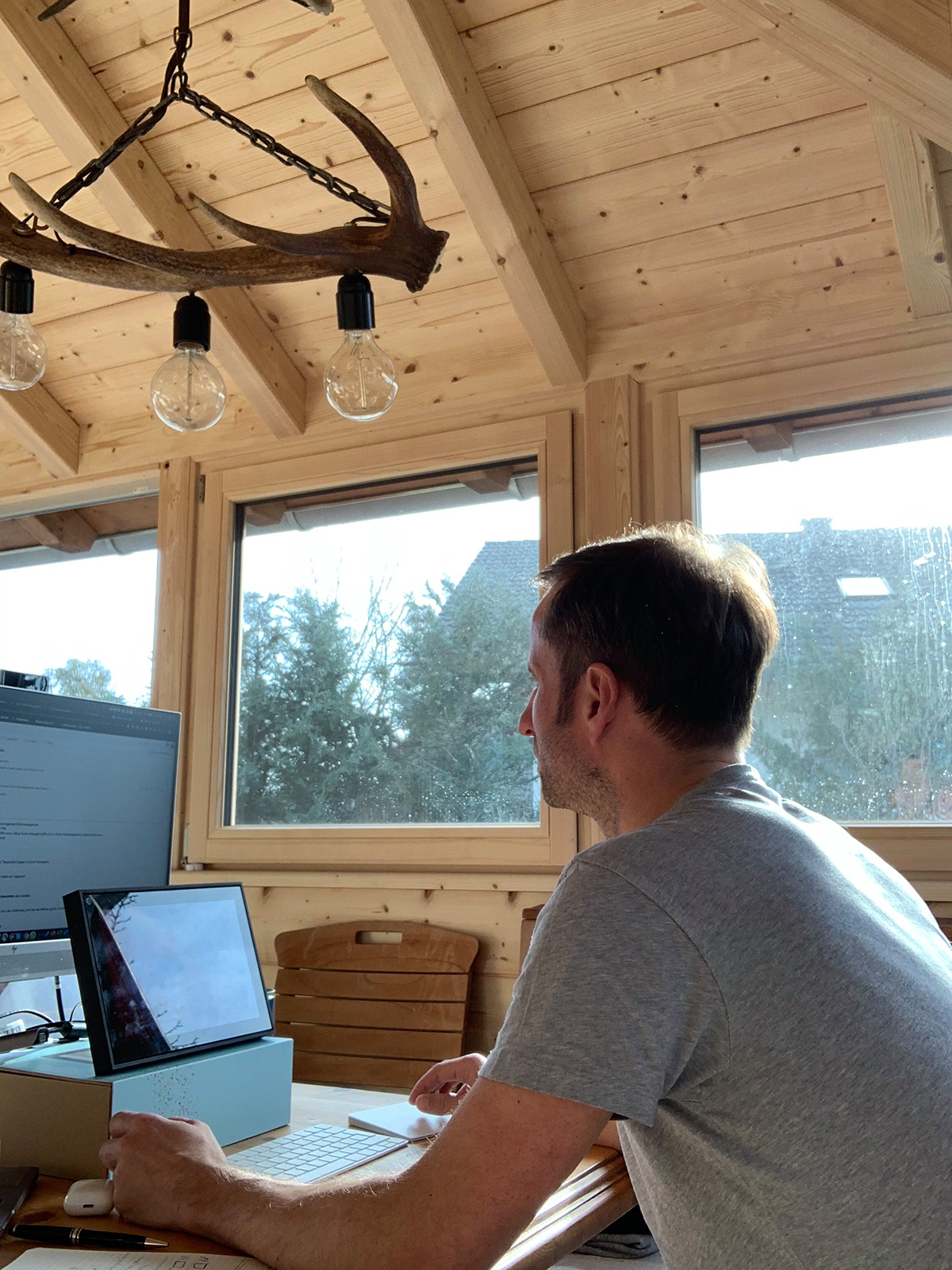
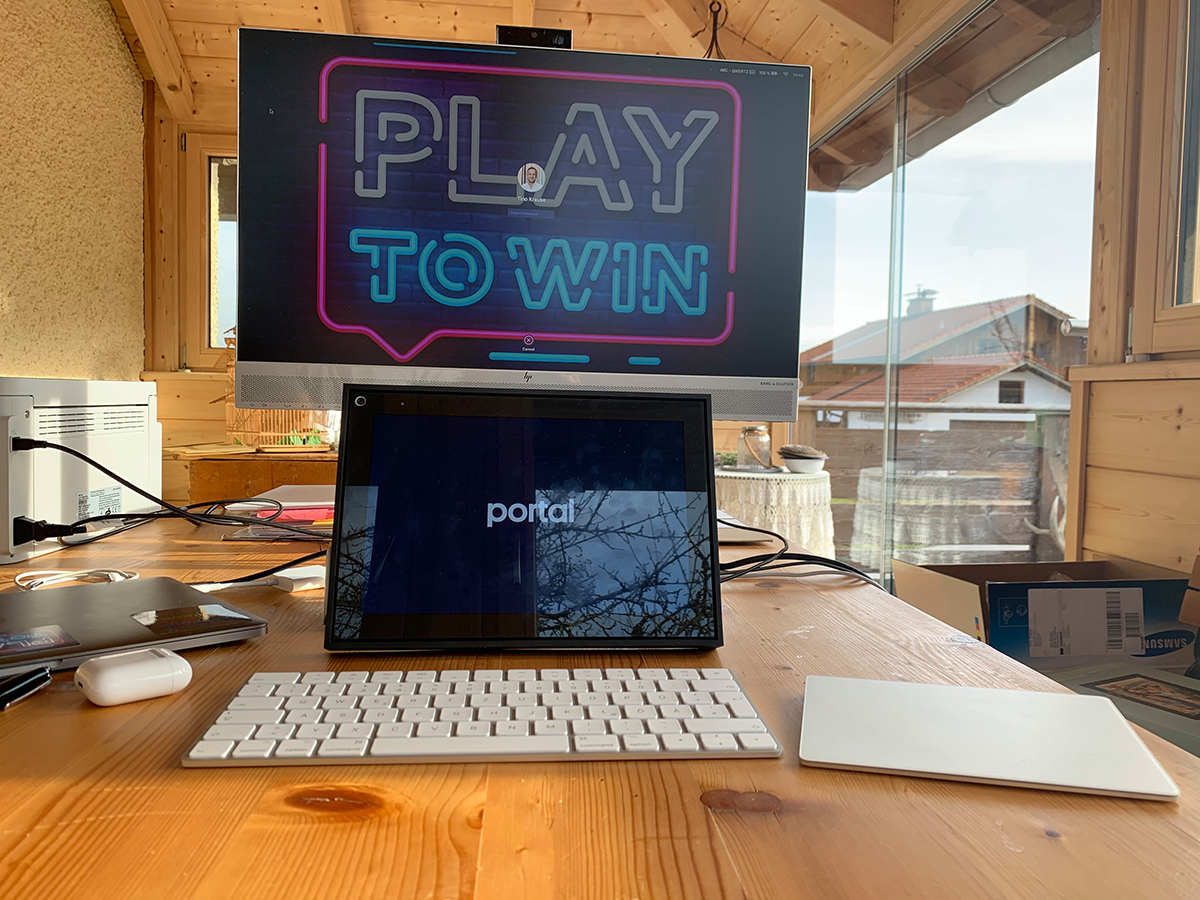
In the 17th installment of the series «Greetings from the Home Office,» Tino Krause, Facebook’s head of the DACH region, shows us his makeshift office in his in-laws’ sunroom.


Tino Krause has been leading Facebook's business development in Germany, Austria and Switzerland as Country Director DACH since February 2019. He has more than 15 years of experience in leading media agencies and companies. Before joining Facebook, Krause was Chief Executive Officer at MediaCom, Germany's largest media agency, where he was particularly responsible for the strategic development of the company.
Werbewoche.ch: How long have you been in a home office?
Tino Krause: This is my fourth week in the home office.
Is your entire company in a home office?
Yes, all Facebook employees worldwide work from home.
Did you face any technical issues while setting up your workstation?
No, but the current situation is changing the way we work together and presenting us with new challenges in this regard. But with the right resources and tools, home office can be productive and fulfilling.
Where have you set up?
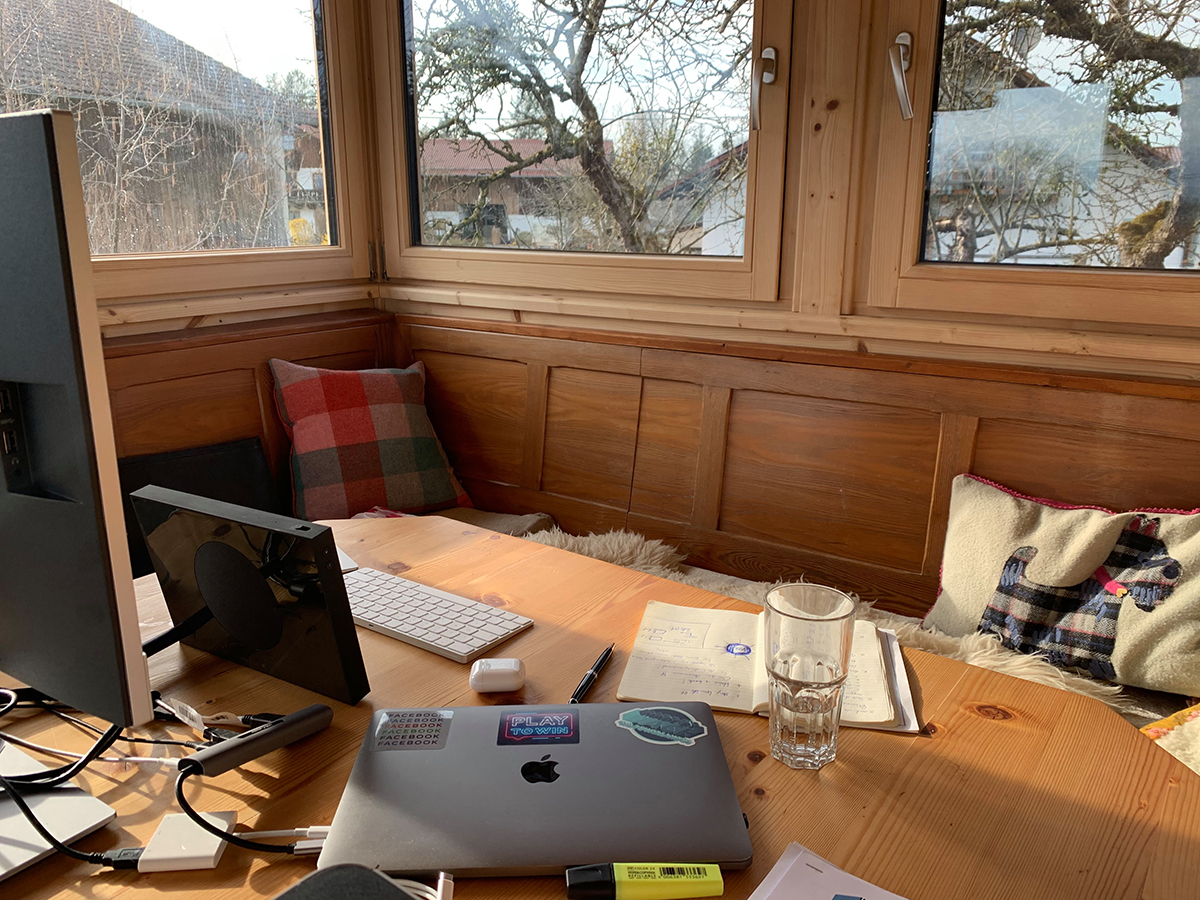
We recently decided as a family to move temporarily to my parents-in-law in the Munich area. There I have set up a small office in the conservatory.
What all do you need to be able to do your job?
Actually, only what everyone needs: Laptop and a basic infrastructure, as well as mutual support in the family.
Is it difficult to separate yourself enough when the children are at home?
It's not that easy, because the boundaries between work and leisure are naturally more easily blurred. That's precisely why I plan very precisely and have defined fixed working hours. Our children are still quite young. I can't convey to them that I'm present the whole day, but that I'm not available all the time. That's why I also have fixed times at lunchtime and in the afternoon when I can spend time with the family. That's important to me - and everyone in the team knows that. Many people with children do the same and work in the evenings when the children are already in bed.
Do you have home office experience or is this a first?
We live in Munich, but I work primarily from the Hamburg office and am also often in Zurich, Berlin or London. But I generally try to work from home every Friday. So I already have a certain routine there. But in this form, it's a first for me, too.
Based on previous experience: Which processes are difficult compared to normal everyday work?
Working from a home office is turning most people's daily lives upside down. Each of us must first get used to and adapt to this new norm of working. We now need additional structure, planning and, very importantly, mutual support and understanding for each other. There are people for whom working alone means stress, for example because the setting at home is not right. For these colleagues, we offer internal coaching and also a guidebook to help them improve their personal home office situation.
Which jobs go smoothly?
We all get along well - also because we try to continue the proximity and exchange that the teams from the office are used to, despite the physical separation. We create many virtual human contact points and, for example, meet more often for informal video conferences with a few colleagues. We have a coffee chat roulette in which colleagues from other Facebook offices are assigned to us and we take a virtual coffee break together.
Is there anything that even works easier or more productively in the home office?
Interesting, new forms of togetherness are emerging. Internally, we normally have a "kick the week off" meeting every Monday. We now conduct this virtually via our Workplace platform. Our customers are also getting used to this form of meeting. As a result, meeting etiquette is evolving, among other things. At the same time, people are being asked to be more active and to concentrate on their work. Otherwise, you can quickly lose touch.
As a company like Facebook, how big an advantage is it to already have a purely digital DNA when it comes to moving operations into your own four walls?
In a way, we're actually skilled at this: our technology and tools are not only currently making a strong contribution to minimizing disruptions to everyday life and maintaining exchanges - regardless of where our employees are. But we know that can be difficult. That's why we've shared our experiences in a Information Hub collected - with tips for employees and managers, but also for parents on how to deal with the current situation.
Should the home office phase continue: What do they do to prevent the ceiling from falling on your head?
Until recently, this was easy, because I was in the preparation phase for the Hamburg Marathon, which was to take place on April 18. When it was cancelled, I was of course frustrated - I missed the goal and took a break. But since last week I'm running again in the morning or in the evening. This is the best balance for me, because I can concentrate on myself.
What do you miss most about the physical workday?
Certainly the short and spontaneous conversation with colleagues, even sometimes the volume and liveliness in the office. You simply need the closeness and the togetherness. The real office is irreplaceable. I think it will even experience a renaissance because people are realizing how important human contact is.
Is Facebook also benefiting from the crisis, as people's need for communication and information is greater at this time and they are presumably spending more time on social media?
We are currently seeing that people are using our services more frequently and more intensively, for example to find out about current events, to organize help for others in groups, or to stay in touch with family and friends. On the one hand, this shows that social networks can do good. On the other, it highlights how technology can help us cope with crises. We are very aware of the responsibility this entails. We focus on providing people with trustworthy information by working with the WHO and local health authorities.
As we all know, everything has its positive sides. What is it in your current home office situation?
Since then, our mission has been to enable people to build communities and bring the world closer together. We see that our platforms facilitate professional and private exchange in the current situation. The last few weeks have also shown how creatively many people are using the features of our platforms. Neighborhood help groups have been set up on Facebook in so many cities and towns - such as the "Gärn gschee" groups that exist in many cities in Switzerland. On Instagram Live, fitness instructors offer workouts in Stories, and there are flower stores that have set up digital plant consultation hours. All of this brings me joy in the current situation.
What would you like to give your colleagues in the industry to take with them through the crisis?
In addition to the solidarity we experience in private, it is important that solidarity among companies also becomes visible. Small companies are the focus here because they are the backbone of our economy and are particularly affected by the crisis. That's why we are in continuous exchange with them and also offer financial support. In addition, we are also working with other technology groups such as Google, LinkedIn, Microsoft, Reddit, Twitter and YouTube in combating misinformation surrounding the coronavirus. We invite other companies to join us in our work to keep people healthy and safe.
The coronavirus has society firmly in its grip. Those who can stay at home, stay at home. The advertising, communications and marketing industry is also shifting operations to the home office on a large scale. With the series "Greetings from the home office," Werbewoche.ch sheds light on everyday working life within the four walls of one's home.
Published so far:
- Episode 1: Peter Brönnimann, Publicis
- Episode 2: Daniel Zuberbühler, Sir Mary
- Episode 3: Christoph Bürge, Butcher Rottmann Bürge
- Episode 4: Jeff Gerber, Comet
- Episode 5: Roman Reichelt, Credit Suisse
- Episode 6: Markus Hammer, Equipe
- Episode 7: Frank Bodin, Bodin Consulting
- Episode 8: Michi Frank, Goldbach Group
- Episode 9: Gioia Bozzato, ADC Switzerland
- Episode 10: Michael Kamm, Agence Trio
- Episode 11: Katja Metz, Leo Burnett
- Episode 12: Karin Estermann, Content and Form
- Episode 13: Leone Ming, Leone Ming Est.
- Episode 14: Guntram Friede, Salesforce
- Episode 15: Claudia Lässer, Teleclub
- Episode 16: Moreno Cavaliere, Gruppo Corriere del Ticino