
Unclear effect of dynamic prices for ski resorts
Ski resorts are still in the dark about what impact the much-touted dynamic pricing will actually have. Nevertheless, more and more regions are jumping on the bandwagon.


Last winter, dynamic pricing was the big topic in Swiss winter tourism. The Oberengandin mountain railroads are partly responsible for this: The area around St. Moritz launched a pricing model that is unique in the Alpine region and is completely dynamic; fixed ticket prices are a thing of the past (Werbewoche.ch reported). Those who book early benefit. In contrast to other areas with dynamic price models, the weather has no influence on prices in the Engadin.
In January 2019, the first interim conclusion: the offer is well received by the majority of guests - despite some negative feedback (Werbewoche.ch reported).
Looking back, St. Moritz can also back up the positive first year with dynamic pricing with figures: Five percent more sales, more ski days booked. The Andermatt-Sedrun ski arena was also able to increase the number of ski days by nine percent, as the Switzerland at the weekend writes in the current issue. The ski resort makes the prices dependent on many factors - they vary depending on the season, booking date, weather and day of the week.
Good conditions dilute the pricing effect
Figures that should be like balm for the soul of Swiss ski tourism, which has been battered for several years. However, it is not clear what role the dynamic prices played. After all, the winter of 2018/2019 was primarily notable for the good weather and snow conditions - especially in comparison to the sometimes worryingly lean seasons of previous years.
Michael Kirchner, Head of Marketing at Bergbahnen Engadin St. Moritz, is realistic about the situation. A large part of the increase can be attributed to the good weather conditions, he admits to the newspaper. However, due to the new price system, more guests have booked in advance and thus - regardless of the weather - have purchased a six-day pass instead of four day passes. This ensures more turnover and planning security.
The new price model in St. Moritz means that a ski pass can cost over 100 francs on peak days. At the same time, budget-sensitive guests - such as families - can benefit from lower prices than before by booking earlier.
Another major player switches to dynamic
Even if we still do not have enough data to fully assess the effects of dynamic pricing: It remains the big topic in the industry. Stefan Reichmuth, Head of Marketing at Bergbahnen Arosa-Lenzerheide, which already uses a dynamic model, is confident: "We are 100 percent convinced that dynamic prices will become established in the majority of ski resorts in the near future."
His prediction is supported by the fact that another large ski resort, the Valais Aletsch Arena, will be jumping on the dynamic bandwagon next season. While a day ticket cost 60 francs last season, it will be between 51 and 66 francs next winter - so guests can save money or have to pay more. The situation is more lucrative for multi-day tickets: For the six-day pass, savings of up to 64 francs and only surcharges of up to 16 francs are possible.
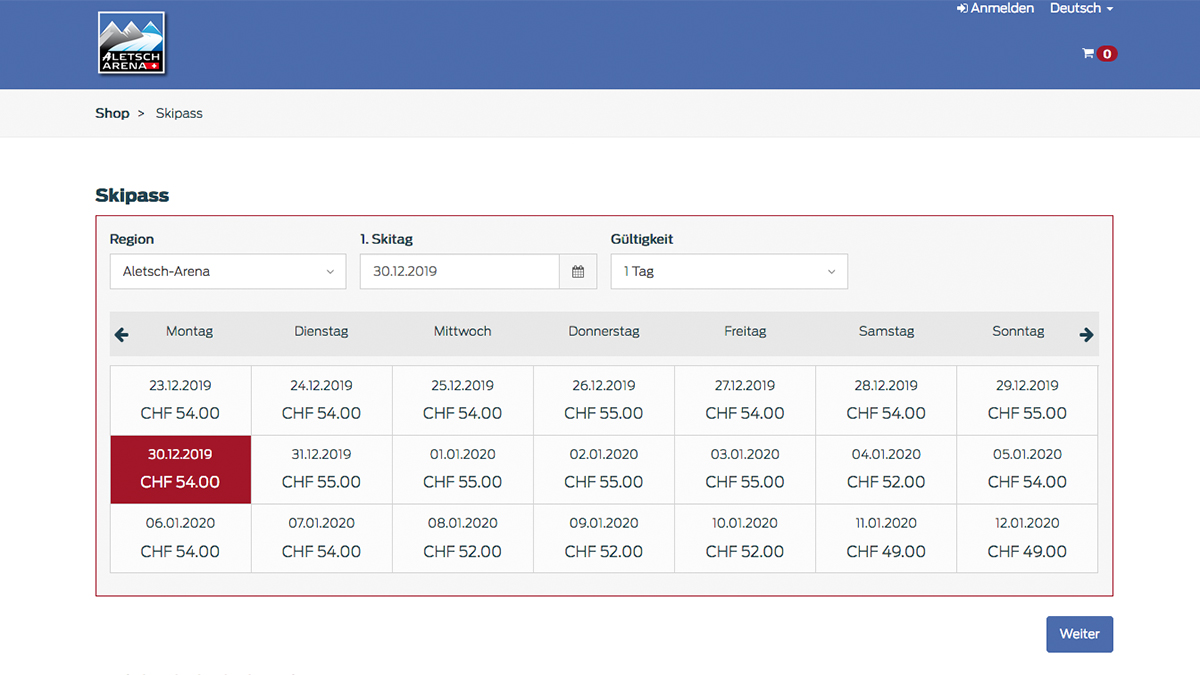
Early booking pays off: in the Aletsch Arena region you now pay dynamic prices (Screenshot Aletschbahnen.ch).
The critics have not yet fallen silent
Nevertheless, the industry is far from being as united as one might expect in Lenzerheide. Peter Reinle, Head of Marketing at Bergbahnen Engelberg-Titlis, criticizes the development and remains critical of the Switzerland at the weekend skeptical: "Should someone be punished with higher prices because they have to work during the week and come at the weekend? They'll have even less space on the slopes." He doesn't want to offend his regular guests. The fact that there are also negative, angry reactions is confirmed by some of the resorts that already apply dynamic prices.
Nevertheless, the market could sooner or later develop in the direction predicted by Stefan Reichmuth. Critic Reinle, who feared last year that prices would fall, no longer rules out the possibility that the Titlis will switch to this model at some point: "It's quite possible that guests will get used to it in the long term . Then we would have to follow suit."
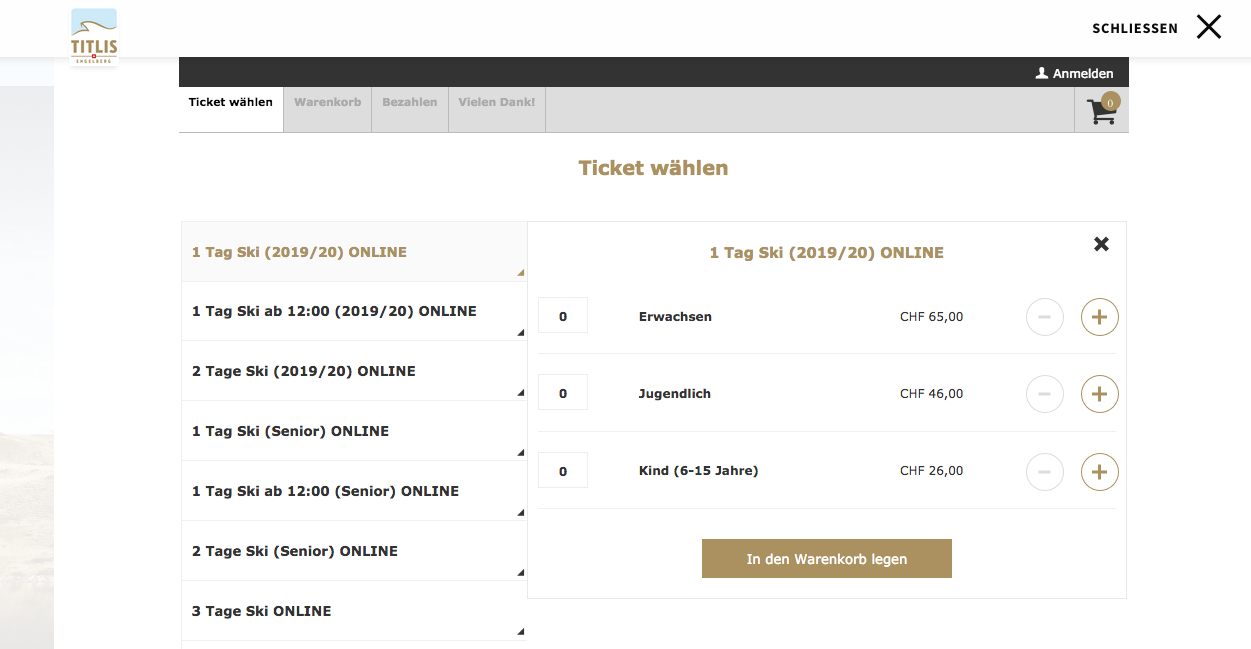
Static prices: On the Titlis, you always travel at the same prices - regardless of when you book or which day you choose (screenshot Titlis.ch).
Prices are "dynamically" adjusted upwards
A price comparison by the newspaper shows that dynamic prices do not automatically lead to ever new savings opportunities. Laax, the ski resort that already has three seasons of experience with dynamic pricing, is raising the lower limit for the day pass from CHF 49 to CHF 68 this year. And while the six-day pass cost 394 francs last year, this year it will be 408 to 468 francs.
Prices in the Matterhorn Zermatt region are also being "dynamically" adjusted upwards: instead of 75 to 82.50 francs, this year you will have to pay between 79 and 87 francs. The upper limit for the six-day pass remains the same (CHF 422), but the lower limit has been raised from CHF 338 to CHF 345.50. In the Engadin St. Moritz region, the lower limit for the six-day pass has been corrected from 207 francs to 225 francs, otherwise nothing else has changed in the region.
The example of Engelberg-Titlis shows that price increases do not necessarily have to be linked to dynamic pricing. There, the day pass costs CHF 3 more this year, the weekly pass CHF 14. However, the price increase only applies to the ticket office; the online sales price remains the same as last year.
However, dynamic prices can also move downwards: In Andermatt-Sedrun, the prices for the day ticket now start at CHF 34.50 instead of CHF 39 as last year. And the prices for the ticket - previously open at the top - are now capped at 84 francs.


