New payment systems: Payment is becoming easier and cheaper
Apple Pay, TransferWise, or WeChat: More and more companies around the world are integrating payment features or creating new business models centered on payment systems. In its study, the management consulting firm Bain & Company analyzes what this trend means for banks, credit card companies, and retailers.


The study "Payments Just Want to Be Free - How Can Providers Adapt?" at a glance:
- The speed of innovation in electronic payment transactions is increasing
- Global payment systems threaten banks' earnings
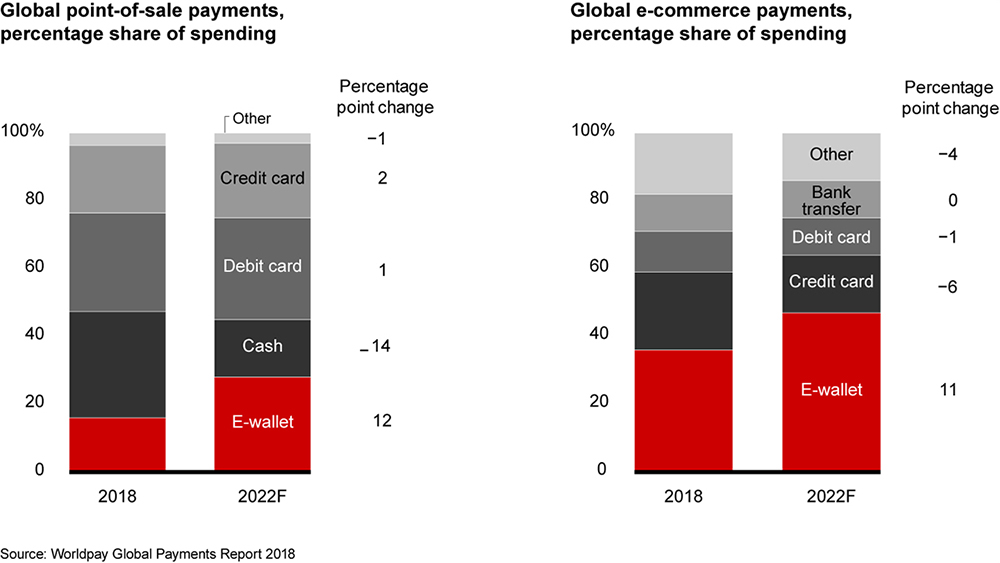
- E-wallets gain market share worldwide in online and brick-and-mortar retail
- More and more apps contain payment functions
- Banks can defend their traditional business with additional services
E-wallets are becoming increasingly popular
"Payment systems are in the spotlight more than ever, especially in Asia," emphasizes Bain Partner Imeyen Ebong. There, e-wallets are likely to replace cash as the most widely used means of payment in bricks-and-mortar retail in the next three years. By 2022, more than a quarter of all payments in stores worldwide and almost half in online retail are expected to be made using virtual wallets. "Modern e-wallets are considered easy to use," says Ebong, "and new market players are further raising the expectations of customers and retailers."
Global income from payment transactions currently amounts to around 830 billion US dollars. Around half of this is made up of B2B transactions on the one hand and B2C and C2C transactions on the other. Cross-border payments and money transfers from and between private individuals are particularly lucrative. The margin here is 3.4 percent or 340 basis points. Otherwise, the margins range between 2 and 22 basis points.
Strengthening the payment transaction business
Banks have three options for defending their business around payment systems and the associated direct customer contact:
- Takeover of competitors. This not only increases efficiency and the speed of innovation. It also opens up new markets and business areas and creates cross-selling opportunities.
- Simplify e-commerce transactions. This can be achieved, for example, by integrating payment functions - an option for retailers in particular.
- Expansion of the range of services. Pioneers are already offering numerous solutions for the actual payment process. These range from fraud detection support and the evaluation of payment data to the granting of credit to consumers and merchants.
Additional services strengthen the business
"The days of fees for pure payment transactions are numbered," states Bain partner Ingolf Zies. "Payment will become part of other products and services." Payment service providers must therefore create added value for their customers, be it through particularly convenient payment options, integrated solutions such as data analysis and financing or complete software solutions including web stores and business management programs. In ten years' time, such services will account for between 50 and 80 percent of payment system providers' profits.
The speed of innovation around payment processes is high. "Every payment provider must therefore consider how their business can survive in the future," says industry expert Zies. And Bain partner Ebong adds: "Consumers will definitely be the winners, as payment will be easier and cheaper than ever before in the future."