Packaging materials - spoiled for choice


What a packaging should be able to do
Packaging provides protection, facilitates storage and transport. In addition, it shows instructions for use, offers information regarding shelf life and protection against counterfeiting, and often has a first-opening guarantee "built in". It advertises the contents with its appearance and offers built-in handles or carrying aids to make handling easier. If all these requirements are met, the packaging should ideally be reusable or at least easy to recycle.
Paper, cardboard, paperboard
Paper-based packaging materials are used as primary packaging for dry goods. Mostly they are used for secondary and tertiary packaging.The renewable raw material wood can be supplemented with recycled material in the manufacturing process. The recycling rate of paper, cardboard and paperboard in Switzerland has been in the range of 80% for years (source: swissrecycling.ch). Papers convince with good and problem-free printability and the possibility of numerous attractive finishing options. Paper-like packaging materials are versatile in surface, color, feel, thickness and formats.Packaging materials based on wood are sensitive to moisture and have limited barrier properties. These disadvantages can be eliminated in combination with composite materials (plastics and aluminum).
Solid and corrugated board
Model AG in Weinfelden uses mainly solid and corrugated board for packaging. These materials offer a wide range of design options. Packaging made of cardboard meets high stability requirements and can be made exactly to measure. Depending on the motif and print run, they can be printed using different printing processes. There are almost no restrictions. In the food sector, for example, printing with food-grade, water-based inks is a matter of course.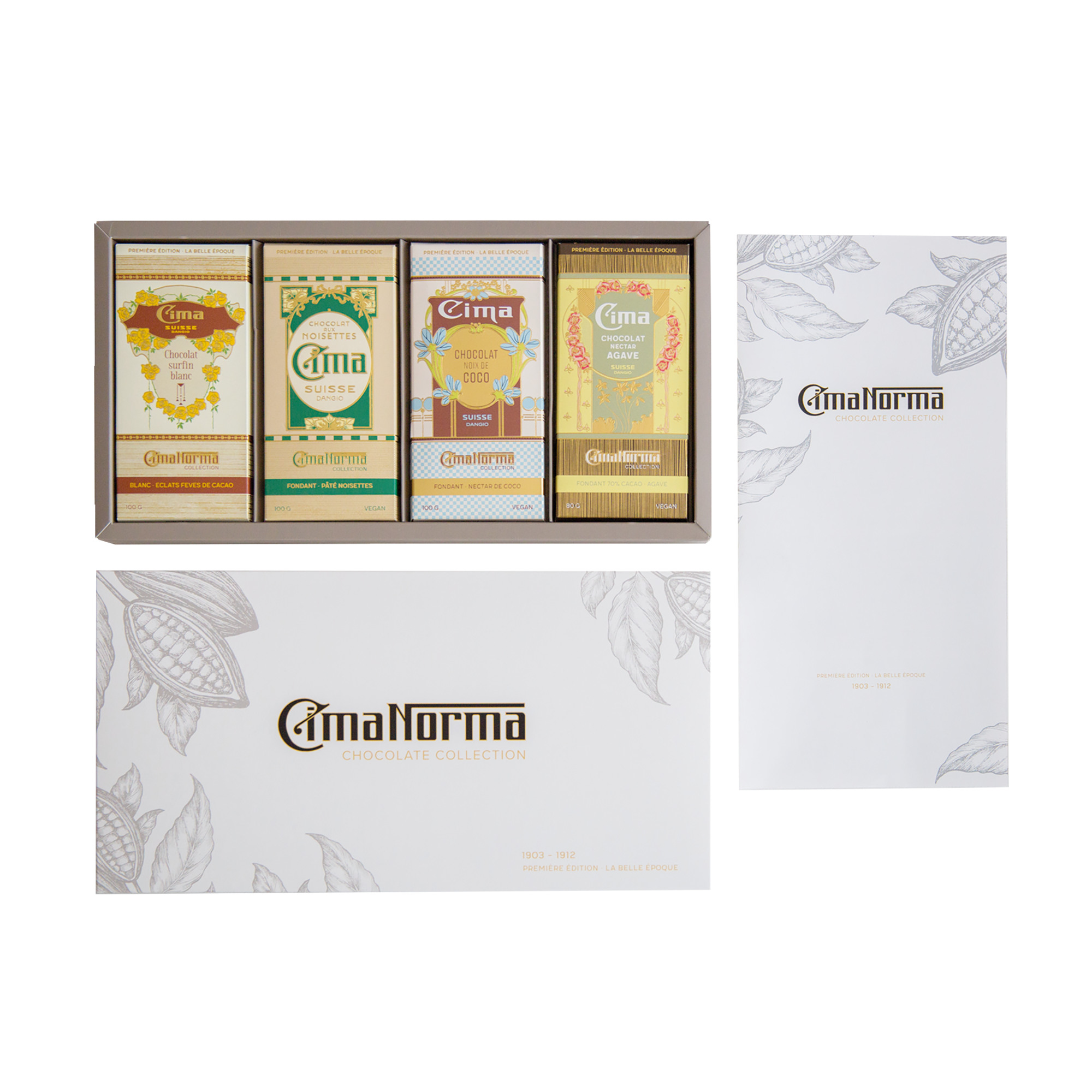
Glass is tasteless
In addition to silica sand, up to 60% of waste glass is used for the production of beverage bottles. For green bottles, this can be up to 95%. Glass has a good reputation among consumers. It is considered to be of high quality and an environmentally conscious, hygienic and recyclable packaging material.In plastic packaging with liquid contents, substances can be dissolved and transfer into the liquid. With glass bottles, there is no exchange between the contents and the packaging. Glass is and remains neutral in taste.
Wood
Wooden packaging is mostly pallets or boxes. Special designs can be used to pack particularly sensitive or bulky goods. In addition, elements such as data loggers can be installed. These monitor the loads on the packaged goods during transport.Furthermore, individual internals can fix the product and ensure that the contents are not damaged during transport. Packaging based on wood is sustainably sourced, can be easily processed and recycled, but is sensitive to moisture.
Plastics
The basis for the production of plastics is usually petroleum. In the packaging sector, PE, PP, PET and PS are most commonly used.Polyamides (PA) have good barrier properties against moisture and oxygen, exhibit good mechanical strength and are therefore often used to manufacture composites.Polyethylene (PE) are used for the production of films and bottles. In composite materials, PE is often used as a sealing layer for sealing containers.Polyethylene terephthalate (PET) is transparent, glossy and impresses with good printability. PET is used for the production of beverage bottles.Polypropylene (PP) helps to ensure that packages can be opened easily thanks to its good mechanical properties. In addition, PP has good barrier properties against moisture. CPP is also a good sealing medium and is used primarily for products that are sterilized.Polystyrene (PS) is highly transparent and dimensionally stable as a film. Foamed on (Styrofoam), it is used to protect fragile goods.Rigid PVC is often used for blisters and trays because it has good barrier properties against oxygen and flavoring agents.
Composite materials
Packaged goods often require a range of different protective properties. To ensure that the packaging meets all of them, materials with different properties are combined and used in composites.To obtain the same property with monomaterials, significantly more material would have to be used in most cases. Composites can also be recycled using modern equipment, but they are still a challenge. The separated starting materials obtained in the process can be recycled.
It is not what it seems at first glance
Depending on the requirements, different composites are used. For coffee, a composite of PET/ALU/PE is often used. Aluminum is a very good barrier (light, oxygen, moisture) and protects the coffee aroma.When it comes to sustainable or climate-neutral packaging, plastics and composites have a rather bad reputation. From the point of view of Karin Marino, Marketing Manager Wipf AG, the bad reputation of composite packaging is by no means justified. When it comes to sustainability, you always have to look at the big picture. When it comes to transport, flexible composite packaging is ahead of the game. They are smaller, lighter and can be stacked to save space. While glass packaging accounts for around 50% and food cans for a good 25%, flexible composite packaging accounts for only 5%.
Sugar cane lid and coating
Tetra Pak began using bio-based plastics based on sugar cane for the coating of its beverage cartons and closures back in 2011. For Dr. Josef Meyer, Commercial Director Tetra Pak (Schweiz) AG, the long-term goal is for all Tetra Pak packaging to be made from bio-based materials.The bio-based closures are made from Brazilian sugarcane ethanol and are functionally like conventional oil-based plastic caps. However, they have a significantly lower carbon footprint. Importantly, recyclability is not compromised, as the bio-based materials can be processed together with conventional polymers without restrictions. The Fibre Evolution plant from Model AG, Weinfelden, processes beverage cartons and poorly soluble papers into corrugated board papers, thus reusing valuable raw materials several times.
Metals
Aluminum is translucent, but has excellent barrier properties against oxygen and moisture. That is why it is often used in food and pharmaceutical packaging. The tinplate can is one of the classics among packaging. As a tin can, it helps to preserve food for a very long period of time. Thanks to its excellent properties as a light and oxygen barrier, tinplate is also often used for packaging paints and varnishes. Like aluminum, tinplate can be recycled with virtually no loss of quality.
Packaging in the future
The demands placed on packaging are extremely diverse. Ever new wishes of users and consumers have to be fulfilled. Despite the complex requirements, the packaging should have an ever smaller share in the product. It should cause minimal costs and as little ecological impact as possible. This is no easy task for the packaging industry, which must continue to respond innovatively and flexibly to market needs in the future.