Social video advertising: First Swiss total reach calculation

While the reach of linear TV is gradually declining, consumer attention is increasingly shifting towards social media and mobile devices. The relevance of video advertising on social media is growing accordingly. However, as the individual platforms such as Facebook, Instagram, YouTube and Twitter are separate silos, there are still no reliable figures for the total reach of social video advertising across all channels. As a specialist in social video marketing, Mediahead has its own comprehensive campaign data for Switzerland, which the software company has now analyzed for a cross-platform reach calculation. The data is based on the social video campaigns of the past six months and shows the aggregated weekly total reach for Facebook, Instagram and YouTube in terms of age groups and geography.
R Graphics Output
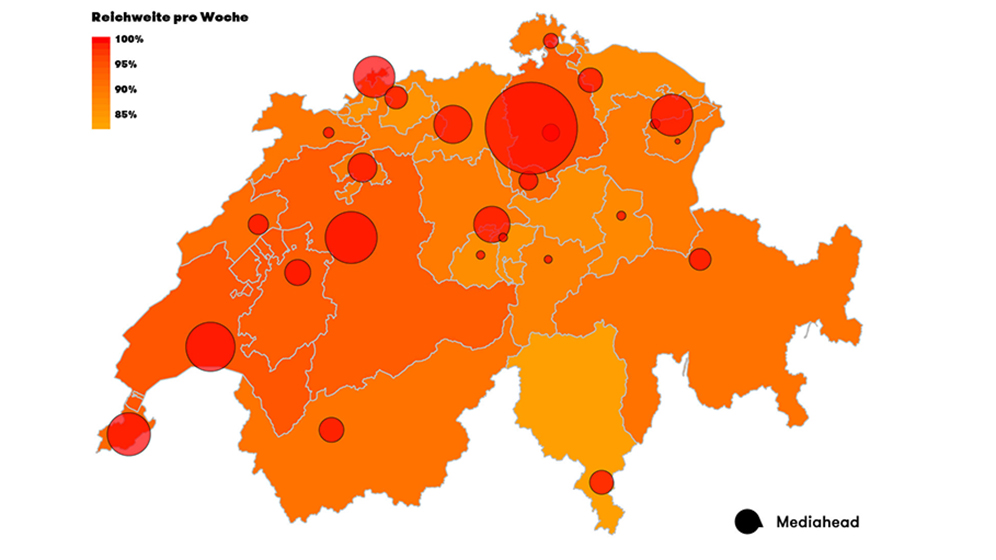
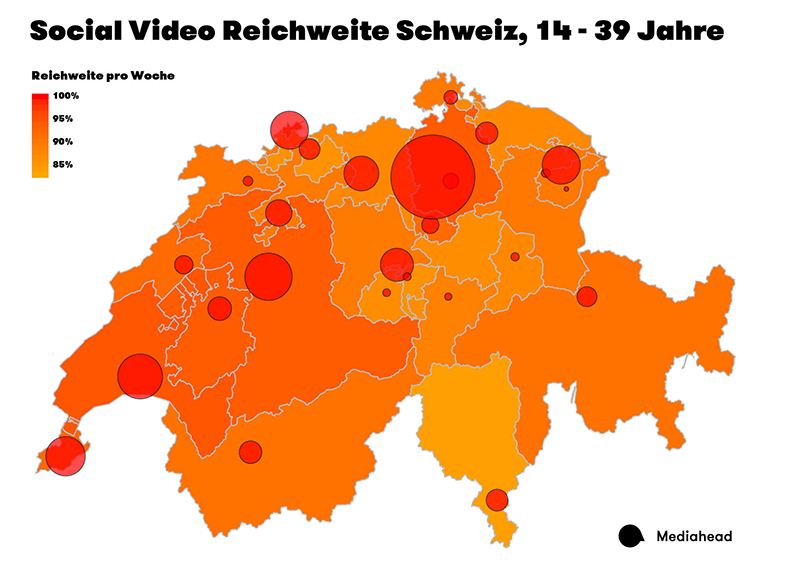
The evaluation by Mediahead showed that in Germany, depending on the region, between 80 and 95 percent of 14 to 39-year-olds are reached with social video. In urban centers, the reach is even almost one hundred percent.
R Graphics Output
Among the over-40s, the reach is between 35 and 50 percent, depending on the canton, with a higher reach measured in more urban areas. The following applies to both target groups: reach is highest in French-speaking Switzerland and Zurich, but slightly lower than average in Ticino and Central Switzerland.The study shows how social media platforms are expanding their dominant position in the advertising market into the area of moving images. Facebook, YouTube and the like are already able to reach the Swiss population across the board with video advertising.

Social video advertising: First Swiss total reach calculation

Mediahead calculated the cross-platform, weekly total reach for video ads on social media. The analysis included data from Facebook, Instagram, and YouTube. The results show how social media platforms are increasingly dominating the market.

socialvideo

While the reach of linear TV is gradually declining, consumers' attention is increasingly shifting towards social media and mobile devices. Accordingly, the relevance of video advertising on social media is increasing. However, as the individual platforms such as Facebook, Instagram, YouTube and Twitter are silos separate from each other, there are still no reliable figures for the total reach of social video advertising across all channels.

As a specialist in social video marketing, Mediahead has its own comprehensive campaign data for Switzerland, which the software company has now evaluated for a cross-platform reach calculation. The data is based on the social video campaigns of the past six months and shows the aggregated weekly total reach for Facebook, Instagram and YouTube in terms of age groups and geography.
Unbenannt-3

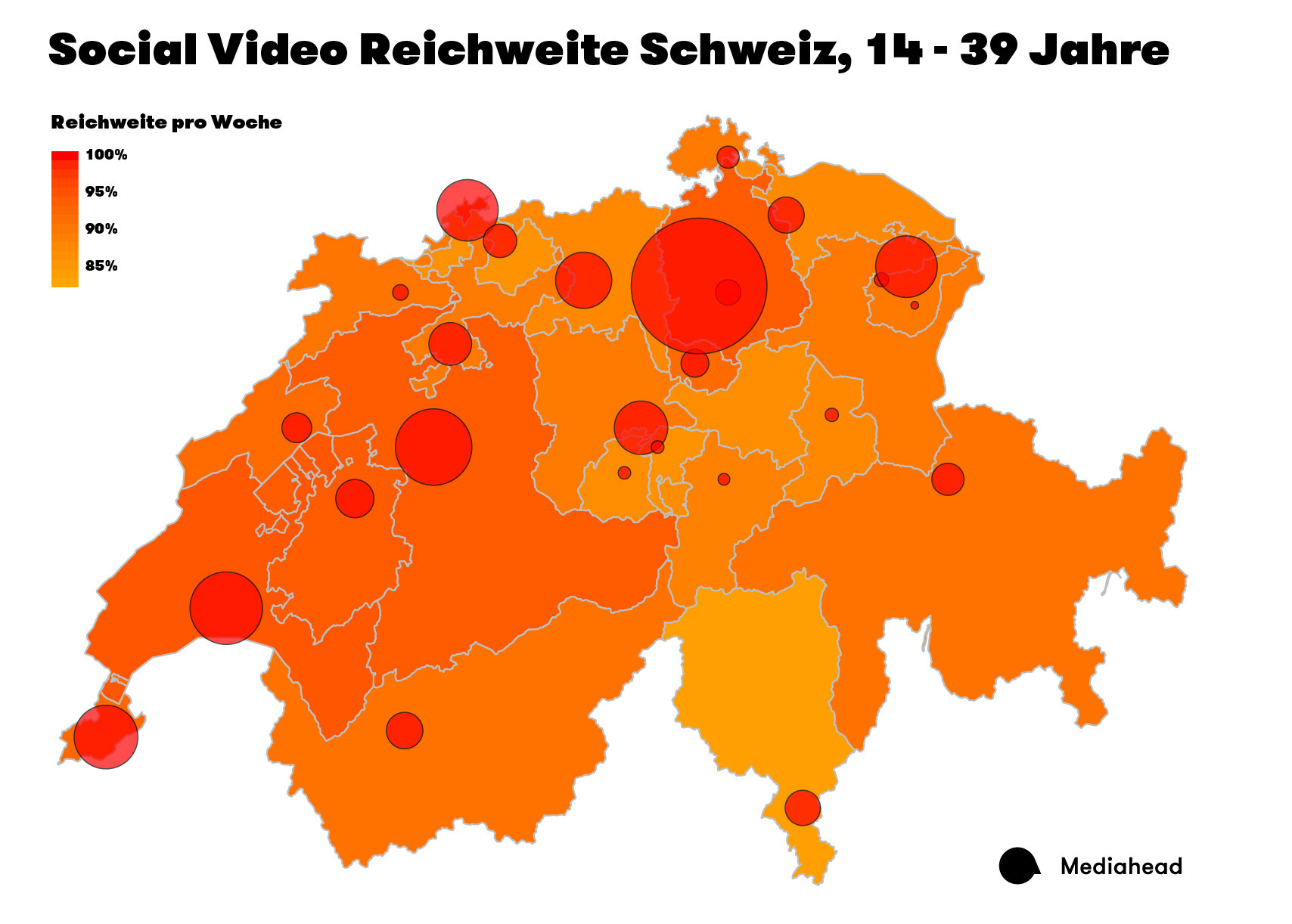
The evaluation by Mediahead showed that in Germany, depending on the region, between 80 and 95 percent of 14 to 39-year-olds are reached with social video. In urban centers, the reach is even almost one hundred percent.
Unbenannt-4

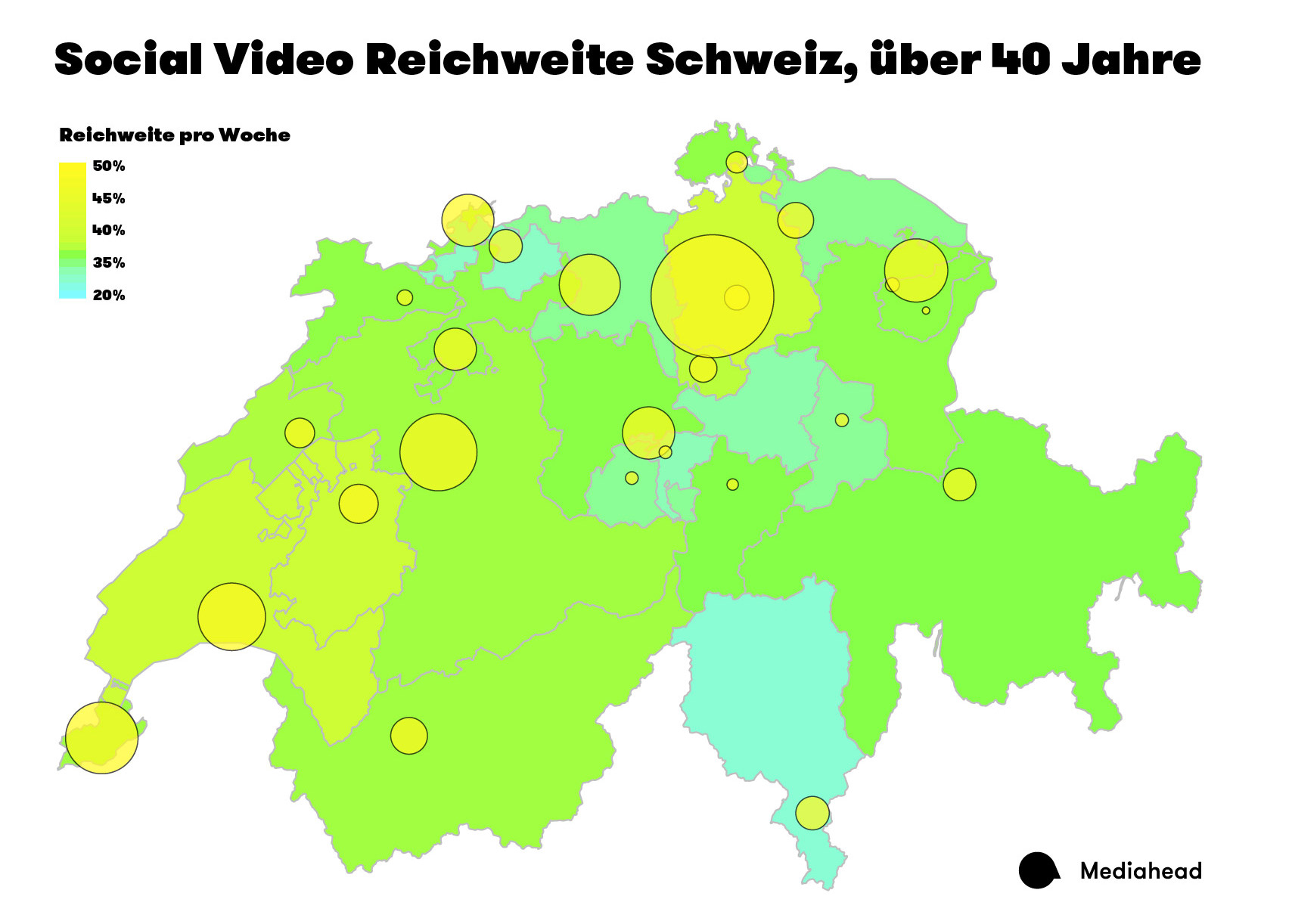
For the over-40s, reach is between 35 and 50 percent, depending on the canton, with higher reach also measured here in more urban areas. For both target groups, reach is highest in French-speaking Switzerland and Zurich, but somewhat lower than average in Ticino and Central Switzerland.

The study shows how the social media platforms are expanding their dominant position in the advertising market into the area of moving images. Facebook, YouTube and Co. are already capable of reaching the Swiss population with moving image advertising across the board.

About Mediahead:

The Zurich-based company Mediahead helps advertisers and media agencies to plan and implement their moving image campaigns at the click of a mouse. With its Social Video Solution, Mediahead offers a fully automated software platform that can be used to play out video campaigns across all social media channels, optimize them and compare them thanks to uniform reporting. Mediahead thus allows advertisers to focus on the strategic aspects of media planning.

More articles on the topic