The e-commerce tops and flops 2015


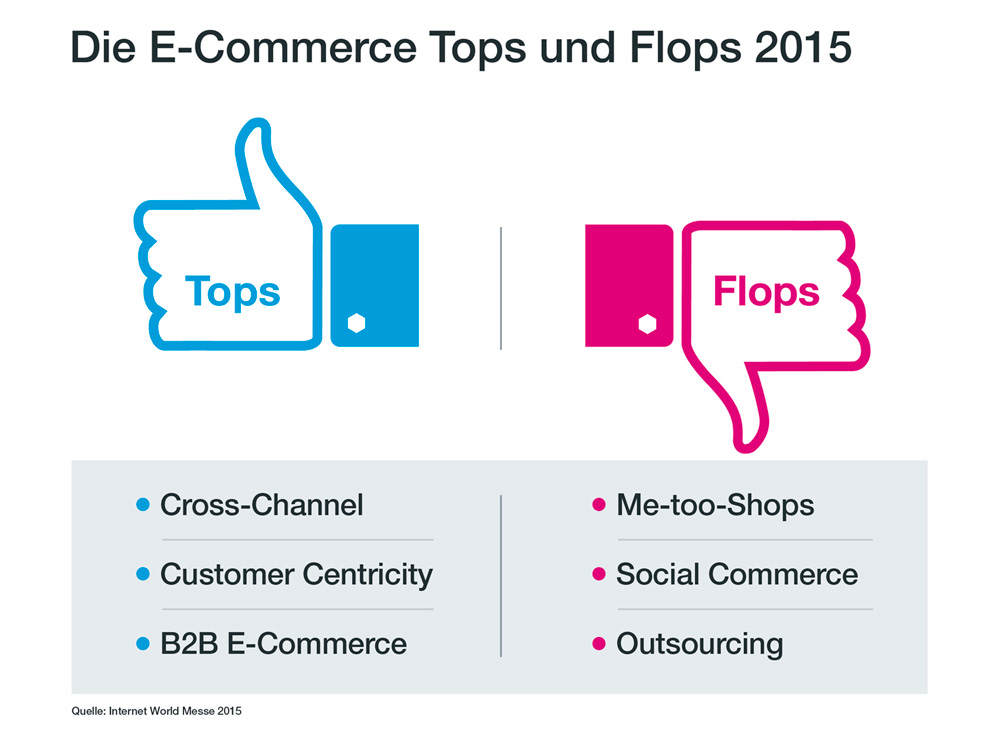
The biggest tops
1. cross-channel: online and offline worlds merge, mobile is the bridgeCustomers are making less and less of a distinction between the channels in which they want to shop. In brick-and-mortar stores, they look up product reviews or compare prices online, while online they search for product availability in stores. Cell phones are also being used more and more in retail, whether for research, payment or collecting reward points or for ordering products online that are not available in stores. Large retailers such as Media Saturn and Douglas are transforming their stores into multichannel experience stores and are already experimenting with the use of digital sales solutions. This trend will continue to grow. However, digital gimmicks will only be successful if they are easy to use and offer customers real added value. In addition, they should only be used once the mobile presence of your own web store has been optimized.2. customer centricity: customer instead of productWeb stores are also working on customer centricity and are transforming themselves from pure product catalogs that cover quick needs into experience temples where online shopping becomes an entertaining pleasure. Fashion retailer Asos, for example, uses interactive music videos to encourage customers to buy and Zalando is giving its product photos a face again. Almost all major web retailers are working on data-supported personalization functions to suggest more relevant products to customers. However, the customer experience does not stop at the front end. Parcel design is being increasingly optimized and logistics are also becoming more flexible and meeting customer needs with fixed delivery windows, preferred windows and more pick-up locations.3. B2B e-commerce: the market is picking upConvenience in B-to-C online retail is also changing B-to-B commerce. After all, those who shop conveniently online in their private lives increasingly want to do the same in their everyday business lives. The growing market share of Amazon & Co. in the B-to-B business is now also forcing B-to-B sellers to tap into the online sales channel. Unlike in the B-to-C market, however, standard solutions are rarely used here, which presents companies and service providers with completely new challenges.
The biggest flops
1. me-too stores: Those who only sell on price will be buriedOnline retailers cannot put their future on a sound footing by offering cheap prices alone. Web stores with comparable product ranges that do not have any unique selling points or their own brand image will find it difficult to survive. Retailers will have to focus more on their core competencies - product range selection, advice and service - in order to stay one step ahead of their competitors.2. social commerce: dreams are shatteredA recent study by Visual Website Optimizer brings it to light once again: social network users are difficult to instrumentalize as multipliers for product purchases. Three quarters of them are not prepared to communicate product purchases on Facebook & Co. And retailers' fans are also difficult to direct to their own stores. According to The E-Tailing Group, on average only two percent of webshop traffic comes from social platforms.3. outsourcing is outAnyone who completely outsources their online store to a service provider is missing out on an increasingly important touchpoint with the customer. We will therefore also see a trend towards the insourcing of important e-commerce skills in 2015. The war for the best minds in online retail will become even fiercer. And traditional retailers in particular need to think about strategies to ensure that young, talented specialists don't just sign up with young, cool start-ups.