Revolution 2.0: The Role of Social Media in Political Unrest


COLUMN How powerful are social networks? Social media expert Ellen Girod* on the influence of Facebook, Twitter and co. on political movements such as the Euromaidan and the Turkey protests.
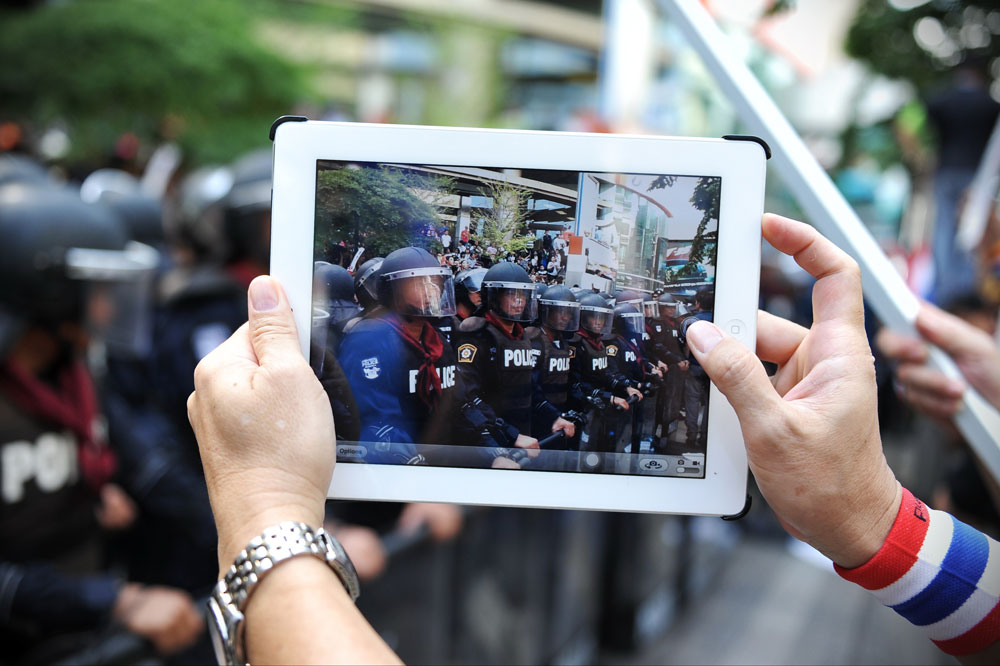
During protests, for example, expressive images can spread virally very quickly via social networks.Camouflage cap and assault rifle. This is what the soldier is wearing in the blurry photo taken by TIME journalist Simon Shuster. With the comment "6th floor of hotel Moskva right now" Shuster tweets the Photo from the hotel in Kiev, where he is staying during the protests on Maidan Square. 670 retweets later, his tweet is being followed by digital news services such as the Tagi Online recorded. Initially, the headlines from the newsrooms of the traditional media were disseminated on Twitter and Facebook. Today, it's often the other way around: the newsrooms of the traditional media use the reports from the social media. The individual becomes the reporter. This changes the role of journalists. They are no longer the exclusive source of information. They use the social web to inform on the one hand and to get information on the other.The same role has been taken on by the most active. The Arab Spring masses had already formed on the Internet before gathering in the streets. On Maidan Square in Kiev, Facebook groups were used to coordinate free accommodation for activists, and on the YouTube channel "Ukrainians and Russians Ukrainians and Russians deny the current speculations about and prejudices of the Ukrainian-Russian conflicts. And although the conflicts on Maidan Square have been defused for the time being, #Euromaidan tweets with various assessments of the situation are rattling down the displays every minute.Using virality for political movements is not a phenomenon of the digital revolution. As early as 1979, Ayatollah Khomeini, the leader of the Islamic Revolution, recorded calls to overthrow the Shah on cassette tapes from exile and distributed them to the Iranian people in some 80,000 mosques. The thesis of democratization through the Internet is also the subject of controversial academic debate. Whether the dialogue between politicians and citizens is becoming more direct thanks to social media and whether this is motivating people politically is a matter for debate.The Constitutional Court in Turkey has lifted the Twitter and YouTube ban again. But the fact that Erdogan had Twitter and YouTube blocked in the first place shortly before the end of the election campaign shows his clear fear of the power of social media. Revolutions still take place in independence squares, not Facebook group chats. But the fact is, whether it's Cairo in 2011 or Kiev in 2014, social media is a channel that gets information out into the world quickly, easily and transparently, facilitating communication, organization and mobilization. And it's a powerful tool.