
Against secrecy
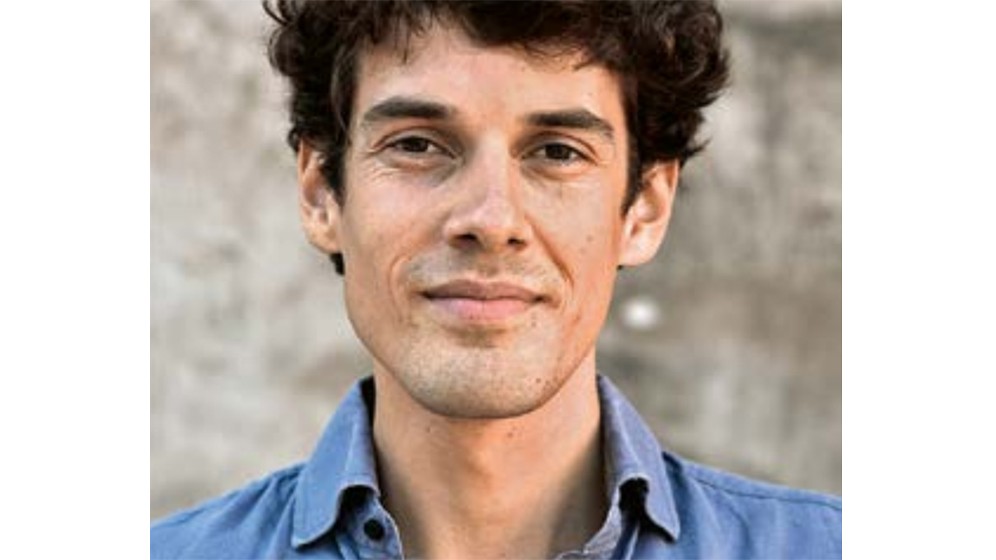
How We Journalists, Defying All the Rules, Get Involved in Politics—So We Can Once Again Practice Sensible Journalism. Column by Marlon Rusch, co-editor-in-chief of the Schaffhausen AZ.


This text is a confession. And a vindication. And an appeal. But first things first.
The Schaffhausen-based newspaper AZ is currently doing something that the journalists' code of ethics says the media should avoid. It is doing politics. It is actively fighting an ordinance that was passed by a large majority in the Schaffhausen city parliament in March. My co-editor Mattias Greuter has launched a referendum against the ordinance in question, supported by the Alternative List (AL) and a political activist.
They are making common cause, the media and politicians, they collected signatures back to back on Schaffhausen's Fronwagplatz - twice as many as necessary in no time at all - and now, one month before the vote, they are distributing flyers back to back. And our editorial team is joining in. Schaffhausen's AZ newspaper has agreed to send its subscribers signature forms free of charge; full-page free advertisements are currently appearing.
Is that legitimate? More than that. It is absolutely necessary! Because it is actually a matter of self-defense. The regulation we are fighting against wants to put obstacles in the way of our daily work.
In principle, and there would actually be no objection to this, it wants to define more clearly at municipal level what exactly the principle of public access means, which has been enshrined in the Schaffhausen cantonal constitution since 2003 and exists as a law at federal level. There, in the federal law on the principle of public access to the administration, it is written: "This law is intended to promote transparency regarding the mandate, organization and activities of the administration. To this end, it contributes to informing the public by ensuring access to official documents."
The law was an important paradigm shift. From then on, what the state does should no longer be done in secret. Citizens should have the right to gain insight into the actions of the administration. For journalists in particular, the principle of public access is a powerful instrument for exercising their watchdog function as the fourth estate and ensuring the functioning of democracy.
In recent years, a wide variety of investigations have been made possible in Schaffhausen thanks to the principle of publicity. Just a few weeks ago, the AZ, based on minutes of the building commission, traced how a multi-million euro construction project in the city could get out of hand due to collective failure. A few months ago, we were able to prove - using the minutes of the Justice Commission - that two controversial public prosecutors were de facto not appointed to office by the broadly supported commission, but by powerful individuals in a very dubious procedure. Since then, the Justice Commission has refused to provide us with further protocols, which we are currently fighting in the High Court. Once again, we are relying on the principle of publicity.
The ordinance in question - which bears the misleading title "Ordinance on the Publicity Principle" - now provides authorities and politicians with a tool to prevent such stories. The ordinance states, for example, that the minutes of all executive authorities such as the city council or city school board are to be completely excluded from the principle of public access. It stipulates that access to files can be refused if the applicant's interest in accessing them is "disproportionate" to the effort required by the administration. The administration is to be permitted to prohibit journalists from "quoting verbatim" from files and minutes. It should also be possible to charge a hefty fee for access to files.
With such paragraphs, it will be possible in future to block unwelcome questions from the public and above all from the media across the board and to prevent or at least make it massively more difficult to write critical articles about everything that happens behind the political scenes.
We discussed for a long time in the editorial office how we should deal with this ordinance. The Schaffhausen AZ is not afraid to take a stand and also print voting recommendations. In this specific case, however, that is not enough. The ordinance is a direct attack on journalism. The members of parliament have waved it through out of convenience and fear; they would be the ones to watch. This makes it all the more important that the electorate can have its say. So important, in fact, that for once we journalists are not standing on Fronwagplatz as observers - but as political activists.
It is unusual for the media to be at the forefront of a referendum campaign. It is a breach of taboo. But a necessary one. We promise: as soon as we can do proper journalism again, we'll stop doing politics again.
Marlon Rusch, Co-Editor-in-Chief of the Schaffhauser AZ
This opinion piece was previously published in Werbewoche 14/18 on September 7, 2018.


