Google turns 20: Widely used, hotly disputed
«Googling» has become synonymous with searching the Internet. But the company, founded 20 years ago, has long since outgrown its search engine roots—and, in addition to admiration, it also sparks concerns about privacy and competition.



Google has changed the world. Thanks to the company's famous formula, finding information on the internet in a matter of seconds has become a matter of course over the past 20 years. However, this is also accompanied by an unprecedented accumulation of information in the hands of one company - and a market power that is increasingly attracting the attention of regulators, particularly in Europe. With artificial intelligence, self-driving cars and health research, Google and its parent company Alphabet also want to set the tone in many future technologies.
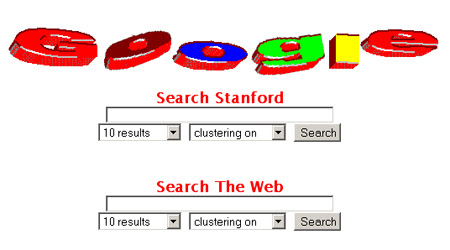
Internet search engines existed before Google. But it was the new approach of founders Larry Page and Sergey Brin that quickly propelled Google forward. Their idea was not to create an editorially maintained web catalog, but a smart search engine. The relevance of individual websites is shown by how often they are linked to ("page rank").
Hundreds of other factors now play a role in the Google algorithm, which has been further developed by many employees. Page and Brin programmed the first version of their search engine, which was initially called BackRub, at home from 1996. It was renamed Google relatively quickly - an allusion to the word "googol", the mathematical term for a 1 with 100 zeros.
"Do no harm"
In order to cash a cheque for 100,000 dollars from Sun Microsystems co-founder Andreas von Bechtolsheim, Google was finally registered as a company on September 4, 1998. The mission: to organize all the information in the world and make it accessible to everyone. The credo, which is now rarely mentioned: "Don't be evil". Page and Brin's first office was a garage in the heart of Silicon Valley, as befitted their status. Their landlady, Susan Wojcicki, now runs the video subsidiary YouTube.
Page was the first CEO - but the investors were not comfortable leaving the rapidly growing business to the two founders, who were not even 30 years old. So in 2001, the experienced manager Eric Schmidt was brought to Google as a kind of "adult supervisor". For ten years, until a mature Page took the helm again, the company's fortunes were steered by a kind of "troika". Schmidt was the CEO - but the founders had the freedom, for example, to buy the start-up behind the now dominant Android smartphone system, as he later recalled.
Just as sophisticated as the search engine algorithm was Google's idea of how to earn money with it: with small ads in the vicinity of the results - which match what the user is searching for. You only have to pay if the ad is clicked on, and the exact price is determined in an auction process.
With Google's size, you can rake in billions with such mini deals. Despite all the newly added activities, search ads are still the basis of Google's business - and that of Alphabet as a whole. In the last quarter, the parent company achieved a total turnover of 32.6 billion dollars, of which a good 28 billion was advertising revenue from Google.
Do-gooder intentions
Even in the early years, it became clear that Google's ambitions were not limited to Internet searches. True to the goal of organizing all the world's information, the company began scanning books on a large scale. This project was the first time the Google founders got a bloody nose with their do-gooder intentions. Authors and publishers saw their copyrights infringed and their business threatened and took them to court. Google Books then made slow progress.
Further conflicts followed. Media companies accused Google of destroying their business base by distributing news for free. Review services such as Yelp criticized the search engine for sucking up their content - which left users stuck with Google. Price search engines saw themselves at a disadvantage.
EU Competition Commissioner Margrethe Vestager has already cracked down twice. In 2017, she imposed a fine of 2.4 billion euros for allegations of unfair competition in shopping search. This July, a record fine of 4.34 billion euros followed for Google's behavior with Android. Google digested the amounts with ease - but the demand to allow more competition on the mobile platform could become a bombshell under the existing Android business.
And data protection fears keep coming up. Does Google now know too much about its users? The idea of Google Glass computer glasses ultimately failed due to concerns that its wearers could film others without being noticed. Just a few weeks ago, the company had to justify the fact that Android phones constantly store location data - even if users do not want this.
Advance of voice robots
The internet company is asking users for even more information: The talking Google Assistant is only particularly useful when it can adapt precisely to the respective person. In spring, the company showed just how far Google has come in the development of artificial intelligence with the Duplex service, which can imitate human speech right down to natural-sounding "ehms". Alongside admiration for the achievements of the Google developers, this also sparked concerns about the advance of voice robots.
A few days before Google's birthday, US President Donald Trump opened up another front. Trump googled news about himself and allegedly found nothing but negative headlines. He then accused Google of manipulating the selection to his disadvantage.
This would have consequences, followed a barely concealed threat. Google rejected the accusations. However, it can be assumed that the Republicans will raise the issue again at the next Senate hearing on Internet companies on September 5. (SDA/DPA)