
From a Madison Avenue Pioneer to an Integrated Agency Group
To understand the full scope of this format, it’s worth taking a look at the agency’s history. When Dr. Rudolf Farner returned to the Limmat from the U.S. in the late 1940s, he brought the mindset and working methods of New York’s Madison Avenue to Switzerland. Whether it was Coca-Cola’s market entry, hair salons, establishing the Three Kings Cake for the Bakers« Association, or the Expo »64 pavilion «Defensive Switzerland»: Farner shaped the craft of strategic communication from the ground up. Rudolf Farners’ often-quoted saying also dates from that time: “Give me a million, and I’ll turn a sack of potatoes into a Federal Councilor.”

While the traditional advertising division underwent changes through international agency networks, the core PR and consulting business remained on course. Farner built on this foundation and gradually expanded its offerings. Today, CEO Michel Grunder leads Team Farner Switzerland, an integrated consulting and communications group. Under this umbrella, Team Farner Switzerland brings together Farner Consulting—with expertise in public affairs, issue management, corporate communications, marketing communications, and advertising, as well as specialized agencies such as Rod for creative work and campaigns, BlueGlass and Semsea for SEO, GEO, and performance marketing, jim & jim for next-gen marketing, and Yoveo for video technology and moving images.

Because the job market for new graduates is under pressure—driven by efficiency gains from artificial intelligence and budget cuts on the client side—Farner opened its doors to 75 talented individuals during its anniversary year: ranging from a communications student at ZHAW to a law student at HSG to a marketing professional with several years of corporate experience.

Jessica Reza, Head of People & Culture at Farner, summed up the unique nature of the agency world right from the start:
«Agencies are career springboards. For one thing, because you take on responsibility very, very quickly and gain knowledge at an incredible pace. And for another, you gain a very broad range of insights and practical experience.»
The Four Economies and the Reality Check for the Dolder Grand
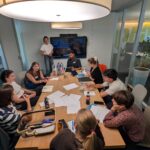
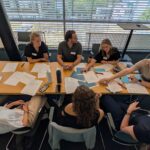
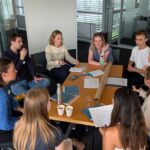
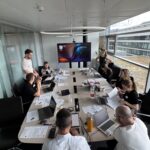
The boot camp consistently avoided tedious lecture-heavy sessions. After brief introductions, participants moved straight into practical case studies. Through four rotating modules—stakeholder economics, shareholder economics, creator economics, and media economics—the groups delved into the interplay of modern communication channels.
In the media economics module, the assignment was to create a campaign for the 125th anniversary of the Zurich luxury hotel The Dolder Grand to develop an earned media strategy to generate maximum impact without a direct media budget. The groups analyzed the existing image—one of aloofness—and got creative, turning the tables: Instead of a perceived exclusive aloofness, they proposed a temporary «Exclusive for Everyone» event—an open house that would open the museum’s world-class art collection and culinary heritage to a broad audience.
The feedback from the plenary session demonstrated just how strong the participants’ motivation was to understand language and strategy across disciplinary boundaries. As Philipp, a student at the University of St. Gallen, put it:
«I'm studying international law at the HSG, but my background is in international affairs. And what interests me most about this boot camp right now is learning how communication, language, and words bridge the gap between disciplines.»
In the area of public affairs, too, the action began right away: In a two-stage advocacy simulation, the teams took on the roles of competing associations, political actors, and media representatives to secure parliamentary majorities for complex bills.


Breaking Patterns in the Age of Generative AI
One of the highlights was the creative module led by Chief Creative Officer Philipp Skrabal. Against the backdrop of ubiquitous generative AI, Skrabal made it clear that while technological tools take over routine tasks, true differentiation arises exclusively from human creativity. AI feeds on existing data patterns; those who rely solely on it produce interchangeable, run-of-the-mill products. Skrabal articulated the core task of creatives in no uncertain terms:
«Creativity is what I like to call a »survival skill' these days. Creativity means breaking patterns, and to do that, you first have to understand them."
Using radical examples—such as the fictional «Sylt Catapult» campaign to mobilize support for the double-track expansion of the Hindenburgdamm, or the presentation of bottled water as «Liquid Death»—Skrabal demonstrated how taking a stand and deliberately breaking taboos can generate attention.


In the creative sprint that followed, six groups were tasked with developing a rental platform for rarely used everyday items. The results showed a remarkable range: «Karma@Home» focused on resource conservation and rhythmic vocal storytelling («Because sharing is awesome»). «Only Gadgets» applied the mechanics of dating apps to tools («Sex rents» with double-entendre headlines for pizza ovens and tents). «Scambi» transformed borrowing into an urban scavenger hunt with community parties. «Nowner» invented the fictional character Robert, who owns nothing but can access everything via an app («Be like Robert»). «THING-DONG.ch» challenged the impulse to consume with «Don’t buy me» posters and the tagline «Owning stuff sucks,» while «Chrims-Chrams» brought unused treasures in Swiss basements back to life with the slogan «Safe e gueti Sach.».


Heated discussions echoed from the workspaces, app prototypes were being clicked through, and props for the pitch were being prepared. One participant summed up the mood after the presentation:
«We just got this super cool assignment to create a campaign. It's really interesting to work with everyone like this and see how a creative process like this unfolds.»
Panel Discussion: The Data Foundation, the Power of Creators, and the Courage to Take a Stand
The third day focused on strategic brand management (led by Head of Branding and CMO Markus Gut), naming processes, and the transition from traditional SEO to Generative Engine Optimization (GEO). In the late afternoon, experts from the various Farner companies gathered for a panel discussion on the practice of modern communication.
Anna-Lena Wohlschlag, Managing Director at BlueGlass, highlighted the interplay between analytics and content: Data is indispensable for uncovering search intent and user behavior, but it is creative storytelling that gives a brand emotional impact. Philipp Nüssli, a guest speaker from Heads Agency, explained that creators and influencers define their relevance not through paid reach but through authentic community relationships—which is why his agency turns down about 90 percent of incoming collaboration requests so as not to compromise its credibility. Anne-Christine Lindner from Jim & Jim emphasized that young target audiences are highly attuned to contrived messages and demand genuine reliability.

Marco Imboden, Managing Director of Corporate Communications & Public Affairs at Farner and former head of communications at renowned corporations, spoke about the dynamics in boardrooms. Out of fear of making mistakes, corporate communications often tends to minimize risk, to the point where messages come across as «lukewarm.» This makes it all the more important for communications professionals to have a thorough command of their craft—from precise writing to quickly grasping complex issues—so that, as valued counterparts to CEOs and board members, they have the courage to demand clear positions.
Pure Adrenaline: When the Amusement Park Is on Fire and the AI Is Sweating
On the fourth day, participants learned in three practice-oriented full-day modules that communicating under real-time conditions requires a strong nerve.
The «Buenaventura» crisis simulation involved reenacting an emergency scenario at an amusement park: Following demonstrations and accidents, a storm of outrage erupted on social media. The participants split into two groups: A crisis response team consisting of park management, security officials, and media spokespeople had to develop a consistent information strategy amid a constant stream of situation reports. At the same time, the opposing group acted as an investigative news team, interviewing eyewitnesses, uncovering contradictions, and demanding tough answers during a live press conference.

«As a student, the insight into crisis communication was incredibly valuable to me—to get a sense of how decisions have to be made under time pressure.»
- Elena Lindner, Crisis Simulation Participant
At the same time, participants in the «AI Academy» experimented with a simulated Meta Ad Manager that Farner had set up specifically for this purpose. They entered briefings, created cross-channel image and text assets using generative AI, and received immediate feedback on simulated community reactions and performance metrics. The «Craft Session,» on the other hand, focused on visual language, color grading, and editing techniques for video formats.

«These young talents have shown just how much energy and sound judgment they possess. If the industry gives them the space they need, I have no fears about the future of communication.»
- Bernhard Schnellmann, Content Consultant and AI Expert, Instructor at BlueGlassFarner




A Wake-Up Call: Let's Put an End to the "Intern Mentality"
The high quality of the results sheds light on a structural debate within the communications industry: the pay and recognition of young professionals. For years, agencies and media companies have tended to keep motivated graduates stuck in a long chain of internships, apprenticeships, and underpaid trainee positions.
Given the rapid pace of technological advancement, this type of internship is outdated. This generation brings with it an intuitive understanding of digital platforms, algorithms, and AI tools—knowledge that many executives must still painstakingly acquire. Anyone who wants to compete for the best talent must offer entry-level positions with salaries that reflect market rates.
In Switzerland, international technology giants such as Google, Meta, Disney, and OpenAI are aggressively competing for the same top talent and offering top salaries. Client companies are also increasingly investing in their own in-house teams with attractive starting packages. Anyone who wants to compete at the highest level must—just as in elite sports—be prepared to invest substantially in up-and-coming talent, rather than fob them off with minimal compensation.
A training program that serves as a model
In the concluding m&k interview, Michel Grunder shared his personal reflections:
«It wasn't just a gift from us to the younger generation; above all, it was a gift from the younger generation to us. We were incredibly inspired by their energy and Thirst for knowledge »benefits."

With its anniversary boot camp, Farner demonstrated what effective knowledge transfer can look like: uncompromisingly practical, free of hierarchy, and using state-of-the-art methods. The format has shown just how much potential the next generation has when given the space and trust to thrive. It is to be hoped that this initiative will set a precedent in the Swiss agency landscape.
]]>
When you ask people in the Swiss communications industry what Farner actually is, they usually hesitate to answer. PR? Advertising? Public affairs? All of those are sort of right. And all of them are sort of wrong. For over 10 years, the agency has been growing against the trend—in an industry where traditional advertising agencies are under increasing structural pressure due to in-housing, consolidation, and AI—to become Switzerland’s largest fully integrated communications agency. Creatively, we’ve consistently ranked at the top of the m&k rankings over the past three years: 3rd place in 2023, 1st place in 2024, and 2nd place in 2025. And yet, this myth still clings to us: present, influential, and yet elusive. Perhaps that’s exactly the point.
What makes Farner strong is also the recipe for the future. Not a single discipline, not a single specialization, not a single talent. Rather, it is the synergy: disciplines at a market-leading level that think in an interconnected way across generations, fields of expertise, and technological interfaces, and that seek to work as equals—thereby generating ideas that no single individual could have come up with on their own. The Team Farner platform is the result.
Myth with a System
In the early 1950s, Rudolf Farner founded two agencies at once: one for advertising and one for public relations. It was a distinction he himself undermined from the start, as Farner was, from the very beginning, more than what the market expected. The launch of Coca-Cola in Switzerland is a prime example of this. The powerful farmers« lobby threatened to boycott newspapers if they ran ads for the American beverage. The traditional route was blocked. Farner’s response: Coca-Cola was launched through hair salons—in other words, places where people sit and talk. With an instinct for how and where opinions truly take shape. Influencer marketing before social media. The mix of »paid« and »earned” was standard practice at Farner from the very beginning.
A decade later, Farner produced a spectacular short film for the Swiss Army’s much-discussed appearance at Expo 64 in Lausanne. In 1965, the film received an Oscar nomination in the «Best Live Action Short Film» category. For the Road Safety Fund and the TCS, Farner created MADE VISIBLE, the streetwear label that turned visibility in traffic into a lifestyle movement. Switzerland’s most successful prevention campaign was honored by the FIA with the Road Safety Innovation Award and is now in its ninth year. Everyone is systematically involved, from the textile industry to designers to retailers. Following the same philosophy, new campaigns are constantly being developed, ranging from the Lindt GOLDHASEN to a major bank and from IKEA to the Dolder Grand. Sometimes black-nosed sheep help with the Federal Council election; other times, we help bring the Eurovision Song Contest to Basel or the Women’s World Cup to Switzerland.
Work that works because brand, strategy, creativity, and media expertise are not considered one after the other, but simultaneously and in tandem.
Creativity Loves Technology
In the age of AI, creativity is a survival skill—for brands, for agencies, and for all of us as human beings. Artificial intelligence is a statistical pattern mixer. It selects what’s probable, amplifies what’s typical, and smooths out the rough edges. This leads to homogenization, to a creeping erosion of brand distinctiveness, to the obsolescence of agencies, and to interchangeable output. Anyone who uses the same tools with the same prompts produces convergent results. Creativity must therefore already be embedded in the questions we ask ourselves—or, now, the machine.
And creativity loves technology. For Arosa Tourism, our team at Yoveo developed Switzerland’s first crowd-generated AI advertising campaign: Whatever you dream of for your mountain vacation, we’ll make it a reality in Arosa. Over 43,000 images were generated, and the average time spent on the landing page was over eight minutes. For Islam Alijaj—now a National Council member for the SP—we developed, among other things, an AI avatar for his election campaign that filters out his speech impediment without altering the personality in his voice.
Two examples that show how AI and technology are paving the way for new possibilities. At its core, however, the idea remains the same.
75 years and no gala dinner
Farner is turning 75 this year. But instead of celebrating ourselves during this anniversary year, we’ve decided to invest more heavily in the future of the industry. Not out of complacency, but out of deep concern about current developments. Successful agencies—some of which have shaped our industry for decades—are struggling to remain relevant. Young talent can no longer find entry-level opportunities, sometimes due to budget constraints, sometimes because AI is increasingly taking over routine tasks. Such developments should be cause for alarm even beyond the agency world. After all, these agencies have produced generations of top CMOs, CCOs, CEOs, strategists, and chief creatives who are setting the standard in international companies today.
That is why we are investing our 2026 in-house marketing budget—including the associated personnel resources—in the future of the industry. We’re doing this at the expense of award submissions and the resulting 2026 creative rankings. Not because we want to turn our backs on creative competitions or the creative rankings—on the contrary—but because we want to drive and initiate important changes for a strong industry.
Four days. Dozens of young people
August 2026: They come from the HSG, the ZHAW, the University of Zurich, and the University of Bern. Some have a degree but haven’t quite found their footing yet. Others are about to graduate. They all carry a silent question with them: What awaits me here?
Four days. All disciplines. No theory—real briefings, real contacts, real pressure. Day one: Fundamentals of communication, reputation management, how communication teams work in practice. Day two: Public affairs and creativity—lobbying meets creative sprint. Day three: Brand management, PR, social media, visit to an editorial office. Day four: Craft, video, motion design—and then the «Buenaventura» crisis exercise. A fictional crisis scenario, staged as if it were real. Incomplete information, time pressure, team dynamics. Exactly what our teams experience every day. What these young people experience in four days is the interplay of all disciplines. Not as theory. As an experience. There’s no better way to learn who and what we are. And yes, these insights will also be available to stream later.
That's not nostalgia. That's the idea.
]]>
A mysterious yellow container is loaded onto a train. As it rolls through Switzerland, pictures and videos are piling up on social media. What is this transport all about? Behind this staging is the international McDonald's «World Menu Heist» campaign: symbolically stolen iconic products from various countries are presented under the claim «Most wanted. Limited time only.» to new markets. Switzerland marked the start of the Europe-wide roll-out.
Creator-led storytelling for hype and engagement
For McDonald's Switzerland, the task was to build hype, entertainment and conversation dynamics even before the official launch - especially among GenZ. To achieve this, Team Farner relied on a social first story mechanic with creator-driven storytelling and active community interaction. At the center of the story was a group of creators who track down the master thieves and the transport of the stolen products. The campaign was deliberately structured in several waves of content - from the first rumors and sightings to the joint search for clues and the resolution.
The creators deliberately implemented the story in their own style within the given framework. They followed suspicious transports, combined clues and actively interacted with their community, creating additional hype and discussions. Ongoing updates on the train journey and new clues brought the story to life on social media over several days.
Showdown in Zurich
The physical finale was the culmination of the story that had previously been built up digitally. Team Farner brought the creators, the community and the new products together at a secret location. A truck specially branded for the campaign arrived and seamlessly continued the staging in the physical space.
More than 500 people from the community were on site and were able to test the products from all over the world before the official launch. Promoters staged as «thieves» handed them out directly to those present.

Content as a driver of visibility
Content production was a key success factor for the campaign. Team Farner deliberately developed the content from three perspectives in order to bring the creative guiding principle of Social First to life: from the perspective of the creators and the public - with UGC-related sightings, reactions and personal updates -, from the perspective of the «thieves» - with staged content on McDonald's channels - as well as with high-quality hero content about trains and containers in the Swiss landscape, including professional photo, video and drone shots.
Editorial coverage by 20 Minuten, including a live ticker on site, ensured even greater visibility. After the showdown, Creators and McDonald's extended the story beyond the official launch with individual recap reels and accompanying product content.
From the international idea to local staging
The starting point was the international lead idea from Leo Burnett London, while TBWA was responsible for the creative implementation of the product campaign and OMD for the media extension. Team Farner took on the communicative translation for the Swiss market. This turned an international product idea into a locally connectable campaign that combines digital community activation, media visibility and a physical experience.
Responsible at McDonald's: Morgane Zillweger (Senior Marketing Consultant), Jae Ah Kim (Head of Impact). Responsible at Farner: Nina Krucker (Client Lead), Toby Felder (Strategy), Andreas Rageth (Influencer Marketing), Susanne Bader (Live Communication). Responsible at Jim & Jim: Robin Steiner (overall management and consulting), Sarah Handschin (project management & production management), Chiara Hess (concept), Nico Drechsel (camera), Aaron Streicher (camera), Erika Gritzfeld (co-management & post-production).
]]>m&k Martin, Philipp - you represent two disciplines. Where does marketing end and creativity begin?
Martin Walthert I don't think you can separate the two any more. Creativity is part of marketing - it's the crucial part. Without it, everything remains mediocre. It's what helps us to create relevance where others only communicate. Philipp Skrabal I agree. Creativity is not a profession, it's an attitude - a way of solving problems. In all situations in life. If you want to be effective in communication, you need a creative mindset. It's not a nice-to-have.
Martin, you lead a team that does almost everything itself - from strategy to production. Philipp, you come to Farner from the outside, as a consultant, sparring partner and source of ideas. What works better - total proximity or creative distance?
Philipp Skrabal The trick is to manage both. It used to be clearly separated: client briefs, agency delivers, then the big magic show follows. Today, we work much more closely together. Closeness and distance are not a contradiction, but rather a rhythm. We need moments of intimacy with the brand - and then the view from the outside to see it anew.
Martin Walthert Proximity is important because it helps to really understand the tone and attitude of a brand. But it can be dangerous if you get too comfortable. We have to constantly take countermeasures - force ourselves to question everything. We must not become complacent. Creativity needs space - without the pressure of expectations, without the stress of having to deliver.
Philipp Skrabal That's the balancing act. We sometimes wish we could look as deeply into the customer as you can. But with you, Martin, it's certainly not easy to keep your distance. I think you have to vary both constantly - closeness to understand, distance to renew.
You both use AI tools. Does that make you more efficient - or more creative?
Philipp Skrabal More efficient in any case. But also more creative. AI is a tool that shows us new paths. It can recognize patterns that we would overlook. And it enables new types of ideas - new mechanics, interactions, involvement. The trick is to use AI and data wisely. This requires creative people. Let's see if I still see it that way in five years' time. (laughs)
Martin Walthert AI can speed up processes. But it does not make the outstanding idea obsolete. I believe creativity will become even more important because it helps us to filter out what is relevant from all the possibilities generated. The machine can produce, but it can't feel.
What if AI suddenly writes better stories than we do?
Martin Walthert Stories only work when they touch us. Even if an AI writes emotionally, in the end it is the human as the addressee who has to judge how credible it is. AI communication has a tendency to be arbitrary, interchangeable, infinitely available and therefore ultimately worthless - and this is precisely when the human and authentic becomes extraordinary again.
Philipp Skrabal Yes, that's the point. Data can be anything - but only someone who understands and interprets it can turn it into something new. A good data scientist is essentially a storyteller. Data tells stories, you just have to be able to read them. And you do that really well at Digitec Galaxus.
Martin Walthert Thank you. We have a lot of data - but the question is: What story does it tell? Where do we put the focus? How do we emotionalize it? This creative focus is the real work.
Philipp, you often say that good advertising needs attitude. Martin, Digitec Galaxus is known for its humor and self-irony. How much attitude can marketing take before it tips over?
Philipp Skrabal A brand that wants to be successful in the long term must stand for something. The attitude is not to jump on the next trend, but to remain consistent. This also means not doing things if they don't fit the brand. Attitude is what remains when the purpose hype is over.
Martin Walthert Yes, attitude is consistency. If you constantly adjust it because the wind is blowing differently, you lose credibility. We have decided to live humor as part of our DNA - because it suits us. Of course, not everyone finds everything equally funny, that's okay. I also answer letters personally if someone complains. Humor is our way of creating emotion without taking ourselves too seriously.
Humor has become rare in advertising. Why?
Philipp Skrabal Because it doesn't suit every brand and can be perceived as artificial. With you, Martin, one can sense that the humor is authentic. It makes you approachable. You don't feel like salespeople, you're on my side as a customer. That's an art. When brands use humor to cover up boredom, it doesn't work. Humor is also an attitude.
Martin Walthert And courage. You have to put up with the fact that not everyone likes everything. But when it's right, humor is the best remedy for distance.
Philipp, you said: "If a new idea takes your breath away for a moment, then you're in the right place." How do you create this space for courage?
Philipp Skrabal By creating security. You need an environment in which everyone dares to say something - no matter how unfeasible an idea may seem. If you reach consensus too quickly, you're still in your comfort zone. The most exciting ideas are the ones where you briefly think: that might be too much or "that won't work". But that's where it gets interesting.
Martin Walthert I see it the same way. We do a lot of brainstorming sessions where everyone can make suggestions. Without evaluation. Allow everything first, then shape it later. If you judge too early, you kill creativity. Mistakes are part of the process.
And do you have enough time for such spaces? Everyday life is very busy.
Philipp Skrabal That is indeed challenging. Everything is measured in hours, but a good idea cannot be measured in hours. That's why it's so important that employees develop ownership - that they say: this is my customer, my project. Then you think along, then you think ahead, then responsibility arises instead of billing. How does that work for you Martin?
Martin Walthert We also have pressure to deliver, of course. But we try to create freedom. Efficiency is important, but if it comes at the expense of effectiveness, you lose what makes brands strong. Better a good idea too late than a mediocre one on time.
You have both been honored - Martin as CMO of the Year, Philipp as Advertiser of the Year. What does that do to you?
Martin Walthert It's nice, but it remains teamwork. I see it as appreciation for everyone who makes ideas possible for us. Of course, I'm also happy about it personally - and yes, my LinkedIn has really picked up since then. (laughs)
Philipp Skrabal It is a nice recognition. It shows that you are making a difference. I got to meet a lot of great people and have exciting conversations. And yes, it has also given us additional visibility as an agency - Farner was sometimes still perceived as a pure PR agency, which is no longer the case. Today, we are a creative network. And awards like this help to make that visible.
Martin, what would you ask Philipp - and vice versa?
Martin Walthert: Philipp, what does it take for you to achieve true excellence?
Philipp Skrabal A CD colleague from Tel Aviv once told me what he told his people: "Bring me what you think you can't do. That's the essence for me. When people dare to push boundaries, something happens. If you stay in your comfort zone, everything stays pretty - but never becomes outstanding.
Philipp Skrabal: Martin, how much freedom do you really give your teams?
Martin Walthert (laughs) Good question. We also have productivity pressure, of course. But I believe that trust is the strongest briefing. When people feel secure, the best ideas emerge. Efficiency must never become an end in itself - otherwise you lose the magic.
When you look at the year 2025 - what remains?
Philipp Skrabal That marketing and creativity are inseparable. We tell stories - and if they are good, they connect people and brands. That remains.
Martin Walthert For me, the realization remains: creativity is not a luxury. It is the hardest currency we have. Because it creates impact where numbers alone have no effect. Good ideas are rare - and therefore priceless.
]]>Zurich-Sihlcity, once the industrial backbone of the Swiss paper industry, today a vibrant temple of consumption with cinemas, boutiques and trendy restaurants. In the midst of this urban cosmos, Team Farner has moved into its new home: the House of Impacta place that is more than just an office complex - a physical manifestation of the aspiration to rethink communication.
A tour of the newly occupied premises quickly reveals that they didn't just move here, they repositioned. Between open workstations, glass walls and creative zones, employees sit concentrated in front of screens, a video conference is running in one room and a table football table is in the next room - currently unused. The atmosphere is calm, but charged with energy.
A special highlight: the company's own film and video studio, which already shows where the journey is heading - towards Multimedia creation and immediate production. From the premises, which previously housed a bank, the view through the window is of the lively Sihlcity area with its striking chimney. You can still sense a bit of that stable smell. But probably not for much longer.

A meeting place for ideas and impact
"The House of Impact is more than just a location," explains Markus GoodCMO and Partner at Farner Switzerland. "It is a meeting place where creativity, vision and the collaboration of top specialists from various areas of communication come together."
The new premises are now home to the teams from Farner, Rod, BlueGlass, Semsea, jim&jim, Affective and Yoveo under one roof. The idea: break down silos, condense ideas, create impact. "What unites us is our passion for communication and the conviction that we can achieve more together," says Gut.

Same contact persons - more options
For customers, much remains the same, assures Michel GrunderCEO Farner Consulting and Partner Team Farner:
"Our customers will retain their usual contacts. But they also benefit from the fact that we can tailor our expertise to their needs and problems."
The new model allows us to react quickly and flexibly to requirements. Whether behavioral science, media training or digital strategy - the paths are short and the impact measurable.
Between effect and spice
In conversation with m&k, it becomes clear that the new proximity of the teams is also a challenge. "Collaboration is the spice in the soup," says Grunder, "but it's also a challenge." A sentence that sums up the balance between aspiration and reality.
A walk through the rooms gives you an idea of what this collaboration will look like in the future: short distances, open doors, tangible team spirit.
A tricycle full of history
A tricycle transporter is parked in front of the entrance - on the loading bridge: a whole collection of awards. Whether they are stored there to charmingly greet guests or to remind employees every day of what is important remains to be seen. Perhaps both. Because the House of Impact is not about trophies, but about what they symbolize: Impact, pride and cohesion.

Looking ahead
Team Farner has created a new stage with the House of Impact - spatially, culturally and strategically. "We are not only creating proximity here, but also focusing on team spirit, creativity and collaboration," says Gut.
And even though Zurich now forms the centerpiece, the network in Basel, Berne and Lausanne exist. The same spirit should be felt there - locally anchored, networked thinking.
It remains exciting to see how the traditional Farner brand will hold its own in this constellation. But anyone who accompanies the two of them through their new home will sense that there is movement here. And impact is not just an empty phrase, but an attitude.
]]>

The members of Leading Swiss Agencies (LSA) elected Claudia Ziltener (thjnk Zurich), Daniel Jörg (Team Farner) and Pascal Winkler (Publicis Groupe Switzerland) to the Board of Directors at their meeting on Wednesday, June 25 at the Razzia in Zurich.
"I am delighted to be involved in the association that showed me the way into the industry. In particular, I would like to promote partnership-based cooperation between agencies and clients as well as the promotion of young talent in our industry. The latter is particularly close to my heart, as I was able to experience for myself how valuable honest support can be and how enriching it is to work with young talents who will carry our industry into the future," says Claudia Ziltener, member of the management team at thjnk Zurich.
Daniel Jörg, Chief Innovation Officer at Team Farner, adds: "We need to become bolder and more visible as an industry. I want to work on the LSA Board to strengthen our self-image as agencies, make our services more visible and reposition the value of creative communication - for more impact, more pride and more future."
"I am involved in the LSA because I believe that creative excellence comes from the interaction of all disciplines. As a strategist, I see it as my task not only to provide guidance, but also to empower everyone involved to make their contribution to a strong industry with a shared impact," says Pascal Winkler, Chief Strategy Officer of Publicis Groupe Switzerland.
Mark Burow (formerly of Dentsu Creative DACH) and Pablo Koerfer (formerly of Farner Consulting) were duly dismissed from the Board after eight and two years respectively. The LSA would like to thank both of them for their commitment and many years of service to the association and the industry.

Review and insight in a new form
A fully digital annual report was presented to members for the first time. This provides a transparent and clear overview of the LSA year in figures, our events and the LSA network. The report can be viewed online.
]]>
m&k: What happens to creativity when the algorithm decides what "performs well" and we misinterpret this as creative excellence?
Fabian Bertschinger:
Imagine if a play was no longer written by the author, but by an algorithm that decides which scenes stay and which are removed based on applause measurements. This is what it feels like when algorithms decide what performs well. Creativity becomes an echo of past successes, as algorithms predominantly favor content that is already popular. What stands out is smoothed out to match the familiar patterns that the algorithm knows from the past. The result would be that what brings the most clicks, likes or conversions is suddenly sold as creative. Yet the ground-breaking ideas often come from beyond the predictable.
A venture into the unknown...
Yes, a truly creative campaign always involves a moment of uncertainty. But if we only play it safe, we risk nipping anything new in the bud. We end up with the same images and messages over and over again because the algorithm convinces us that this is optimal. But it's just yesterday's statistical mediocrity. At a time when everyone is suffering from content fatigue, we are missing the opportunity to inspire people through creativity. If everything looks the same, everything becomes interchangeable and nobody is really surprised or moved. This makes it increasingly difficult to stand out from the crowd and create a genuine connection. For me, creativity means swimming against the tide and daring to do something that doesn't yet have a track record. But the algorithm has no gut feeling and no vision, it only knows data. So if we blindly rely on its definition of "excellence", we cut off the very thing that brings creativity to life: the surprising, the unpolished, the leap into the unknown.
"The Sorcerer's Apprentice is a cautionary parable. It shows that you should master a power before you use it."
Conversely, is the greatest risk of generative AI in marketing mediocrity and not manipulation?
Manipulation, deepfakes and subtle influence are extremely dangerous, no question about it. They distort reality and undermine trust. But they attract attention, provoke, outrage and get us moving, precisely because boundaries are being crossed. When we recognize them, we discuss them and take a stand. Mediocrity, on the other hand, remains silent. It doesn't excite anyone, doesn't arouse any emotion and offers no resistance. This is precisely where its treachery lies. Mediocrity slips under the radar until it becomes the norm. It seeps unnoticed into the language of brands, images and claims. Everything sounds correct, but nothing special anymore. Mark Zuckerberg describes this mediocrity not as a danger, but as a goal. In a recent interview with Ben Thompson, he outlines how Meta wants to advertise in the future: companies should simply state their destination and link their bank details. The AI will do the rest. No creation, no targeting, no strategists, no questions. Content without creativity. That sounds like efficiency, but it is a rejection of the creative principle. Because what results is neither surprising nor original. Generative AI optimizes for what is statistically expected, not for what is unique. It delivers what works, not what fascinates. The result is an aesthetic of flawless harmlessness, but also of insignificance. Yet good marketing thrives on profile and edges. But if every headline is generated by an AI according to a formula, we run the risk of sanding off those corners and edges that make a brand unmistakable. Zuckerberg's vision is radical. The risk that every creative act entails is to be eliminated. What remains is a self-optimizing cycle of input, output and feedback. The greatest danger is then not the dreaded scandal, but the big yawn.
If AI only optimizes attention in communication, who actually pays attention to meaning anymore?
Humans, of course, who else? Meaning doesn't come from algorithms, but from experience, intuition and context. AI does great groundwork for this by being able to recognize patterns from huge amounts of data, which we would never be able to do. It provides an excellent basis for differentiating insights. But tools don't build houses, they have to be managed. Developing communication is not just about seeing or recognizing something, but also about understanding the why behind it. Meaning is created in the space between sender and receiver and no system can ever have a complete overview of this space. Fortunately, one might say. Because this is precisely where our task lies: as curators, translators and creators of meaning. With the sovereignty over meaning also comes the responsibility for what we put into the world. Ultimately, it is the end consumer who decides whether the content has meaning for them. And if everything is the same, nothing has meaning anymore.
"What AI lacks is friction and that's exactly what creates connection."
Can you think of an example where AI communication is completely ethically correct, but still culturally toxic?
A recent example of ethically correct but culturally toxic AI communication was provided by Channel 4 in the UK. As part of the "Dispatches" series, undecided voters were confronted with political messages via a specially developed platform in the experiment "Can AI Steal Your Vote?". Partly real, partly AI-generated, partly deepfakes. Everything was transparent, voluntary, clearly labeled, i.e. ethically impeccable. And yet the result is worrying. Because 23 out of 25 participants changed their political stance. Influenced by content that convinced them emotionally, even though it was not real. This is precisely what makes the case culturally toxic, because AI is not used here to mislead, but to be emotionally effective. The communication doesn't break any rules, but it changes the rules of the game. When deepfakes seem more convincing than real statements, communication becomes a simulation. It is no longer about truth, but about effect. The line between the real and the fake becomes blurred. AI communication seems to numb our critical thinking. What remains is a perfectly staged reality that we want to believe. Not because it is true, but because it is so well made.
What values does a brand lose if it relies entirely on AI-based targeting?
A brand that relies entirely on AI quickly learns what the target group wants. And at some point stops asking itself what it actually wants to say. Because AI is good at adapting, but not at differentiating. It recognizes trends, but no direction. It recognizes needs, but has no attitude. And so it optimizes communication for maximum resonance until everything feels relevant, but nothing has meaning or contributes to an overarching goal. Relevance does not arise where you simply give what is asked for. It arises where there is an overlap between what the target group is looking for and what the brand offers out of conviction. This is not a data cut, it is a decision and an attitude. AI can help to recognize patterns. But only humans can recognize when it's time to break them. Successful marketing begins when a brand not only reacts, but also takes risks. If I were an AI right now, I would probably use the statistically most likely quote from Steve Jobs at this point: "People don't know what they want until you show them".
"AI does great groundwork by being able to recognize patterns from huge amounts of data."
Could it be that the greatest creative provocation in 2025 will be not to use AI - as a matter of principle?
Absolutely. At a time when generative AI has become the norm, deliberate renunciation is the real provocation. Not as hostility towards technology, but as an attitude. Dove demonstrated this in April 2024 with its "The Code" campaign, in which the brand explicitly refrained from using AI-generated images of women in its communication. Instead of algorithmically generated flawlessness, Dove shows real faces, real bodies, real stories. It is remarkable that this step did not come out of nowhere. It is the logical continuation of a consistently managed brand. For over 20 years, Dove has stood for "Real Beauty", for an understanding of beauty that is not based on standards, but on people. In a world that increasingly relies on synthetic emotionality, Dove is defending its brand essence: authenticity as a design principle. What makes the campaign really strong is not just the renunciation itself, but the public appeal to do the same. Dove is calling on the industry to also commit to not using AI-generated images of women. This is no small gesture, but a strong signal that responsibility is not just a matter for the market, but a cultural issue. In the midst of a flood of generated content, the renunciation of AI is not a step backwards, but a conscious resistance against the uniformity. Dove shows that the courage to embrace imperfection does not mean renunciation, but cultural leadership.

Which myth or fairy tale do you think would make a good parable for today's AI communication in marketing - and why?
Funny question, perhaps Goethe's "Sorcerer's Apprentice"? An inexperienced apprentice orders a broom to fetch water using a magic spell. At first he is delighted with the new efficiency - at last he no longer has to carry the buckets himself. But soon everything is under water because he doesn't know how to stop the broom. "I can't get rid of the ghosts I called." What does this have to do with AI in marketing? Not that we want to get rid of AI, but for me the moral of the story pretty much reflects our situation in communication. With algorithms that automatically produce, distribute and optimize content, we have conjured up a powerful force. We celebrate content at the touch of a button, marvel at efficiency, scalability and text quality. At the same time, however, we feel our control slipping away. The communication landscape is filling up with generic messages and automated interactions. Soon we are knee-deep in content water and looking for the magic word to stem the tide. The sorcerer's apprentice is a cautionary parable. It shows that you should master a power before you use it. In the same way, we should learn to use AI consciously and at the right moment. Otherwise we will drown the brand along with its audience. But the challenge does not end with technology. While Europe is attempting to set guidelines for the use of AI with the AI Act, it is clear how inconsistently AI is handled around the world. Many brands operate globally, but their communication rules are negotiated locally.
In your opinion, what aspect of the human being is too contradictory, too chaotic, too flawed to ever be meaningfully captured by AI in marketing?
People are contradictory, not by accident, but by principle. They want to fit in and still stand out, preserve and change at the same time, plan and remain spontaneous. What was true yesterday seems embarrassing today. What comforts us can bore us at the same time. These inner tensions are not a flaw, but the essence of the human condition. This is precisely where artificial intelligence struggles. It thinks in patterns, in probabilities. What it cannot grasp is the improbable, namely the moment when someone acts against their profile, makes a gut decision or even contradicts themselves with conviction. AI tries to divide our nature into segments. But what to do with a customer who buys organic vegetables and loves trash TV? AI recognizes the combination, but not the reason. It understands the what, but not the why. AI also lacks the ability to grasp the subtle nuances of human emotions. Emotional intelligence remains the domain of humans, as AI can recognize patterns but cannot empathize with real feelings. Effective marketing, however, thrives on a feeling for what cannot be calculated. From those illogical moments when a person overtakes themselves. Brands that recognize this do not meet us as a mirror image, but as a counterpart. What AI lacks is friction and this is precisely what creates connection. These unpredictable human impulses are also what make great campaigns. Moments in which the audience is surprised and genuinely touched.
"AI is good at adapting, but not at setting boundaries. It recognizes trends, but not direction."
If you had to combine AI with a philosophy, for example Zen, Dadaism or Situationism, which would you choose and what would the result be?
Dada. Not because it fits, but because it stands in the way. Where AI seeks order, Dada brings disorder. Where algorithms love patterns, Dada focuses on disruption. The combination seems absurd, but that is precisely what would make it fruitful. Because the hallucinations, semantic aberrations and formal lapses that we dismiss today as AI errors would become artistic potential in the light of Dadaism. At a time when generative AI is increasingly being used to produce disinformation, a Dada AI offers an alternative approach. By deliberately dispersing meaning and subverting the expectation of coherent statements, this AI evades the game of truth claims and deception. If you cannot claim truth, you cannot lie. The result would be a machine that does not work, but inspires. One that does not try to provide the right answers, but rather triggers thought processes. In an age where predictability is becoming the ideal, Dada AI would be one that does not make itself useful, but one that enriches life.
The power of AI.images: Midjourney
Fabian Bertschinger is Executive Creative Director at Farner, Switzerland's leading communications agency. He has more than 20 years of experience in branding and communication and is a member of the Art Directors Club Switzerland (ADC). He played a key role in Switzerland's first AI-generated advertising campaign and is currently driving the integration of generative AI in the creative industry with various projects. In addition to his agency work, he teaches at several universities and is currently continuing his own education in the field of AI management. He is a regular speaker on topics at the interface of AI, design and brand strategy.
]]>
How do you take a campaign that has been successful for years to the next level? Farner | Team Farner asked itself this question together with Switzerland's largest mobility club. The answer: by showing in a gripping way what sets TCS travel insurance apart from other insurance companies.
Film: Help from person to person
In contrast to conventional travel insurance, TCS itself is a highly professional emergency organization with a personally committed team of helpers who do everything they can to ensure that members who have taken out TCS travel insurance receive the best possible care, medical treatment or even repatriation in an emergency. This differentiating aspect is the focus of a film that brings to life the person-to-person help and the professionalism of TCS case managers and doctors. It acts as a campaign umbrella in TV and online placements.
Posters: The Turrini family is traveling again
A national D/OOH and OLV flight deepens the messaging and conveys the comprehensive range of services. This year, TCS is once again sending the likeable Turrini family on vacation and using various subjects to tell the story of what can go wrong when Murphy's Law strikes: from cancellation due to illness to medical problems to a real emergency.
A comprehensive digital performance inventory is used at transactional level. The ads are designed contextually along micro-moments in the vacation preparation and as sets for different target group segments, thus ensuring traffic and conversions.

Audio spots: regionally coordinated
In addition, audio spots advertise TCS travel insurance - played out in the classic radio format and programmatically. The spots were produced in various dialects for targeted regional use. They address the topic of travel protection in a channel-specific way with a cheerful wink.
Mailing: directly to the target group
Direct mailings - created by Farner | Team Farner - are also a central element in the mix of measures. For this purpose, existing and former TCS members were divided into six sub-target groups in order to address them optimally with mailings with different content and style. In addition to the benefits of TCS travel insurance, the focus here was also on the work of the case managers. A leaflet describes several rescue cases by way of example.
"TCS is there for its members in an emergency at home and abroad. We want to convey this feeling of security with this comprehensive campaign," says Dierk Schehrer, Head of Marketing Communication TCS. "Because with TCS travel insurance, you also have TCS at your side on vacation and can enjoy the best time of the year without a care in the world."
Responsible at TCS Dierk Schehrer (Head of Marketing Communication), Mike Keller (Head of Acquisition & Lead Management), Sabrina Gartmann (Head of Cross-Selling), Alain Götschi (Senior Marketing Manager), Alain Knutti (Digital Campaign Manager), Fabian Burgener (Marketing Performance Manager), Matthias Lanz (Marketing Communication Manager), Responsible at Farner | Team Farner Daniel Jörg (Chief Strategy Officer), Philipp Skrabal (Chief Creative Officer), Jonas Brändli (Head Integrated Campaigning), Claudia Vydrzel (Senior Copywriter), Mathias Kröbl (Senior Art Director), Christine Spirig (Copywriter), Nina Schennach (Consultant), Marion Wehrli (Executive Consultant), Camille Zuber (Senior Consultant), Lukas Schnider (Brand Designer), Aleksander Sofranac (Motion Designer), Camila Aguilar (Graphic Designer), Tjabrina Penazzi (DTP), Alex Schmid (Topic Lead Dialog), Implementation partner Addictive Films (Film Production): Stephan Christen (Director & Producer), Rafael Kistler (DOP), Nicolas Bechtel (Edit); Neil Stubbings (Director, Design, Animation CGI); Ansichtssache (Litho): Urs Handschin; Mediatonic: Marco Rose (Co-owner & Head of Strategy), Patrick Frieden (Senior Media Consultant), Maximilian Stürzekarn (Senior Digital Media Manager).
]]>
The Clio Awards in New York are one of the most prestigious international creative competitions. As the only Swiss agency nominated, Farner | Team Farner was able to convert its shortlist place for the award-winning campaign "Giving a Voice to the Unheard" into a bronze statue in the Local/Regional category.
The campaign for Islam Alijaj from the SP appeared at the beginning of 2023 and supported his election to the National Council the following October. Part of the campaign was an AI avatar. With the help of text-to-speech, the National Council candidate was able to largely compensate for his speech impediment for the presentation of his election program. Supported by over 100 supporters, his campaign became a movement for the rights of people with disabilities.
]]>
The Zurich-based agency was once again able to prevail against competitors in a public tender process and will continue the mandate for Ewz. BlueGlass has been supporting the energy service provider in the areas of SEO, SEA, UX, analytics, social media and community management since 2021. The collaboration will now be extended for several years.
BlueGlass also won two other pitches: a new website is being developed for "Zermatters", a provider of outdoor experiences in Zermatt. The future platform will be characterized by a close integration of content and commerce as well as improved findability via search engines. BlueGlass is responsible for the concept, screen design and content approach in a multilingual setup. In addition, the agency is supporting Zermatters with an SEO workshop for the independent creation of further content with increased visibility.
Confiserie Sprüngli will also be relying on the expertise of BlueGlass in future. Together with its technical partner Sitewerk, the agency prevailed in a multi-stage selection process. The aim is to further develop the concept for the company's digital presence.
]]>
m&k: Philipp Skrabal, congratulations on your Title "Advertiser of the Year" 2025. How did you experience the award night and the handover of the baton?
Philipp Skrabal: Thank you very much, it was a great evening! Last year I very happy for Andrea Bison. What she does with Alex, Gordon and the rest of the team [from Thjnk Zurich, editor's note]. deserves the utmost respect and is good for the entire industry. Even the supposed competition. Because at the end of the day, it's about proving with as many campaigns as possible that intelligent strategy and creative excellence make the difference. I am doubly honored to have taken over the "Egon" from her. I didn't know it would be me until her laudation and was therefore quite relaxed until shortly beforehand. Then my nervousness increased with every sentence.
Do you find the term "advertiser" of the year at all appropriate for yourself?
Even though I use my creative skills not only in advertising, but also in all other areas of communication, I can live with the term very well. Advertising is culture and zeitgeist and has also inspired art - we should be proud.
Team Farner has continuously worked its way up the creative rankings in recent years. From 10th place in 2020 to 1st place in 2024.
That was hard work and a bit of luck, because it's important for us to shine with relevant and paid work and not work specifically for the "shop window". With campaigns such as "Islam Alijaj in the National Council", various campaigns for SBB, Arosa Tourism and our film for Greenpeace, we have succeeded in producing several works that have also won international awards. Added to this is Yoveo's extensive AI expertise, which creates exciting new creative spaces for us.
You now have a "double pole position". How do you intend to use the momentum?
For me, these are two things: First place in the creative ranking hopefully makes it clear to everyone and every CMO that it is worth looking at Team Farner. Our expertise is unique in the Swiss market and our joint success with our clients is demonstrable. On the other hand, I don't see the title "Advertiser of the Year" as an opportunity for self-promotion. I truly believe that our industry and our creative product deserve more respect. That's why I want to stand up for the industry, especially for all those who focus on quality.
The advertising industry needs more self-confidence - you have already emphasized this several times. What's wrong with it and how can this be changed?
The fact is, and there are now a number of studies on this from various consulting firms, creativity makes companies more successful. So if creativity makes us more effective, why should it always cost less? The existential pressure, also caused by Big Tech, is driving us in the wrong direction. It's a trap, because in the medium and long term, it's not the tools that make the difference, but what you create for the brand in the long term. What's more, communication has never had more influence than it does today. Take post-factual politics, for example, in which emotions and narratives are more important than objective facts. As a society, we are therefore called upon to pay more attention to the topic of communication.
In what direction has the advertising, marketing and communications industry changed since you embarked on this path?
In the past, there was marketing communication and corporate communication. The former occupied paid space, the latter took place in the editorial section of the media. Even if these silos still exist, they no longer correspond to the reality we experience today, as both share the same channels and profiles and are hardly differentiated in people's perception. To be successful in the long term, companies and brands need a consistent language, they need an attitude, a personality, a soul. It makes no difference whether it is the company or the product that speaks. In addition, successful brand management is becoming more demanding, not easier, due to the increasing automation of communication.
Ban advertising from the cityscape that Debate is currently raging in politics. What is your view on this?
I find that simply absurd. As I just mentioned, advertising is part of our culture and a central pillar of our economy. It is one of the values of our democracy that we trust ourselves to form our own opinions. This also requires advertising. In addition, outdoor advertising creates publicity, which is important for initiating social discussions.
They are strongly committed to young talent. At the same time, the industry - like others - is struggling with many challenges. One indication of this is the current job market. Is the industry still attractive enough for young talent or does it need a rethink?
The industry needs to evolve, it needs to learn and understand how to deal with all the changes and where the opportunities lie. This requires ideas and courageous decisions. The old stability and predictability is unlikely to return, so we need to become more agile - without losing our profile. Communication is and remains attractive for young talent and creativity is a multiplier for effective communication.
Which campaigns from your career have burned themselves into your brain and heart? What are you particularly proud of?
Our road safety campaign spontaneously comes to mind. "Made Visible" come to mind. Instead of following the original message "Dress brightly so as not to be overlooked." we founded the streetwear label "Made Visible". The campaign has been measurably successful for seven years, we cooperate with over 40 fashion and lifestyle brands and the textile industry, have created our own fashion collection, employ a number of influencers and continuously produce our own branded content formats. Together with the TCS, we have created the most successful prevention campaign in Switzerland, which was even awarded the "Road Safety Innovation Award" by the FIA. However, the Mobiliar campaign, in particular the "Liebe Mobiliar" film with Didier Cuche, or more precisely the viral for it, has burned itself into my heart the most.
The recipe was perfect: Didier as a celebrity, his legendary ski flip as the cause of the damage and the historic duel between Switzerland and Austria in alpine skiing. Within a week, we had a million organic views and media coverage in Blick, SRF and also in numerous Austrian tabloid newspapers and on ORF. Only then did we launch the actual TV commercial. To date, the film has over 20 million views and hundreds of thousands of likes and comments - also thanks to TikTok and Instagram. The shoot in Sölden with Didier Cuche, director Tobi Fueter and cameraman Filip Zumbrunn is unforgettable.
Hand on heart: What was your biggest creative mistake - and what did you learn from it?
An event on Waisenhausplatz in Bern comes to mind. We organized it as part of a campaign for a diverse Switzerland. Cool acts, but unfortunately little budget for the actual campaign and therefore few guests on site. A likeable older woman who danced passionately and experimentally and a horde of alcoholized teenagers dominated the scene. Thanks to the photography lessons I took during my training, I did manage to take a few photos of what looked like a decent crowd - enough for the media release. What I learned from this: Even a good cause needs money.
]]>
"It is a great pleasure and an honor for me to stand here today and present the next 'Advertiser of the Year' with this wonderful award.
For me, the title 'Advertiser:in of the Year' is more than just an award. It is a promise. A promise to creativity, to the courage to break new ground and to the responsibility we all bear when we tell the stories that shape our world.
The nominees are three passionate advertisers who do and have done a lot for our industry, three great and highly deserving representatives who stand for creativity and good communication, and three inspiring people full of heart and mind.
What distinguishes an advertiser of the year? Is it the number of awards won? The size of the budgets they are responsible for? Or is it perhaps something else entirely?
I think it's the ability to make a difference with your work. To inspire people, to touch them, maybe even to change the world a little bit. It's the passion with which you fight for your ideas every day anew. And it's having the courage to admit mistakes and learn from them.

One person embodies all of these qualities in a very special way. Over the years, he has proven that creativity is not a question of budget, but of attitude. That good advertising not only sells, but also has something to say. And that you can swim against the tide with courage and determination.
The community said such wonderful things about the winner as:
- He impresses with boundless curiosity, interdisciplinary thinking and the ability to creatively advance his environment.
- He is a mentor and inspirer, an inspiring leader.
- He demonstrates excellence in integrated communication, cultivates creative, strategically sound communication at the highest level and does so with great consistency.
- He redefines advertising - wild, courageous and strategically brilliant.
- An industry leader and a team player
He is passionate about our industry and manages to ignite young talents and infect them with his joy and passion for good communication.
In his eyes, communication has never been more powerful than it is today and is therefore more important than ever. He sees the power and potential of communication and believes that as a powerful tool - and one that is now almost impossible to control - it should be given greater importance in schools.
He discovered his love of good stories as a young boy. To sell his scratched little Formula 1 toy car, he torched it with his father's lighter and then invented the story of a spectacular accident.
I got to know him on a jury where he fought more passionately for our idea than I did.
More than many others, he stands for the promotion of young talent. And what I am particularly pleased about is that he is particularly committed to promoting young, talented women with the aim of having more women in management positions in the future.
He began his career as a graffiti artist and is now one of the most sought-after minds in the Swiss advertising industry. As a creative mastermind, the multi-award-winning creative has had a lasting impact on the Swiss advertising landscape with his decades of dedication.
He is Vice President of ADC Switzerland, a member of the ADC of Europe and the CCA. As a member of the Ad School Board, he is committed to promoting young talent in the industry. Together with his team, he has created campaigns that have not only won awards, but have also sparked debate and set new standards.
After working at Publicis, Y&R and Wirz, he took on the role of Chief Creative Officer at Farner in 2014. In his ten years there, he has demonstrated enormous transformational power and, with a team of over 300 employees at six locations in all parts of the country, has developed a former PR agency into one of the most creative communications agencies in Switzerland.
From 10th place in 2020, he and his agency have continuously worked their way to the top, reaching first place in the creative ranking in 2024. For this continuous performance, he has already been nominated four times for Advertiser of the Year.
Dear Philipp, congratulations on being named 'Advertiser of the Year' 2025! It is an honor to present you with this award tonight.
I am sure that as 'Advertiser of the Year' you will manage to attract even more young talent to us with your passionate and infectious manner and give the industry more self-confidence.
All my love,
Your Andrea"
]]>