
Study by News Aktuell: This is how Swiss journalists work
Face-to-face interviews remain the most important source of research for journalists. This was the finding of the major journalist survey «Recherche 2018» conducted by News Aktuell, a subsidiary of SDA.


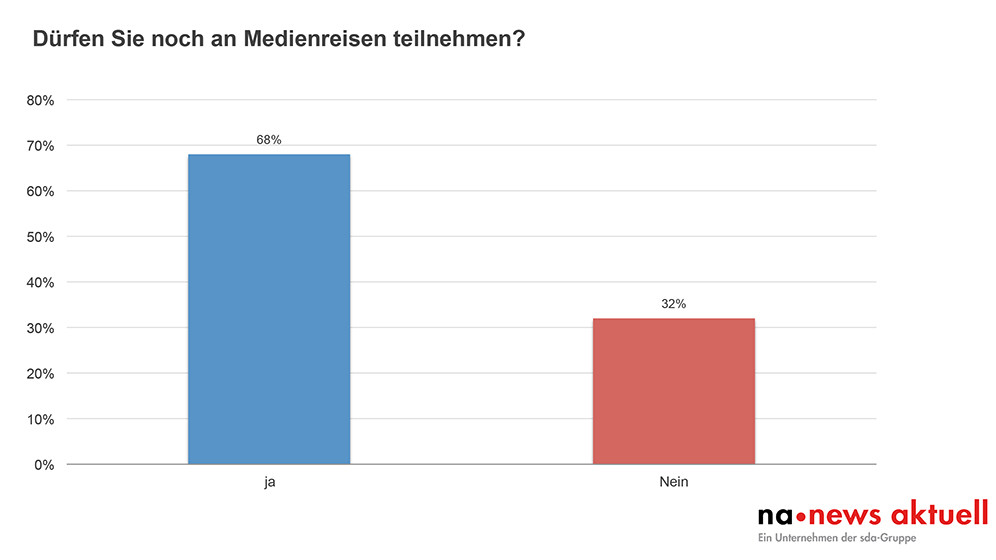
Further results: Social media is now part of everyday journalism. And: Mobile reporting and data journalism are the biggest future trends for editors. The complete results are available as a free report.
The top five sources of research for journalists are personal conversations, traditional media, search engines, media releases and telephone interviews. This result shows that media releases are still as popular as ever: 81% of respondents say that they use media releases for their research.
Social media becomes part of everyday life
For 60 percent of the journalists surveyed, Twitter, Facebook and the like have become more important for their research over the last two years. No other research source has become as relevant as social networks.
The increase in importance also manifests itself very specifically in the working behavior of journalists. Well over half of all respondents currently incorporate information from social media into their own reporting (61%). Two years ago, this figure was only 50 percent. This means that social media is no longer just used as an entry point for research, but also for the production of articles. As two years ago, Facebook is still the most popular research source for journalists (65%), followed by Twitter (58%) and YouTube (57%). LinkedIn and the image networks Instagram and Pinterest recorded a slight increase (two percentage points each).
Further increase in demand for images and videos
The old journalistic adage "A picture is worth a thousand words" is more true today than ever before. For almost every second respondent (46%), the need for images has increased over the past two years. An overwhelming majority of journalists therefore consider it important that media releases also contain images (93 percent). The need for video material has also increased in the last two years. According to more than half of the survey participants (51%). As a result, 44% would like to see moving images as accompanying material, compared to just one in three (32%) in 2016.
Media office as a service provider: What journalists want
Has cooperation between editorial offices and companies improved compared to 2016? After all, only every second respondent currently criticizes the slow response to inquiries (50%). In 2016, it was still 62 percent. Nevertheless, many media professionals continue to criticize the lack of service from communicators. For example, 38% call for better availability and a good third say they would also like media spokespeople to be industry experts (37%).
How will journalists work in the future?
Journalists are increasingly becoming all-rounders. This is not only shown by the growing importance of multimedia and social media. Compared to 2016, the number of journalists working exclusively for print products has already halved. 63 percent now publish for print and online. With regard to future technologies for everyday editorial work, two trends are clearly emerging: half of those surveyed believe that both data journalism (55%) and mobile reporting (47%) will become more important in the coming years.
The study was conducted by News Aktuell in November 2017. 220 Swiss journalists were surveyed online.
Download the report: Ots.ch/RQAnWX


