Roger de Weck for advertising cap instead of advertising restriction for SRG
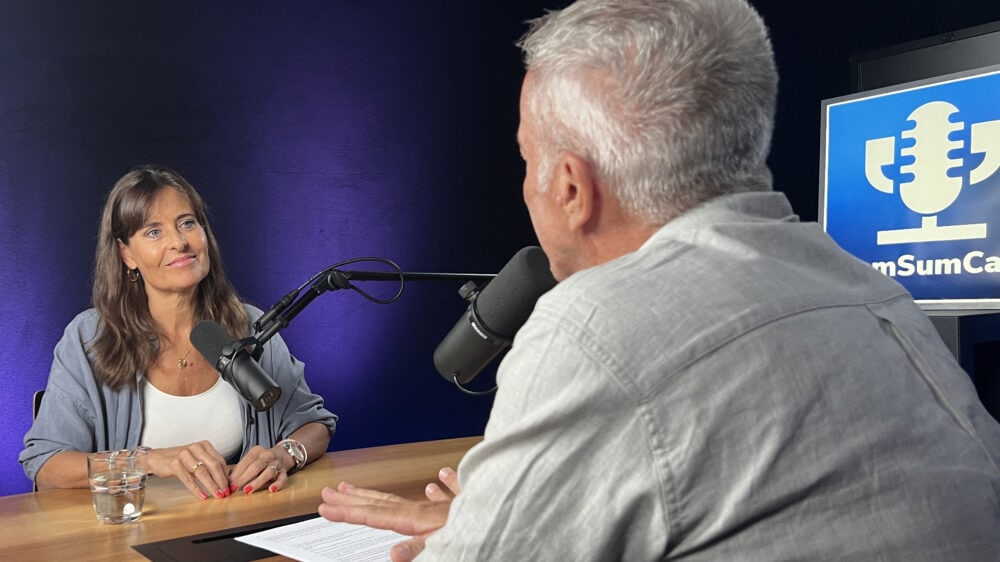
Roger de Weck, the outgoing SRG Director General, is not in favor of restricting advertising at SRG—such as banning commercials after 8 p.m. However, he could envision a cap on advertising revenue.


"We are open to new business models in terms of advertising," said de Weck in an interview with the NZZ am Sonntag. SRG could, for example, be obliged to meet a certain threshold of advertising revenue. "If SRG's advertising revenue exceeds this threshold, part of it would flow into the indirect promotion of media." His successor Gilles Marchand has proposed this. "Such models are more sensible than restricting advertising at SRG," said the SRG boss. He is convinced that the German and French channels in particular, with their Swiss advertising windows, would benefit from a restriction. Channel reduction "anachronistic"
De Weck has little sympathy for calls from private media companies for SRG to be downsized. When asked about this several times, he said, among other things, that SRG had not expanded in the past ten years. The debate about the number of channels is also "anachronistic". With apps, websites, social media and smart TV, new distribution channels have been added to radio and television. "In a few years, we will no longer be talking about channels at all, but about the optimal use of the six distribution channels to reach the audience," he said. In the interview, De Weck also speaks out against the so-called "open content" demand, which is supported by the National Council's Media Commission and according to which private media companies should have free access to SRG broadcasts. This is "completely unrealistic in the jungle of copyrights", said de Weck.
Main problem of journalism financing
De Weck explains the SRG's criticism of private media groups, which want less advertising on public television and a smaller SRG, with their own problems, among other things. Their stance is: as they themselves are worse off due to the migration of advertising money to the internet, the public media house must also cut back. If this logic were to continue, "all media would ultimately be weakened", said de Weck. The main problem of media policy is not the SRG, but the question of "how journalism can still be financed in the future". This is a central problem in terms of democratic policy: "Any weakening of journalism weakens democracy, which is dependent on an enlightened public."
Better the state than "power mongers"
However, De Weck identifies "powerful forces" that want to intimidate and destabilize enlightened media. Cue Donald Trump, who is too opposed to the independence of the media. De Weck does not want to address the question of whether he has portrayed the SRG as a bulwark against a national conservative press. In his own words, however, he expects newspaper titles to come onto the market in Switzerland and is concerned that "political forces are acquiring one medium after another". This would serve neither the media market nor democracy, he said. In such an environment, de Weck can also imagine journalism being financed by state bodies. He cites the ownership model of Fribourg's La Liberté as an example. The Fribourg cantonal bank and the cantonal electricity company have joined in - via an interposed foundation to prevent influence. For de Weck, such a model is preferable to the alternative, in which "people in power" could take control of publications. A "two-level model" could possibly emerge: "At national level, fee-payers finance the SRG and 34 regional broadcasters. At cantonal level, forward-thinking public servants take the initiative." This week, the National Council's Media Commission launched a series of demands in the dispute over the direction of SRG. In addition to the "Open Content" demand, it is also calling for the closure of broadcasters and wants the Federal Council to examine the impact of restricting advertising. (SDA)
Image: OBS/SRG SSR/Danielle Liniger