Amazon remains the world's most valuable retail brand - and is making gains
The ranking of the world's 25 most valuable retail brands shows: Amazon remains at the top. Its brand value is growing by 59 percent. Brands such as Woolworths and Alibaba are losing massively.


Four years ago, Amazon toppled top dog Walmart from the throne of the most valuable retail brands. The supermarket giant's replacement at that time manifested the fundamental transformation of the retail industry and led to even greater digitization of business processes. At the same time, Amazon, Alibaba and eBay - which alone account for 40 percent of the total value of the 25 most valuable retail brands - have become flagships for the entire industry.
Today, Amazon is the most valuable retail brand in the world, with a brand value of almost 100 billion US dollars (USD). This is a key finding of Kantar Millward Brown's brand value ranking for the retail industry. The international market research and consulting firm has now published the ranking based on the BrandZ Top 100 brand value study released in summer 2016. The study calculates the value of the most valuable brands worldwide from a unique combination of financial indicators and data from surveys of over three million consumers.
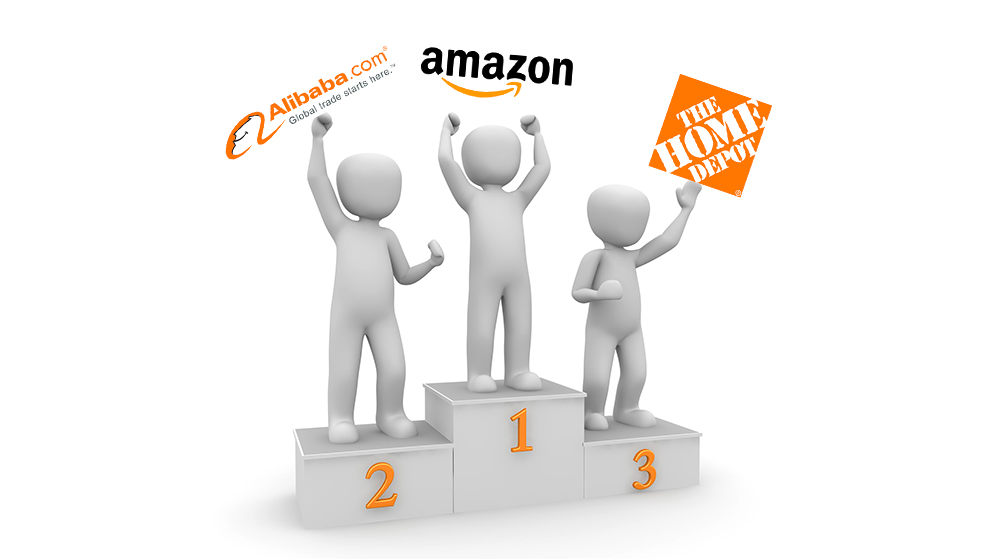
The study was commissioned by the media group WPP. Top performer Amazon recorded brand growth of 59 percent in 2016 and a brand value of 99 billion U.S. dollars, followed by Alibaba with a brand value of 49.3 billion U.S. dollars (-26 percent). In third place is The Home Depot - the brand is one of the winners and is valued at 36.4 billion US dollars (+32 percent). The German companies Aldi and Lidl also feature in the top 25. Aldi impresses with a brand value of 12.1 billion US dollars and occupies eighth place with a growth rate of 4 percent. Lidl is in 19th place with 6.8 billion US dollars and 14 percent growth.

Amazon wants to grow and win over additional markets and product categories. The size and the high reputation among customers are helpful in opening up new segments again and again - for example, the area of fresh produce. Through offerings in music streaming and Amazon Studios, the company is now also changing the entertainment and IT industries. Whether business services, grocery, electronics, FMCGs or the Internet of Things, Amazon is omnipresent. In the future, the retail giant will further increase its presence in private households through order-by-voice systems such as Amazon Echo or Dash buttons.
Alibaba is the only company in this ranking that does not sell itself but provides a sales platform for others. The company focuses on the entire customer experience and offers B2B as well as B2C and C2C services with its portals Alibaba.com, Tmall.com and Taobao Marketplace. In addition, Alibaba provides its users with Ali-Pay, its own digital and fee-free payment system.
The Home Depot, the world's largest home improvement retailer, is increasingly investing in digital technologies to reach young consumers. Compared to other home improvement stores, The Home Depot has rethought the showroom concept as part of an omni-channel strategy. Apps, for example, enable virtual furnishing of one's own four walls. This attracts young consumers in particular, who are ideally expected to remain loyal to the home improvement store over various phases of their lives and homes.
Aldi is pursuing a very successful growth course in Germany and in many European markets. Over the past five years, the Group has recorded double-digit growth rates in the UK and is looking to double its current 500 stores there. The success is due in part to a departure from Aldi's usual one-size-fits-all concept - the store tailors its offering to meet the needs of local consumers. Aldi continues to open large-scale stores to offer a wide range of products and attract customers through a large fresh produce department. Alongside this, however, the discounter is pursuing an urban concept and opening smaller, urban stores tailored to local needs, for example with to-go goods.
Lidl is the second German company in the top 25 of the world's most valuable retail brands. Thanks to its aggressive low-price strategy, the supermarket chain is already present in 27 markets. Of all supermarkets, the discounter invests the most in advertising measures in relation to its size and, like Aldi, focuses on local goods and needs. In addition to weekly specials, Lidl also impresses with its social media use, and enters into direct contact with its consumers. Lidl also wants to improve the shopper experience in the future with its "Store of the Future" concept and expand its product range.
"The influence of new technologies is strongly felt in all industries and their effects are far-reaching. Especially in retail, it is important to develop a strategy that links on- and off-line channels. In addition, communications should be aligned with and consistent across channels - the top retailers are already taking this into account," said Bernd Büchner, managing director of Kantar Millward Brown in Germany, Austria and Switzerland. The total value of the world's twenty-five most valuable retail brands increased by 7 percent year-on-year to a total of $402.142 billion.