Women and mountains - late appreciation of the posters of Martin Peikert
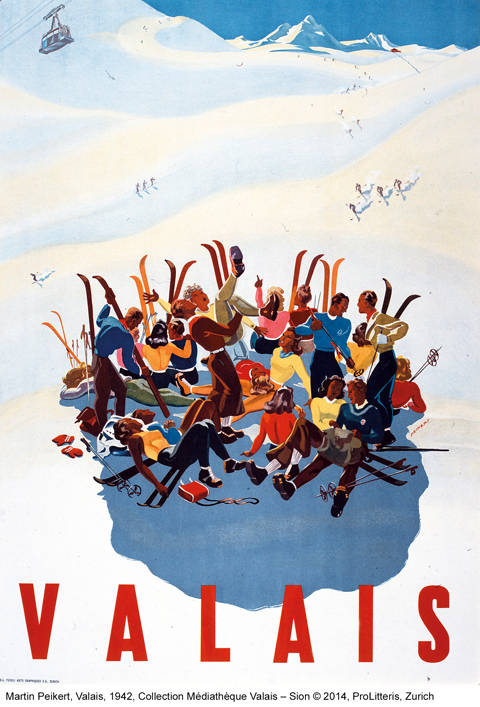
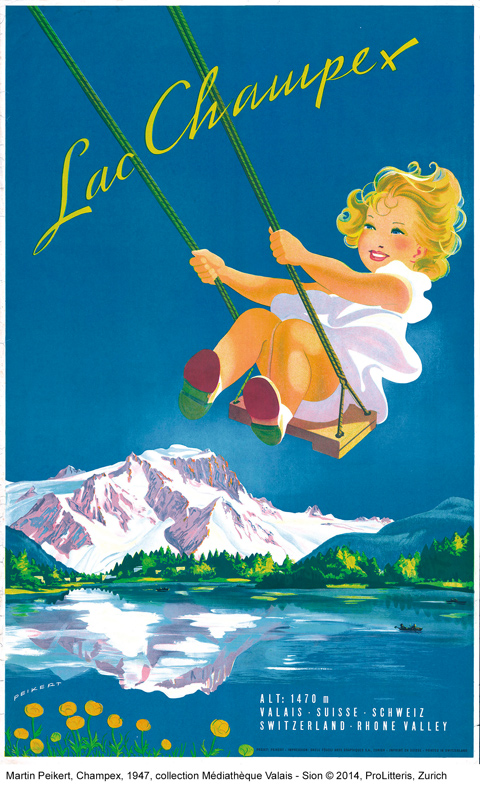
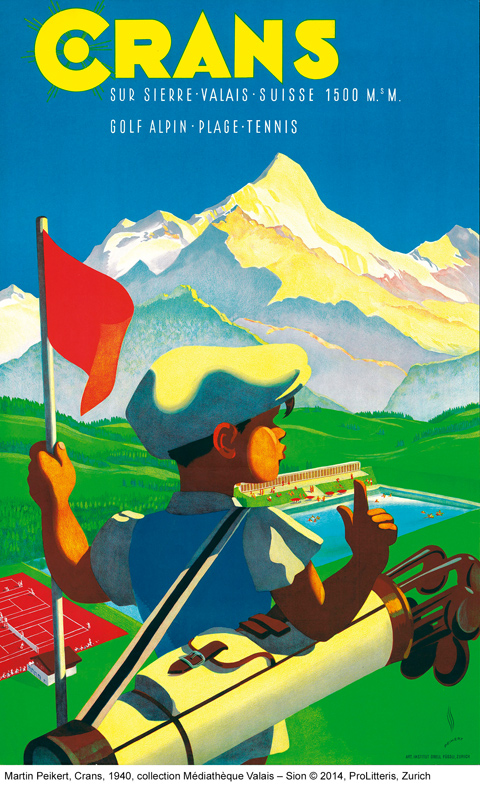
In his posters, women bask in the sun against mountain backdrops. Some of his creations, such as the little devil from Les Diablerets, have survived to this day. Martin Peikert is now receiving a belated tribute in the form of a book and an exhibition in Martigny, Valais.


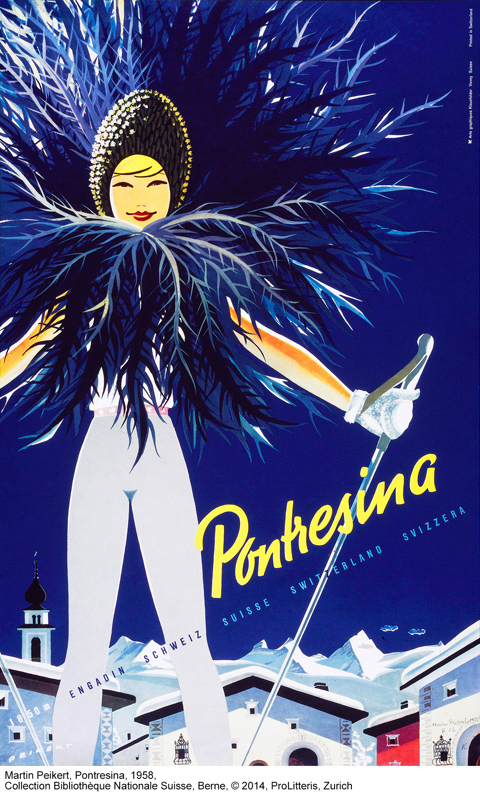
He drew posters for Pontresina, St. Moritz, Gstaad, Crans-Montana, Villars, Verbier and numerous other tourist destinations, for which prices of over 20'000 francs have been paid at auctions. Nevertheless, his work remained unnoticed for a long time. The son of German immigrants was born on April 5, 1901 in the canton of Zug. At the age of 19, he went on a course at the Geneva School of Art, where, among other things, he learned to draw nudes and graduated with the maximum grade.
He opened his first own studio in Zug in 1927, before moving to the canton of Vaud in 1939. It was not until 1951 that he returned to Zug, where he died in 1975. After entering the advertising industry, Martin Peikert first drew for stores (Globus) and products (Persil). His first tourist poster followed in 1930 for the Interlaken lido. It shows a woman walking along the pool with a water balloon in her arms, with the mountains in the background.
Daring style
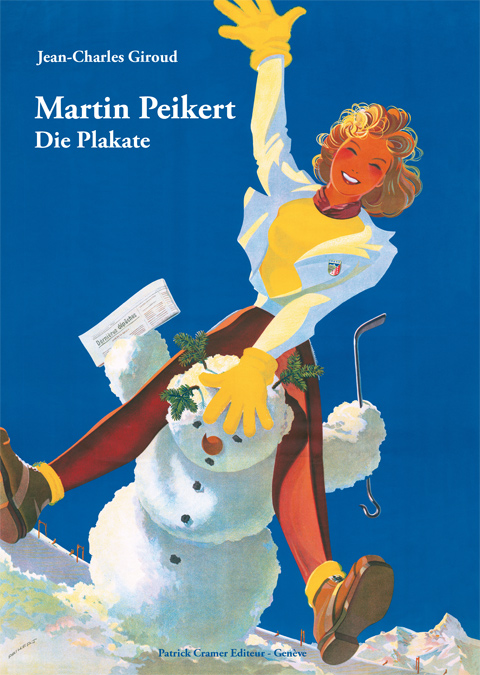
He continued this concept in numerous posters: a woman sunbathing in the mountains near Champéry (1938), a woman lying on a sundial in Pontresina (1939), another woman hopping over a snowman in Crans-Montana. This daring style is also found in a poster for Champéry from 1945, which shows a woman in a ski suit leaning against an entire mountain. Peikert places the outline of the woman and the mountain in a sensual context - so sensual that this advertisement would probably not pass muster today. He also draws his son Yan Peikert several times on his posters. Always in the background, he sketches the respective mountain massifs and develops into a master of landscape painting.
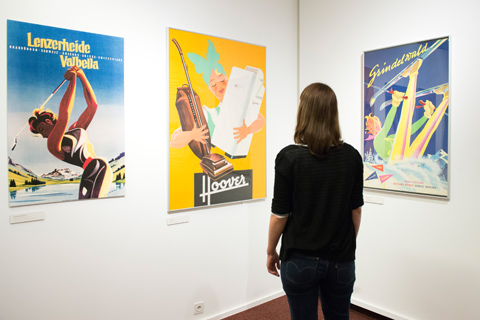
He gives his posters extraordinary life, says Jean-Charles Giroud, former director of the Geneva University Library and historian. He is the author of the book "Martin Peikert. Les Affiches" (208 pages published by Patrick Cramer Editeur), which was produced in collaboration with Peikert's children (see cover above).
Late recognition
Peikert did not receive too much recognition during his career, says Giroud. This also has to do with the fact that he was a loner professionally and did not leave anything in writing about his profession. In addition, tourism advertising received less attention than advertising for other products or culture. Peikert's style can hardly be classified in the history of Swiss graphic art, Jean-Charles Giroud notes.
Little devil and chocolate cow
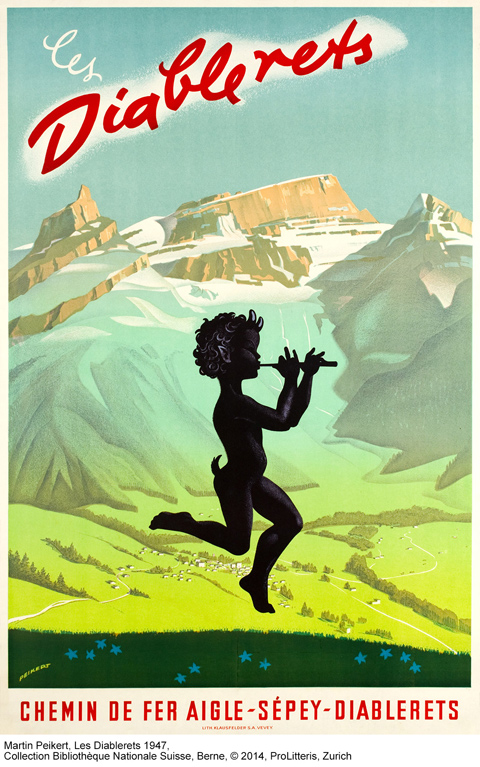
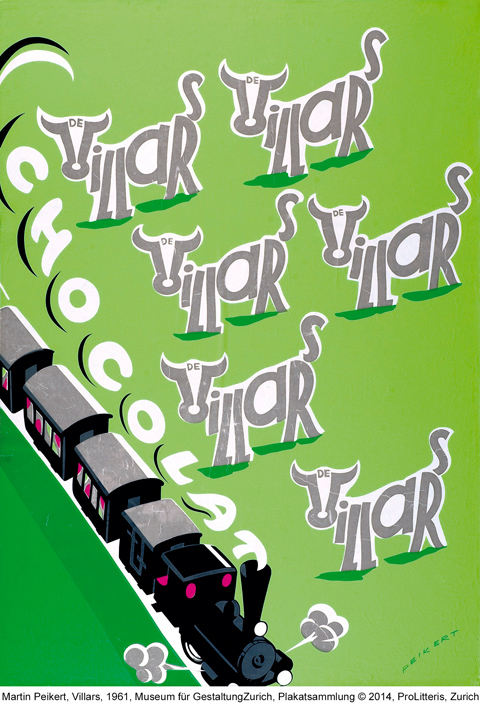
Some of his creations have endured to this day and are part of the cultural heritage. For example, Peikert designed a little devil playing a flute for "Les Diablerets" in 1947. It can still be found today in all the logos of the tourist destination. For the chocolate factory from Villars in the canton of Fribourg, he formed a cow from the letters "Villars", which is still known today. The factory erected oversized metal sculptures of this defining logo along the railroad lines, which are now protected.
From commerce to culture
Jean-Charles Giroud describes this cultural appreciation of the graphic artist as fundamentally paradoxical: culture is always against advertising. Advertising is often spurned, but sometimes later becomes culture itself and passes into the intangible cultural heritage. Official Switzerland also advocates an appreciation of Swiss graphic design and typography. These are among the eight proposals approved by the Federal Council at the end of October for inclusion in Unesco's World Cultural Heritage list. The historian Jean-Charles Giroud would like to make the Zug artist better known in German-speaking Switzerland. A German edition of his book marks the beginning. Whether there will be further exhibitions after Martigny is still open. (Andreas Stüdli/SDA)