
Social media marketing is experimental marketing
Whether it's product innovation, storytelling, or social responsibility campaigns, consumer engagement is transforming traditional marketing. By Beat Hürlimann


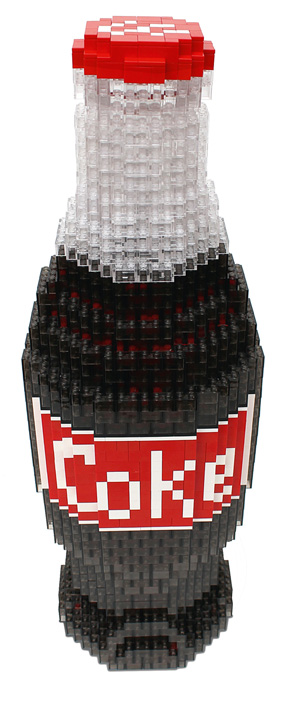
David Haliski is a LEGO artist from New York. "Life, and LEGO®, is much more than what is in the instruction manual." We found each other via Google and Facebook. He put together this Coke bottle especially for my contribution. We found each other because we share something: the joy of experimenting. Now you're thinking: experimentation has no place in marketing plans. The opposite is true: marketing plans without experimentation have no place. The exciting case with a 5-pack secret formula for social media marketing is provided by the maker of the most famous bottle in the world: The Coca-Cola Company!
Setting ambitious goals
Coca-Cola is over 100 years old, the most popular brand on Facebook with 73 million fans, its logo is known by 94 percent of the world's population and its brand value is 74 billion dollars. Only Apple and Google are more valuable. What more could you want? Anthony Newstead, Global Director of Innovation, IT and Interactive at Coca-Cola, provides the answer: double sales by 2020. A clear statement.
Boldly cutting away old habits
With "Great New Taste! Better than ever." and "Change for the Best", the ads in the USA went viral in spring 86. Sales had been declining for 15 years in a row. The idea was to turn things around with a new flavor formula. 200,000 test persons helped. What followed was a disaster with a happy ending. Every consumer had their own relationship with Coke and the taste was part of it. The outrage was correspondingly great. After 79 days, on July 11, the company announced its return to the original formula. Today, 27 years later, the global Coca-Cola brand community has a seat at the decision-making table when it comes to product innovations and other experiments. At Coca-Cola, "Case of Change" stands for the marketing age in which the stories of technologically advanced, always-connected consumers far exceed the reach of the company's own campaigns and stories. The strategy of openness and collaboration is well underway.
The founding principle of the "Secret Formula" is gradually fading. It is increasingly being replaced by an attitude of openness and exchange. Anthony Newstead calls it "The mantra of sharing formula". The change also harbors risks. Newstead comments: "We are going through a phase of risk awareness rather than risk aversion when it comes to innovation." Rapid communication and decision-making channels and trust-based collaboration models are therefore essential. They are replacing the rigid hierarchy and control models based on controllable one-way communication. Creative teams are spontaneously formed across countries, supplemented by technicians and programmers, who hatch ideas together, adopt the latest technologies and experimentally feed campaigns into the social networks. At Coca-Cola, they call this "social collaboration".
Imaginative storytelling
With "Dynamic Storytelling", Coca-Cola is setting completely new accents in campaign management. Classic campaigns, if they have something to tell, are based on the principle of "one-way storytelling". Storytelling is feared. People are not prepared for it, for example because the department is deserted at the weekend or because the IT manager is busy at the moment. The aim of dynamic storytelling is the complete opposite. Stories are launched by consumers, employees or the official Coca-Cola teams. They are recorded, retold and updated chapter by chapter over time. What other users like is included by eliciting a like, retweet or comment. It starts when the material is available. Speed is an important aspect here. Stories whose posts on social media platforms remain unanswered for more than two to three hours end in agony. Context is another aspect. And here Coca-Cola has created a story platform with the highest inspirational content with "Open Happiness". Praise also comes from the highest social media authority. For Faebook COO Sheryl Sandberg, Open Happiness is "the next step in fan culture".
Diligently increasing sales
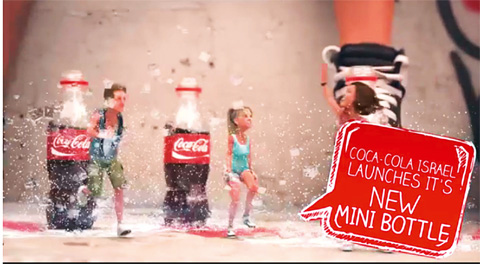
When it comes to stories to increase sales, the focus is on the product. At Coca-Cola Israel, experimenting with the latest trends in marketing and technology seems to be particularly popular. State-of-the-art 3D printer technology was used for the launch of "mini-bottles". Consumers were able to win a 3D printed plastic mini-figure of themselves as part of a competition. They had to download an app, create a digital mini version of themselves and then make it happy by grooming, pampering and playing. Who remembers Tamatgotchi? The winners were 3D scanned in the studio and the little "mini-me" was printed out. A story about little characters with lots of material to tell. The makers of our second Coke case thought half the fun. The "Coke Social Can" story, with a can that can be shared, is exemplary in two respects. The idea is a "social co-production" by creatives from Singapore and France. And the shareable Social Can allows friends to enjoy Coca-Cola in no time at all. Thanks to its physical properties, the product itself becomes a shareable social medium. The perfect Shared Happiness story for the Open Happiness platform.
Giving something back to society
When it comes to stories in the service of reputation, the focus is on the well-being of people and the community. To this end, Coca-Cola has launched the "Live Positively" program for sustainability and social responsibility. With good reason. According to a recent US study, young people of student age in particular, who are highly influential on the social web, so-called "millennials", attach great importance to companies giving something back to society. According to Head of Marketing Joseph Tripodi, the fight against obesity is a particularly urgent issue for Coca-Cola in terms of reputation management. This clear admission is surprising, but shows what transparent communication should look like in the digital age. Provided that big words are followed by concrete action. This is what happened at the end of June in the Argentinian test market, where "Coca-Cola Life", the first Coca-Cola drink to contain the natural sweetener stevia, was launched. Stevia is a plant whose leaves contain a substance that is more than 200 times sweeter than sugar. It is said to come very close to the original taste of Classic Cola. This is a project that is both innovative and experimental. Will Americans and Europeans also like it? The two video stories "Be Ok" and "Coming Together" are currently causing a surprise in the advertising world. In one, Coca-Cola explains that all the calories we consume every day count - including the calories from the Coke bottle. A second commercial is even clearer and shows how to get rid of the 140 calories in a can of Coke. And how many calories can you get rid of with a blog comment? Dare to experiment and spark an exciting discussion with your contribution on Huerlimanncc. com.
Beat Hürlimann
Beat Hürlimann


